Best Dog Boots UK 2026: Paw Protection for Every Season

Gritted pavements in January, scorching tarmac in July, muddy woodland trails that cake between the toes — British dogs put up with a lot under paw. If your dog is limping home from the park, licking sore pads after a walk, or leaving a trail of muddy paw prints through the hallway, a decent pair of boots can be genuinely life-changing. Good dog boots protect against ice and road salt in winter, hot surfaces in summer, rough trails, and post-surgery recovery when a wound needs to stay clean and dry.

Finding the right pair, though, is harder than it sounds. Fit is fiddly, some dogs refuse to walk in them at first, and there’s a real gap between the cheap disposables and serious outdoor footwear. We’ve pulled together the boots we’d actually recommend to a friend, with honest notes on what works, what doesn’t, and who each pair suits.

Quick Comparison

ProductBest ForPrice RangeRating
Ruffwear Grip TrexHiking and rough terrain£70-85 (pair)★★★★★
Hcpet Waterproof BootsEveryday wet walks£15-22★★★★
Pawz Rubber Dog BootsShort walks and injury recovery£12-18 (12 pack)★★★★
Ancol Extreme Weather BootsWinter and ice£18-25★★★★
My Busy Dog Waterproof BootsHot pavements and summer£25-35★★★★

Our Top Picks

1. Ruffwear Grip Trex

Best for: active dogs who hike, run or explore rough ground

If you do serious walks — rocky trails in the Peak District, long coastal paths, hot country roads in summer — the Ruffwear Grip Trex is the boot most experienced dog owners end up with. The Vibram outsole is the same rubber compound used on human hiking boots, and the lug pattern grips properly on wet rock and loose gravel without feeling stiff under paw.

The breathable mesh upper keeps the boot from overheating on warm days, which is a common problem with cheaper waterproof models. A single hook-and-loop strap cinches across the ankle, and there’s a pull tab at the back to help get them on over hairy paws. They’re sold in pairs, so you’ll need two sets for a full foursome.

Ruffwear fit tends to suit medium to large active breeds best — think spaniels, collies, labradors, retrievers. They’re pricey, but these are the boots that will still be going after two or three years of regular use.

What we like:

  • Vibram outsole grips on wet rock, scree and tarmac
  • Breathable mesh means they’re usable in summer heat
  • Genuinely durable — many owners report two to three years of use
  • Reflective trim for winter walks at dusk

Worth knowing:

  • Sold in pairs — a full set of four is a significant investment
  • The mesh upper is not fully waterproof in deep puddles
  • Measure carefully — Ruffwear’s sizing runs to exact paw width in mm

Specifications:

  • Sizes available: 1.5″ up to 3.25″ paw width (8 sizes)
  • Suitable for: medium to large breeds; working and active dogs
  • Material: Vibram rubber outsole, breathable air mesh upper
  • Colours: Obsidian Black, Red Sumac, Lichen Green

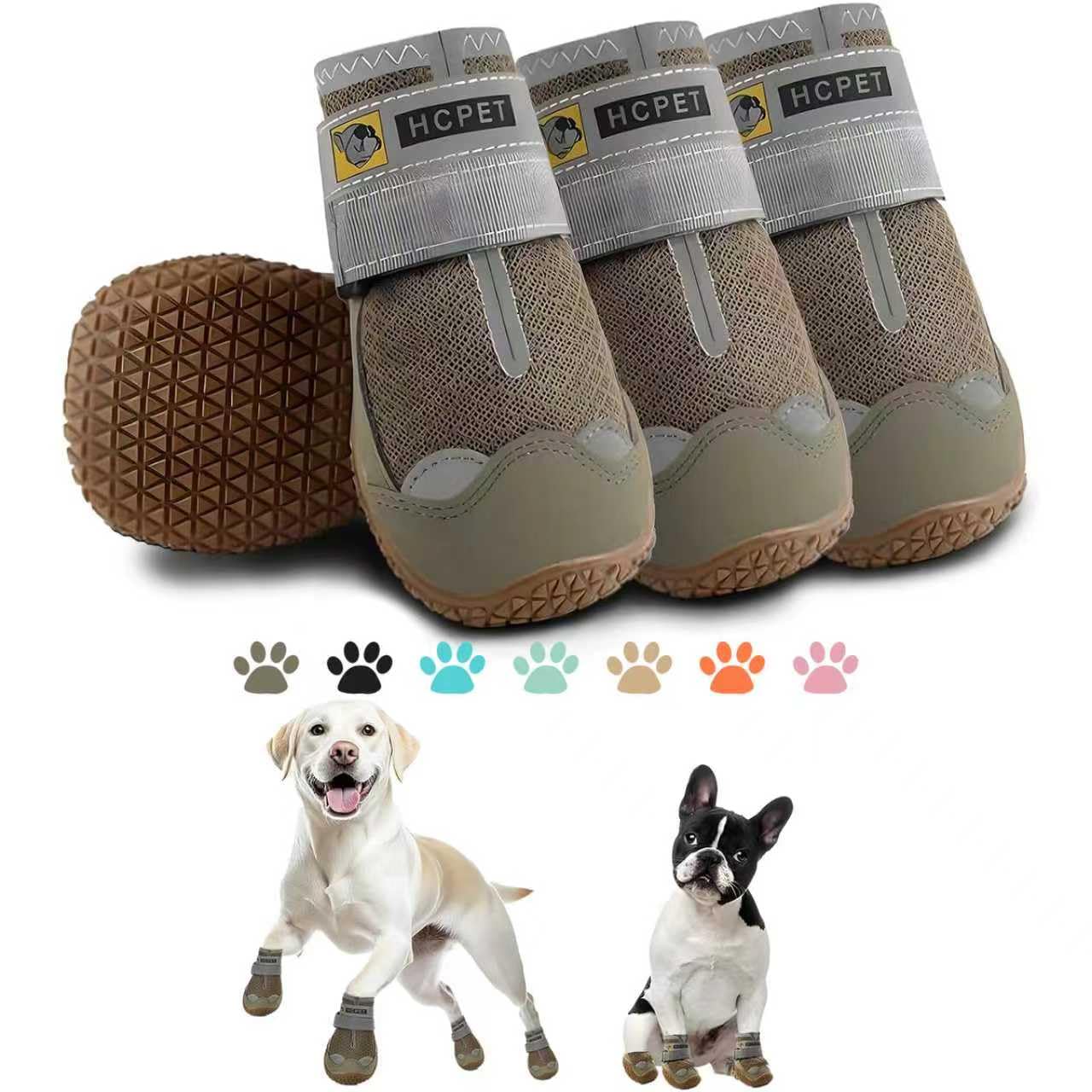
2. Hcpet Waterproof Anti-Slip Dog Boots

Best for: everyday wet and muddy walks on a smaller budget

The Hcpet boots are the pair we’d suggest for most pet parents who want something affordable for the school run, the morning park walk, or muddy autumn fields. They come as a set of four with two adjustable velcro straps per boot — one around the ankle, one across the mid-foot — which is the sensible design choice for keeping them on.

The rubber sole is chunky enough to handle gravel and rough pavement, and the upper fabric sheds water for long enough to get through a typical one-hour walk. They won’t survive a full river wade, but for wet grass and puddles they’re fine. Reflective trim across the straps is a nice touch for darker mornings.

Sizing runs a little small, so we’d measure the paw width carefully and go up a size if you’re between two. Best suited to small and medium breeds — the largest size tops out around a labrador paw.

What we like:

  • Sold as a full set of four — no need to buy two pairs
  • Two-strap design stays on better than single-strap budget boots
  • Good grip on pavement and wet grass
  • Reflective strips visible in headlights

Worth knowing:

  • Sizing runs small — check the paw width chart carefully
  • Not suitable for heavy-duty trail use or daily 10km+ walks
  • Fabric can stain from wet mud — machine wash on cool

Specifications:

  • Sizes available: 1 to 8 (paw width 3.8cm to 7.8cm)
  • Suitable for: small to medium breeds, some larger dogs in size 7-8
  • Material: waterproof Oxford fabric, rubber outsole
  • Colours: Black, Red, Pink

3. Pawz Rubber Dog Boots

Best for: short walks, injury recovery and dogs who hate traditional boots

Pawz are not really boots in the traditional sense — they’re disposable, natural rubber booties that look and feel a bit like balloons. They stretch over the paw and stay on through grip rather than straps, which means most dogs tolerate them far better than bulky velcro boots on the first try.

They’re brilliant for specific jobs: keeping a bandaged paw dry in the garden, short post-surgery walks, covering stitched pads, or getting through a single icy morning. A pack of twelve will stretch to a few weeks of occasional use — some owners get three or four walks out of a single set if you’re gentle.

Don’t expect hiking-grade grip from these. On smooth tile floors they’re slippery, and they tear on concrete after a while. Think of them as paw-condoms rather than proper footwear.

What we like:

  • Low profile — dogs tend to accept them faster than velcro boots
  • Waterproof enough for bandage protection
  • Twelve-pack means you can replace singles as they wear
  • Biodegradable natural rubber

Worth knowing:

  • Disposable — not a long-term solution
  • Limited grip on hard indoor floors
  • Can be fiddly to get on the first few times

Specifications:

  • Sizes available: Tiny, XS, S, M, L, XL
  • Suitable for: all breeds; best for short-duration use
  • Material: 100% natural rubber
  • Sold in: packs of 12 (single colour per pack)

4. Ancol Extreme Weather Dog Boots

Best for: winter walks, ice and road salt protection

Ancol is a long-standing British pet brand, and their Extreme Weather boots are built for exactly what the name suggests. A thick, fleece-lined interior keeps paws warm in sub-zero walks, and the tall ankle cuff stops snow, slush and grit from getting in from the top — which is the real weakness of shorter boot designs.

The sole is softer than the Ruffwear’s Vibram, so they’re not our first pick for rocky terrain, but on frosted pavement and park paths they grip well and insulate against cold concrete. Road salt is the real paw-killer in British winters, and these do a proper job of keeping it off.

Best for small to medium dogs who feel the cold — whippets, dachshunds, small terriers, spaniels. Larger breeds may find the fleece lining over-warm in milder weather.

What we like:

  • Fleece lining genuinely insulates on icy walks
  • Tall cuff keeps slush and grit out
  • Double velcro strap holds well even on active dogs
  • UK-stocked in Pets at Home as well as Amazon UK

Worth knowing:

  • Too warm for spring and summer use
  • Softer sole wears faster on heavy trail use
  • Black only — less reflective than some rivals

Specifications:

  • Sizes available: XS to XL
  • Suitable for: small to medium dogs; winter-focused
  • Material: fleece-lined waterproof upper, rubber sole
  • Colours: Black

5. My Busy Dog Waterproof Boots

Best for: hot pavement protection and sensitive summer paws

UK summers are getting hotter, and tarmac in July can reach temperatures that genuinely burn paw pads. The My Busy Dog boots are designed with heat protection in mind — a thick but flexible rubber sole insulates paws from the ground, while the mesh-and-fabric upper vents well enough to avoid sweaty paws.

Fit is generally accurate to the size chart, and the two-strap velcro system keeps them on even on springy retrievers. They’re also one of the few mid-price boots that offer reflective trim on all four sides, which is useful if you’re an early-morning or evening walker year-round.

They’ll handle wet grass and light rain, but for serious wading or deep puddles you’ll want something with a higher sealed cuff.

What we like:

  • Thick rubber sole insulates from hot tarmac
  • Breathable upper avoids summer sweat
  • Reflective trim on all four sides
  • Sold as a set of four

Worth knowing:

  • Not warm enough for hard winter use
  • Low cuff means deep puddles can overtop
  • Break-in walk needed — some dogs kick them off in the first session

Specifications:

  • Sizes available: 1 to 8 (paw width 3.8cm to 7.4cm)
  • Suitable for: small to large dogs; summer-focused
  • Material: rubber sole with mesh-and-fabric upper
  • Colours: Black, Orange, Pink

Buying Guide: How to Choose the Best Dog Boots

What to Look For

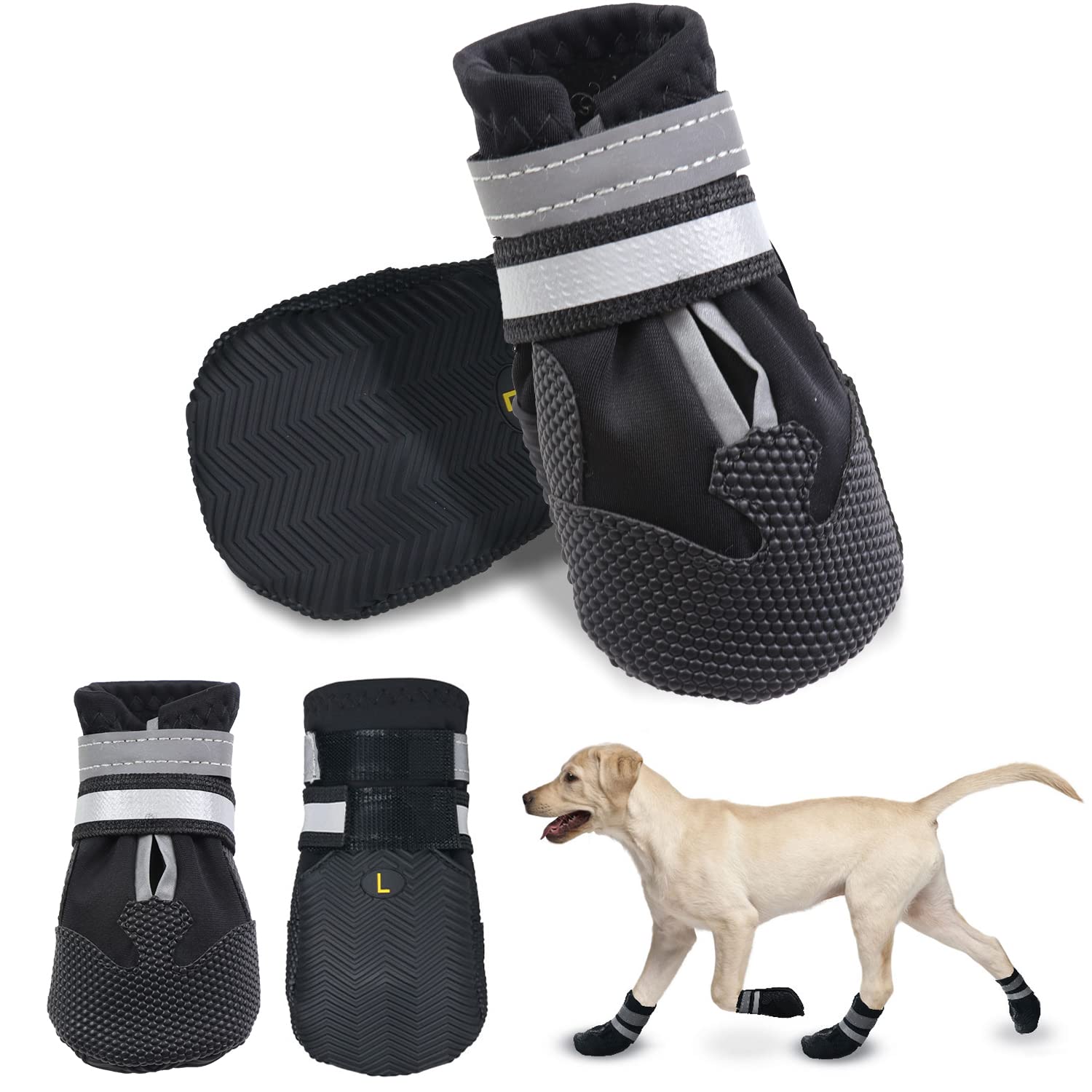
A decent pair of dog boots does four things: protects the paw from the ground surface, stays on without chafing, lets the foot flex naturally, and survives repeated wear. Cheap boots usually fail on the second point — they slip off within ten minutes — or the fourth, where the sole splits after a few walks.

Look for a two-strap fastening rather than a single strap, a flexible rubber sole (not a rigid plastic one), and some kind of pull tab at the back to help get them on. Reflective trim is not essential but genuinely useful in British winters when most of us are walking in the dark.

Types of Dog Boots

Hiking boots (like the Ruffwear Grip Trex) have serious rubber outsoles and are designed for long, rough walks. Everyday waterproof boots are lighter, cheaper, and built for an hour in the rain. Winter boots have fleece lining and tall cuffs for ice and salt. Disposable rubber boots (Pawz) are for short-term paw protection — injuries, medication, or one-off icy days. Hot-pavement boots are like everyday boots but with thicker, more insulating soles and more ventilation.

Most households don’t need all five. For a typical UK pet — a park walk morning and evening, the occasional weekend hike — a decent everyday waterproof pair plus a handful of disposables for emergencies covers most of the year.

Size Guide

Dog boot sizing is based on paw width, not body size. Stand your dog on a piece of paper, press a paw flat (or wait for them to stand naturally), and trace around the widest points of the pad. Measure that width in millimetres — that’s your size.

Rough size reference by breed:

  • Small (Chihuahua, Yorkie, Toy Poodle): 35-45mm paw width
  • Medium (Spaniel, Beagle, Border Collie): 45-60mm paw width
  • Large (Labrador, Golden Retriever, German Shepherd): 60-75mm paw width
  • Extra Large (Great Dane, Mastiff, St Bernard): 75mm+ paw width

It’s worth noting that a dog’s front and back paws are often different sizes — the front paws are usually slightly wider. If the difference is significant, size to the larger measurement and accept the rear boots will be a touch loose.

How Much Should You Spend?

Budget (under £20): A full set of four for occasional wet-weather walks. Expect them to last a season of regular use. Fine for most casual pet parents.

Mid-range (£20-40): Better fabrics, proper two-strap fittings, more sizes. The sweet spot for dogs who walk every day in varied weather.

Premium (£60+): Serious hiking boots like the Ruffwear Grip Trex. Worth it if you’re doing long, rough walks regularly, or have a working dog that needs proper grip on rough ground.

Frequently Asked Questions

Do dogs actually need boots in the UK?

Most dogs get by fine without boots, but there are specific situations where they help. Road salt in winter can crack paw pads and irritates if licked. Hot tarmac above 28°C can burn pads within a minute. Post-surgery recovery often requires keeping a paw clean and dry. And for active dogs on rocky trails, boots prevent torn pads on flint or broken glass. If none of those apply, your dog probably doesn’t need them.

Why won’t my dog walk in their new boots?

The high-stepping, reluctant walk is completely normal and happens to almost every dog on their first boot session. Start indoors with one boot, then two, then all four, with treats and short sessions. Most dogs are walking normally within three or four sessions. If you skip the indoor break-in and go straight outside, expect a lot of drama for the first ten minutes.

Can puppies wear dog boots?

Puppies grow quickly, so unless there’s a specific medical reason, we’d avoid investing in expensive boots until your dog is close to full-grown. For short-term use — a bandaged paw or icy week — cheap disposable Pawz are a better choice than a properly fitted boot they’ll outgrow in two months.

How do I clean dog boots?

Most fabric boots can be rinsed under the tap and air-dried. Some (including the Hcpet and My Busy Dog models above) are machine washable on a cool cycle in a laundry bag. Never put rubber-soled boots in the tumble dryer — the heat warps the sole. Check and brush out grit from inside the boot every few walks to prevent rubbing.

Should my dog wear boots in the house?

No. Paws need to breathe and spread naturally, and most dog boots give less grip on smooth flooring than bare paws. If your dog is slipping on hardwood or laminate, paw-grip spray, claw trimming, or anti-slip socks are better solutions than outdoor boots.

Final Verdict

For most UK pet parents, the Hcpet Waterproof Anti-Slip Boots are the sensible everyday pick — a full set of four at an affordable price, with enough grip and waterproofing for daily walks through British weather. If you’re hiking regularly, doing long trails, or have a working dog who needs serious paw protection, spend up to the Ruffwear Grip Trex — they earn the price back in durability.

For occasional use, a pack of Pawz in the drawer is genuinely useful for bandaged paws, icy mornings, and post-surgery recovery. And if your dog feels the cold, the fleece-lined Ancol Extreme Weather boots are worth adding for winter.

Some More Reviews Here..