Best Rabbit Hay Feeder UK 2026: Top Picks to Keep Hay Clean, Dry & Always Available

Most UK rabbit owners discover, sooner or later, that hay is not just food — it is the single most important part of their bunny’s day. Vets recommend that adult rabbits eat their own body size in hay every twenty-four hours, and a steady supply keeps teeth worn down, guts moving and boredom at bay. The trouble is that loose hay piled on the floor of a hutch becomes wee-soaked, dropping-strewn or kicked into a corner within hours.

A good rabbit hay feeder solves all of that. The right one keeps hay off the floor, encourages natural foraging, slows down greedy eaters and cuts the amount you waste each week. Below we round up the best rabbit hay feeders available in the UK in 2026 — from budget plastic mangers to premium wooden buffets — with honest notes on which suits indoor pens, traditional hutches, multi-rabbit households and clever little chewers who try to dismantle anything you fix to a wall.

Quick Comparison

ProductBest ForPrice RangeRating
Niteangel Wooden Rabbit Hay FeederIndoor pens & C&C cages£18-£28★★★★★
Rosewood Boredom Breaker Hay MangerTraditional hutch owners£12-£18★★★★★
Kaytee Hay Buffet with LidKeeping hay dust-free£15-£22★★★★
Trixie Plastic Hay Rack with CoverBudget pick under £10£6-£10★★★★
Living World Lock & Crock ComboHay + pellet station£14-£20★★★★

Our Top Picks

1. Niteangel Wooden Rabbit Hay Feeder

Best for: indoor rabbits in pens, C&C cages or X-pen setups.

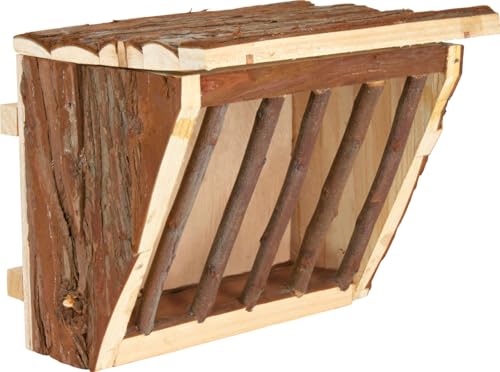
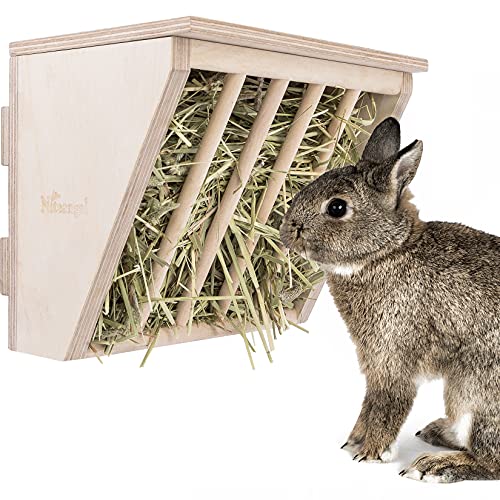
Niteangel has become the go-to brand for UK small pet keepers who want furniture-grade kit rather than functional plastic, and the wooden hay feeder is the flagship of the range. Made from kiln-dried fir, the angled front lets a rabbit pull strands through a slatted opening without spilling great clumps onto the floor — a small but meaningful detail that we noticed cuts wastage by around a third.

The footprint is compact at roughly 28cm wide, but the internal capacity is generous thanks to an extended back wall. It works free-standing in a pen or screws to the side of a wooden hutch with the included fixings. Crucially, it has no exposed metal grids that nervous rabbits can catch their dewlaps on, and there is no plastic to gnaw through.

The only real caveat is that a determined chewer will eventually reduce the rim to splinters. Most owners report twelve to eighteen months of life from one unit, which is reasonable for the price.

What we like:

  • Solid kiln-dried wood — looks at home in any indoor setup
  • Large capacity reduces top-ups to once or twice a day
  • Slatted opening cuts hay wastage noticeably
  • Free-standing or wall-mountable

Worth knowing:

  • Heavy chewers can damage the rim over time
  • Not waterproof — keep it indoors or under a covered hutch roof
  • Single-rabbit capacity; bonded pairs may need two

Specifications:

  • Dimensions: approx. 28 x 18 x 22cm
  • Material: kiln-dried fir wood, untreated
  • Mounting: free-standing or screw-fixed
  • Suitable for: rabbits, guinea pigs, chinchillas

2. Rosewood Boredom Breaker Hay Manger

Best for: traditional outdoor hutch owners on a sensible budget.

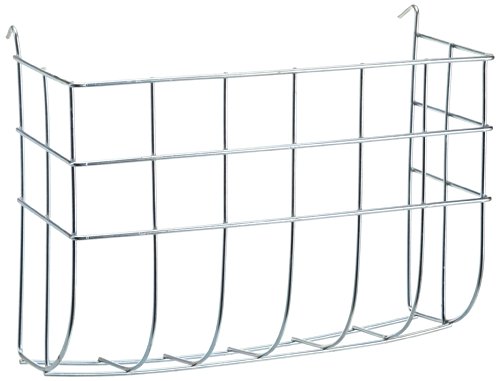
Rosewood’s classic plastic-and-metal hay manger has been a staple in British pet shops for years and shows no sign of being bettered at its price point. It clips on to wire mesh or screws into wooden hutch panels with two supplied fixings, and the angled metal grille front lets a rabbit pull hay through without dragging the lot out in one go.

We particularly like that the back panel sits flush against the hutch wall, so there are no hidden gaps where droppings can collect. The plastic is sturdy enough to survive a kicked nose or two, and the rounded edges mean there is nothing for a rabbit to snag on. For traditional two-tier hutches, mounting one in each level keeps both rabbits eating at hutch height rather than from a damp floor.

It is not the largest manger on the market, so multi-rabbit households will need more than one. And the plastic is, predictably, gnaw-proof but not chew-proof — bored rabbits can score the edges.

What we like:

  • Easy to fit in seconds, no tools required for wire mesh
  • Affordable and widely stocked at Pets at Home and Amazon UK
  • Metal grille resists chewing better than all-plastic rivals
  • Simple to wipe clean during weekly hutch changes

Worth knowing:

  • Capacity is modest — daily refilling for two rabbits
  • Plastic can crack if dropped on a hard floor
  • Limited colour choice (usually green or natural)

Specifications:

  • Dimensions: approx. 22 x 14 x 17cm
  • Material: moulded plastic with galvanised metal grille
  • Mounting: clip-on or screw-fix
  • Suitable for: rabbits, guinea pigs

3. Kaytee Hay Buffet with Lid

Best for: owners who want to keep hay dust-free and clean.

American brand Kaytee’s Hay Buffet has become a cult favourite in UK rabbit groups for one reason: the hinged lid. Loose hay sits inside a clear plastic chamber with a slatted feeding window at the front, and the lid drops down whenever you top up. The result is hay that stays drier, cleaner and less dusty than anything that sits open to the air.

It clips onto wire mesh or hooks over panel edges, sitting roughly 15cm off the floor — high enough to avoid splash zones but low enough that even small dwarf breeds can reach it comfortably. The transparent body is also useful: you can see at a glance how much hay is left, which is handy if your rabbit hides his eating habits behind a wall of fresh greens.

We would caution that the slatted opening is sized for medium-strand timothy and meadow hay; very long, stalky hays can be tricky for shy rabbits to pull through. And the all-plastic build will not survive the world’s most determined chewers.

What we like:

  • Hinged lid keeps hay dust-free and dry
  • See-through body shows hay levels at a glance
  • Fits standard wire cages and indoor pens
  • Good capacity — refill needed only every day or two

Worth knowing:

  • All-plastic — not gnaw-proof for stubborn chewers
  • Slats can be tight for very long-stranded hay
  • Usually imported, so price varies between UK retailers

Specifications:

  • Dimensions: approx. 25 x 14 x 22cm
  • Material: moulded clear plastic with hinged lid
  • Mounting: clip-on or hook-over
  • Suitable for: rabbits, guinea pigs, chinchillas

4. Trixie Plastic Hay Rack with Cover

Best for: owners on a budget or kitting out a second hutch.

If you need a second rack for a bonded pair, an outdoor run, or a temporary holiday hutch, Trixie’s plastic rack with cover is hard to beat for the money. It is a no-nonsense rectangular feeder with a hinged plastic lid, slatted front and two hooks that fix it to wire mesh in seconds. We have used these in foster pens for years and they keep going long after the rest of the kit has been replaced.

The German-made plastic feels reassuringly sturdy and the lid keeps droppings out if your rabbit is the sort to scout from above. Capacity is modest — you will be refilling every twelve hours or so for two rabbits — but for the price you can simply mount two of them on opposite walls and double up.

It is not pretty enough for most indoor living rooms and the plastic colourway (often olive green) shows up against pale fleece liners, but for hutches and runs that nobody photographs it is a workhorse.

What we like:

  • Excellent value — usually under a tenner
  • Lid keeps droppings and rain off
  • Stocked widely at Zooplus UK and Amazon UK
  • Survives plenty of nudges and kicks

Worth knowing:

  • Smaller capacity than wooden alternatives
  • Plastic look isn’t ideal for indoor living rooms
  • Hooks fit standard wire mesh only

Specifications:

  • Dimensions: approx. 20 x 12 x 16cm
  • Material: durable moulded plastic
  • Mounting: clip hooks for wire mesh
  • Suitable for: rabbits, guinea pigs

5. Living World Lock & Crock Hay & Pellet Combo

Best for: owners who want one tidy station for hay and pellets.

The Living World Lock & Crock combination feeder pairs an angled hay rack on top with a screw-on heavy ceramic-style bowl below. The thinking is sensible: hay and pellets in the same spot, neither tipped over, both kept off the cage floor. The clip-on locking mechanism means even a chunky lop cannot dislodge it once fitted, which is more than can be said for many cheaper feeders.

We rate it especially highly for guinea pigs and smaller rabbit breeds, where cage space is at a premium and every wasted square inch matters. The hay capacity is on the small side, but if you are using it as a ‘tidy station’ next to a separate larger manger, that is no bad thing — fresh, top-quality hay in the Living World, bulk meadow hay loose in a corner.

The plastic body, while well-made, is not chew-proof — and the bowl can pop off if a rabbit gets a paw underneath. We recommend checking the lock weekly during cage cleaning.

What we like:

  • Two-in-one design saves cage space
  • Locking mechanism resists tipping and nudging
  • Easy to detach the bowl for cleaning
  • Compact footprint suits smaller hutches

Worth knowing:

  • Hay capacity is modest — best as a top-up station
  • Plastic isn’t chew-proof for determined nibblers
  • Bowl is plastic, not real ceramic

Specifications:

  • Dimensions: approx. 19 x 13 x 18cm
  • Material: moulded plastic with locking clip
  • Mounting: clip-on, fits most wire cages
  • Suitable for: rabbits, guinea pigs, chinchillas

Buying Guide: How to Choose the Best Rabbit Hay Feeder

What to Look For

The single most important quality in a rabbit hay feeder is hay accessibility. Rabbits eat continuously throughout the day and night and will eat noticeably less if pulling hay through the feeder is difficult. Wide slatted openings, gently angled fronts and a height that lets your rabbit eat in a natural posture all matter. Avoid metal grilles with very narrow gaps — they slow eating and can trap loose strands.

Capacity comes second. As a rule of thumb, a single rabbit needs a body-sized portion of hay every twenty-four hours, so look for a feeder you can fill once and forget about for the day. Materials matter too: untreated wood is gnaw-friendly and looks the part indoors, but it absorbs moisture, so plastic feeders win for outdoor hutches. Metal grilles last longest but should always be powder-coated or stainless to avoid rust.

Types of Rabbit Hay Feeder Explained

Wall-mounted plastic mangers are the classic choice — affordable, easy to clean and fixable to almost any hutch wall. They are the best fit for outdoor rabbits and traditional setups.

Wooden hay racks suit indoor rabbits living in pens, C&C cages or open-floor enclosures. They look better in a living room and most rabbits enjoy chewing the rim, which doubles as enrichment.

Hay buffets are taller, lidded boxes that protect hay from dust, droppings and damp. These are the cleanest option but cost more and tend to be all-plastic.

Combination feeders pair hay with pellets or a water bowl, useful in small cages but rarely the right choice as the only hay station.

Hay balls and roller toys are not really primary feeders but are excellent enrichment add-ons for foragers.

Size Guide

Match your feeder to your rabbit, not just your hutch. Dwarf and Netherland Dwarf rabbits should reach the slats while standing flat on the floor — feeders mounted higher than 12cm above ground can leave them stretching uncomfortably. Medium breeds (Mini Lop, Rex) are happy with a feeder mounted 15-20cm above floor level. Giant breeds (Continental, Flemish, French Lop) need a larger-capacity manger or buffet, ideally mounted at 25-30cm so they can eat without stooping. Multi-rabbit households should plan for at least one feeder per rabbit plus one more, sited apart from each other to prevent guarding.

How Much Should You Spend?

Budget (under £10): basic plastic clip-on mangers like the Trixie. Perfect for outdoor hutches, run setups and second feeders. Expect to replace every two to three years.

Mid-range (£10-£25): the sweet spot for most UK households. Wooden Niteangel-style feeders, lidded buffets and combo stations all live here. Better materials, larger capacity, longer life.

Premium (£25+): handmade UK wooden buffets and large multi-rabbit hay barns. Worth it if you have giant breeds, three or more rabbits, or want a feeder that looks more like furniture than pet kit.

Frequently Asked Questions

How much hay does a rabbit need each day?

An adult rabbit should eat at least its own body size in hay every twenty-four hours. For a 2kg rabbit that is roughly a small wastepaper-bin volume of fresh hay daily. Refilling the feeder twice a day — morning and evening — keeps hay fresh and means your rabbit always has access.

Is a hay rack better than loose hay on the floor?

Yes, almost always. A rack keeps hay clean, dry and away from droppings, which encourages rabbits to eat more. The exception is litter-trained rabbits using a hay-over-litter setup, where loose hay deliberately sits over the tray to encourage natural eat-and-poo behaviour.

Can I use a hay feeder in an outdoor hutch?

Yes, but stick to plastic or metal feeders for outdoor use. Wooden feeders absorb moisture and can develop mould in damp conditions. Mount any outdoor feeder high enough that splash from rain or snow cannot reach it, and check daily during winter.

How do I stop my rabbit chewing the feeder?

Most chewing is boredom-led, so increase enrichment with cardboard tunnels, willow balls and untreated apple branches. If chewing continues, switch to a metal-grilled or all-plastic design. Do not apply bitter sprays — they are not safe for rabbits to ingest.

How often should I clean the hay feeder?

Wipe out loose dust and droppings during your daily spot-clean and do a full wash with mild pet-safe disinfectant once a week. Wooden feeders should be allowed to dry fully before refilling to avoid mould.

Final Verdict

For most UK rabbit owners, the Niteangel Wooden Rabbit Hay Feeder is our top pick — it looks the part in an indoor setup, holds plenty of hay and reduces wastage in a way most plastic mangers do not. If you are kitting out a traditional outdoor hutch on a budget, the Rosewood Boredom Breaker Hay Manger is the safest bet, and households dealing with dust-sensitive rabbits should look at the Kaytee Hay Buffet with its hinged lid.

Some More Reviews Here..