Clicker training is one of the most effective and kindest ways to teach a dog. The click marks the exact moment your dog does the right thing, and a treat follows straight away. Because the sound is short, sharp and always the same, dogs learn what is being asked far faster than they do with words alone.
A clicker is one of the cheapest pieces of training kit you will ever buy, but the differences between models are real. Volume, button size, strap quality and reliability all matter. We have compared five clickers currently available on Amazon UK, from professional-grade to budget multipacks, and explain who each is best for.
Quick Comparison Table
Product | Best For | Price Range | Rating |
Coachi Multi-Clicker | Adjustable volume | £5-£7 | 4.2/5 |
Karen Pryor i-Click (5 Pack) | Crisp, professional click | £20-£26 | 4.4/5 |
Company of Animals Multi-Clicker | Familiar UK brand | £4-£6 | 4.1/5 |
Diyife Dog Clicker (2 Pack) | Budget with a strong record | £3-£5 | 4.4/5 |
8 Pack Big Button Clickers | Classes and families | £10-£13 | 4.7/5 |
Individual Product Reviews
Coachi Multi-Clicker
Best for: adjustable volume and a comfortable button
Coachi’s Multi-Clicker is one of the best-designed clickers on the market. It has a volume control with three settings, so you can use a quieter click for a nervous dog or a louder one for outdoor work, and a large, comfortable button that is easy to press.
It has an adjustable wrist strap, which stops you dropping it when you are holding a lead, a treat pouch and a dog all at once. That matters more than you might think in a real training session.
It costs around £5 and averages 4.2 out of 5 across more than 530 ratings. It is a very good all-round choice for beginners and experienced trainers.
What we like:
- Three volume settings
- Large, comfortable button
- Wrist strap included
Worth knowing:
- Some owners find the click slightly soft on the quietest setting
- Plastic build
Specifications:
- Type: multi-volume clicker
- Volume: 3 settings
- Includes: adjustable wrist strap
- Brand: Coachi
No products found.
Karen Pryor i-Click Clicker (5 Pack)
Best for: the clicker made by the founder of clicker training
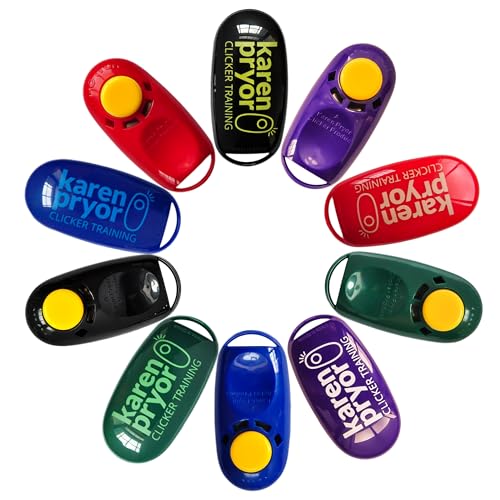
Karen Pryor is the person who brought clicker training to a wider audience, and her i-Click is a well-known, professionally designed clicker. It has a crisp, consistent click, a raised button and a design that is easy to press without looking.
A five-pack is very handy if you have several dogs, several trainers or a habit of losing clickers. It is also a good way to have one at home, one in the car and one in your walking coat.
It costs around £25 for the five-pack and averages 4.4 out of 5. The review count is small, but the product has a long-standing reputation in the training community.
What we like:
- Designed by the leader in clicker training
- Crisp, consistent click
- A pack of five
Worth knowing:
- More expensive than a single clicker
- Small number of ratings on this listing
Specifications:
- Type: i-Click clicker
- Pack: 5
- Brand: Karen Pryor Clicker Training
- Best for: trainers who want reliability

Company of Animals Multi-Clicker
Best for: a familiar UK brand with adjustable volume
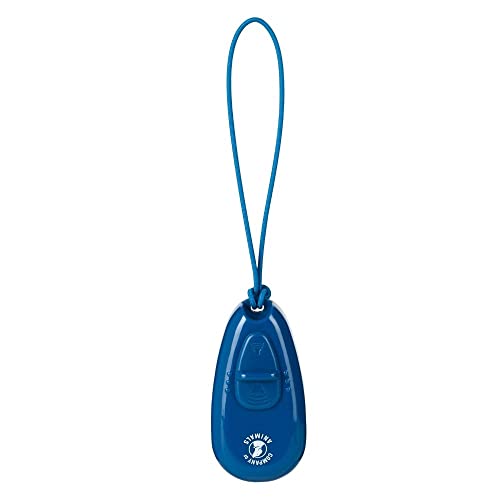
Company of Animals is the company behind the Clix range and is well known in UK dog training. Its Multi-Clicker offers adjustable volume, so you can switch between a loud click and a quiet one.
It is a simple, affordable, dependable clicker with a wrist strap and a comfortable body. If you have a dog that is sensitive to noise, the quiet setting is a useful feature.
It costs around £5 and averages 4.1 out of 5 across more than 1,500 ratings.
What we like:
- Adjustable volume
- Well-known UK brand
- Very low price
Worth knowing:
- Slightly lower average rating than the Coachi
- Basic design
Specifications:
- Type: multi-clicker
- Feature: loud and quiet click
- Includes: wrist strap
- Brand: Company of Animals
Diyife Dog Clicker (2 Pack, with Wrist Strap)
Best for: a very cheap two-pack with an outstanding record
If you just want a simple clicker without paying much, the Diyife two-pack is hard to beat. It has more than 16,000 ratings on Amazon UK, which is very unusual for a training accessory, and the average is a solid 4.4 out of 5.
The design is basic: a small plastic clicker with a metal tongue and a wrist strap. That is all a clicker needs to be, and the price of around £4 for two means you can keep one in every coat pocket.
It is a good option for beginners who are not sure they will keep clicker training, and for anyone who wants a spare.
What we like:
- Very low price for two
- Enormous number of positive ratings
- Simple and dependable
Worth knowing:
- Basic design with no volume control
- Plastic build
Specifications:
- Type: standard clicker
- Pack: 2
- Includes: wrist strap
- Brand: Diyife

Dog Training Clicker (8 Pack, Big Button, with Wrist Strap)
Best for: a large pack for classes, families and multi-dog homes
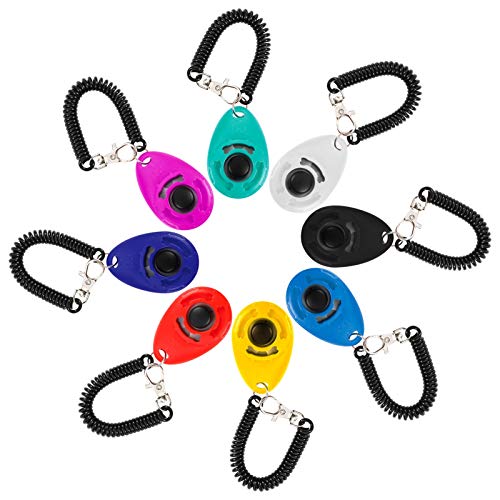
This eight-pack of big-button clickers is aimed at people who need several at once, such as a family where everyone wants to train the dog, a dog training class or a multi-dog household.
The big button is easy to press for children and for people with limited hand strength, and each clicker has its own wrist strap. The pack works out at very little per clicker.
It costs around £12 for the pack and averages 4.7 out of 5 across nearly 200 ratings.
What we like:
- Large, easy-to-press button
- Eight in a pack
- Very good ratings
Worth knowing:
- You may not need eight
- Basic build
Specifications:
- Type: standard clicker
- Pack: 8
- Includes: wrist straps
- Feature: big button
Buying Guide: How to Choose the Best Dog Clicker
What to Look For
Choose a clicker that gives a crisp, consistent click, with a button that is comfortable to press without looking. A wrist strap is essential, since it lets you drop the clicker to reach for a treat without losing it.
If your dog is noise-sensitive, look for a model with adjustable volume. A quieter click is less likely to startle a nervous dog, and a louder click helps in open or windy places.
Types of Dog Clicker Explained
A standard box clicker has a metal tongue in a small plastic case and is the simplest and cheapest kind. A button clicker, such as the i-Click, uses a raised button for a cleaner, more consistent sound. Multi-clickers add volume control. Some clickers are combined with a wrist coil, a whistle or a target stick.
Any of these works well. The best clicker is the one you find easy to use.
Matching the Clicker to Your Dog
A puppy or a nervous dog benefits from a softer click. A confident, distracted or outdoor dog needs a louder one. A dog that is scared of the click can often be helped by muffling the clicker in a pocket or a sock until they are comfortable.
If you want to train more than one dog or share the training with family, a multi-pack is a good idea.
How Much Should You Spend?
A basic clicker costs £3 to £6. A professional i-Click is around £5 each in a pack of five. A multi-pack of big-button clickers is around £12. You do not need to spend more.
Frequently asked questions
Do dog clickers really work?
Yes. Clicker training uses a well-established learning method. The click marks the exact moment of good behaviour, and the treat rewards it. Used consistently, it teaches new behaviours quickly and clearly.
Is a clicker better than just using my voice?
A clicker is more precise. The sound is short, sharp and always the same, so your dog knows exactly what earned the reward. Your voice varies in tone and takes longer to say, which makes it less accurate.
How do I start clicker training my dog?
Start by pairing the click with a treat. Click, then treat immediately, about ten times. Once your dog looks for a treat when they hear the click, begin clicking for simple behaviours such as looking at you or sitting.
My dog is scared of the click. What should I do?
Try a quieter clicker or muffle the sound in a pocket. Introduce it gradually, at a distance, with treats. If your dog remains worried, use a verbal marker such as a short word instead.
Do I need to use the clicker forever?
No. A clicker is mainly for teaching new behaviours. Once your dog knows a skill, you can phase it out and use verbal praise and occasional treats to maintain it.
Conclusion
For most owners, the Coachi Multi-Clicker is the best all-rounder, with volume settings, a comfortable button and a wrist strap at a low price. The Karen Pryor i-Click is a professional choice with a crisp click, and the Company of Animals Multi-Clicker is a solid UK-brand alternative.
If you want to spend as little as possible, the Diyife two-pack has thousands of happy customers, and the eight-pack of big-button clickers is ideal for families and classes. Whichever you choose, keep it handy and be consistent, and your dog will be learning faster in no time.
This roundup is part of our Dog Walking Gear: The Complete Guide.