Every dog owner eventually runs into the same small, unglamorous problem: what to do with a full poo bag between the garden and bin collection day. Leaving it in the wheelie bin for six days in August is nobody’s idea of a good time, and hanging it on the fence to deal with later is how gardens acquire a smell that never quite leaves.
A dedicated dog waste bin solves it, and there are more approaches than most owners realise — sealed outdoor bins, in-ground digesters that compost waste away entirely, twist-lock indoor pails and small clip-on carriers for the walk itself. Below are the best dog waste bins in the UK, with a buying guide covering capacity, odour control and what UK councils will and will not accept.
Quick Comparison Table
| Product | Best For | Price Range | Rating |
| Sealed Outdoor Waste Bin | Best all-rounder for gardens | £25-60 | ⭐⭐⭐⭐⭐ |
| In-Ground Waste Digester | Best for eliminating waste entirely | £40-90 | ⭐⭐⭐⭐⭐ |
| Indoor Silicone Waste Caddy | Best for flats | £12-£20 | ⭐⭐⭐⭐ |
| Wall-Mounted Garden Bin | Best for small yards and patios | £20-40 | ⭐⭐⭐⭐ |
| Clip-On Walk Carrier | Best for carrying bags on the walk | £8-18 | ⭐⭐⭐⭐ |
The Best Dog Waste Bins Reviewed
Sealed Outdoor Waste Bin
Best for: most households with a garden, and anyone tired of the smell at the back door.
A sealed outdoor bin is a purpose-made plastic or galvanised steel container with a gasketed lid, a foot pedal and usually a removable inner bucket. The gasket is what separates it from a plain bin: a proper rubber or foam seal around the rim contains odour far better than a lid that simply rests in place, and the pedal means you are not handling the lid with the same hand that has just picked up a bag.
The practical case is straightforward. It lives by the back door or beside the wheelie bins, takes a week’s worth of bags without complaint, keeps flies out and stops the smell reaching the house or the neighbours. Models with a removable liner bucket are much easier to empty, since you lift out the inner rather than trying to wrestle a bin liner from a fixed body, and a UV-stabilised body or galvanised steel will survive several British winters without going brittle or fading.
The things to check are seal quality and stability. A cheap gasket flattens within a season and then the bin is just a bin, so look for a replaceable seal, and be aware that a lightweight plastic bin blows over in an exposed garden unless it is weighted or fixed to a wall. Even the best sealed bin needs washing out regularly with a disinfectant, because odour eventually gets into the plastic itself. This is a containment solution rather than a disposal one — the bags still go in the general waste.
What we like:
- Proper gasket seal genuinely contains odour
- Foot pedal keeps hands off the lid
- Removable inner bucket makes emptying easy
- Holds a full week of bags without trouble
Worth knowing:
- Cheap gaskets flatten within a season
- Light plastic bodies blow over in exposed gardens
- Still needs regular washing out with disinfectant
Specifications:
- Material: UV-stabilised polypropylene or galvanised steel
- Typical capacity: 20-30 litres
- Features: gasket lid, foot pedal, removable inner bucket
- Suitable for: one to three dogs, garden or side-passage siting

- 12L / 2.64 UK GALLON CAPACITY: 24.9*24.9*41.1cm (L*W*H)Comfortably store enough dogs waste until trash day! 5-Liter waste bins are too small and require frequent emptying. PAWZIDEA Metal dog poop can is designed for outdoor use and offers superior durability compared to plastic bins. It resists aging, withstands high temperatures without deforming, and prevents odor leakage due to a securely fitting metal lid.
- ODOR CONTROL: Say goodbye to dog waste odors with PAWZIDEA outdoor poop trash can! It comes with a 19.8-cm replaceable carbon filter that traps any smell under the metal lid. And additional EVA gaskets seal better and control odor -20% more than others!
- OUTDOOR STANDBY: A protective UV-resistant & multi-layer paint coating was used. Weather-resistant, rust-resistant, rust-cracking, fade-resistant, heat-resistant and no-deformation. Engineered with upgraded construction to handle all weather conditions and built to withstand outdoor elements on patios, yards, and gardens.
- HANDS-FREE: Step-on dog waste trash can with soft-close foot pedal, uses a strong and durable foot pedal design, upgraded chrome-plated rustproof process.
- EASY TO USE: Removable inner bucket and carry handle ensure easy, convenient pet waste disposal, made of new odorless plastic, BPA-free, and more durable! Also for Cat Litter Disposal, bathroom, kitchen, etc. Conveniently use any standard trash bag.
In-Ground Waste Digester
Best for: gardens with suitable soil, and owners who want the waste gone rather than stored.
A digester is a perforated plastic chamber sunk into a hole in the garden, with a lid at ground level. Waste goes in along with water and a sachet of enzyme or bacterial starter, and it breaks down over weeks into a liquid that drains away into the surrounding soil. It is the same principle as a small septic tank, and it is the only common option that actually disposes of the waste rather than holding it until bin day.
For a household with two or three dogs the savings and the convenience add up quickly. There is no weekly bin bag, no ongoing smell at the back door and no plastic sacks going to landfill, and once it is installed the only maintenance is adding starter powder every week or two and topping up with water in dry spells. Owners in rural areas with infrequent collections, or on properties with plenty of garden, tend to rate them highly. Bags used with a digester must be flushable or fully compostable, or removed before the waste goes in.
The constraints are real and worth understanding before buying. Digesters need free-draining soil and a water table well below the chamber, so they work poorly in heavy clay and not at all in ground that waterlogs. Activity slows substantially in cold weather, so a unit that copes fine in September may back up in January. Installation means digging a hole around 60cm deep, and siting matters — well away from vegetable beds, water courses and children’s play areas. Check with your local authority if you are in a groundwater protection zone.
What we like:
- Disposes of waste rather than storing it
- No weekly bags going to landfill
- Very little ongoing maintenance once installed
- Cheap to run beyond the starter sachets
Worth knowing:
- Needs free-draining soil, not heavy clay
- Slows right down in cold weather
- Requires digging a hole and careful siting
Specifications:
- Material: perforated polypropylene chamber with ground-level lid
- Typical capacity: suits one to three medium dogs
- Installation: buried hole roughly 55-65cm deep
- Suitable for: gardens with well-draining soil and no waterlogging
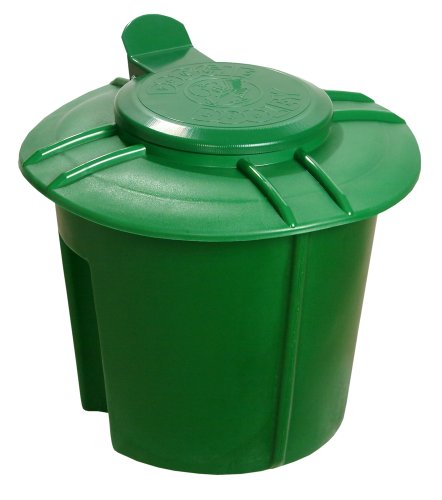
- Environmentally safe in-ground pet-waste disposal system
- For 1 large dog or 2 small dogs; works like a miniature septic tank
- Durable plastic construction; foot-operated lid opener; made in USA
- Includes Digester
- Measures 11-1/2 by 11-1/2 by 15-3/4 inches
Indoor Silicone Waste Caddy
Best for: flats, utility rooms and puppy-pad clean-up, where the waste has to stay indoors.
This is a small lidded, handled silicone container built for exactly the job an outdoor bin can’t do: holding waste indoors between bin days without the smell taking over a kitchen or utility room. The soft silicone body flexes for easy emptying and wipes clean in a sink, unlike a rigid plastic pail that holds odour in its seams.
It works equally well clipped to a wall, tucked under a sink, or standing next to a puppy pad station, and the carry handle means a full one can go straight out to the main bin without transferring the contents. For flats with no garden and nowhere for an outdoor bin, this is usually the practical answer.
It is a holding container, not an odour-sealing system on the scale of a dedicated outdoor bin — expect to empty it every day or two rather than leaving it to fill over a week, and the lid keeps smells down rather than eliminating them entirely.
What we like:
- Soft silicone wipes clean in seconds
- Small enough for a flat, utility room or under-sink space
- Carry handle for quick trips to the main bin
- Far cheaper than a rigid outdoor bin
Worth knowing:
- Needs emptying every day or two, not weekly
- Lid reduces odour rather than sealing it completely
- Not designed for outdoor/weatherproof use
Specifications:
- Capacity: small, suited to daily or twice-daily emptying
- Material: soft silicone with a lift-off lid
- Mounting: wall hook, freestanding or hanging
- Suitable for: flats, utility rooms, puppy pad stations
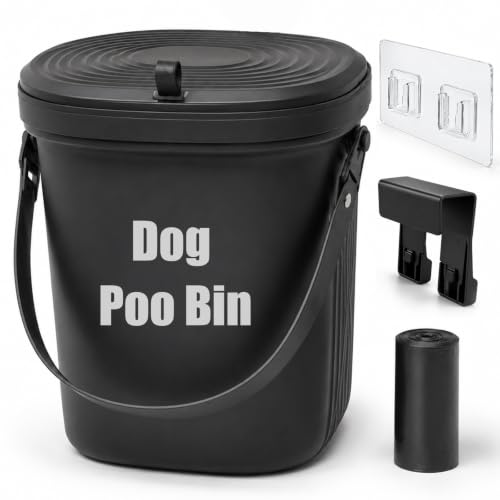
- 【Covered Waste】:Use this dog poo bin for garden clean-ups to keep sealed pet waste bags separate from patios, lawn edges and outdoor seating areas. The close-fitting lid helps cover daily mess between collection days, while the compact black bin can sit near a fence, enclosure or back door without taking up much space.
- 【Hanging Setup】:The clip-on hanging design lets you place the outdoor dog waste bin on a suitable fence, wall hook or smooth area with the supplied adhesive hook. Lift it off when you need to empty or rinse it, then hang it back for a tidy, space-saving garden waste station.
- 【Easy Clean】:The soft silicone body is designed for simple rinsing after everyday use, helping owners avoid lingering residue inside the container. Use a liner or dog poo bag first for easier disposal, then wipe the lid and edges regularly to keep the small bin with lid fresh.
- 【Portable Handle】:A built-in handle makes this rubbish bin outdoor friendly for quick garden rounds, yard checks or moving from the back door to the main household bin. The removable design is practical for dog owners, cat owners and pet sitters who clean up little and often.
- 【Multi Use】:Made for bagged dog waste, this small outdoor bin can also hold cat litter scoops, food waste bags or light garden rubbish where local disposal rules allow. Its lidded, hanging format keeps small messes organised in gardens, kitchens, yards and utility areas.
Wall-Mounted Garden Bin
Best for: courtyards, patios and small yards with no spare floor space.
A wall-mounted bin is a compact sealed container that screws to a fence post, a wall or the side of a shed, holding the waste off the ground at a comfortable height. In a small yard where a free-standing bin would be permanently in the way, or on a decked area where you do not want anything sitting on the boards, being able to put the bin on a vertical surface solves the problem entirely.
Mounting brings a few incidental benefits. Nothing can blow it over, foxes and cats cannot get into it, and it stays clear of standing water and leaf litter, so the base does not rot or stain the patio. Most designs are front-opening with a lift-out liner, so emptying does not mean unscrewing anything, and many include a built-in dispenser for fresh bags on the underside, which is genuinely useful right by the back door. Capacity is smaller than a floor-standing bin, typically ten to fifteen litres, which for one dog is still comfortably a week.
The considerations are mounting and capacity. It has to go on something solid — a rendered wall, a proper fence post or a shed frame — and fixing one to a flimsy panel fence will end badly once it is full. Renters should check what they are allowed to drill. The reduced capacity means a two or three dog household will be emptying it twice a week, and it is worth mounting it somewhere you will not brush past it, because at hip height a bin gets caught more often than one on the floor.
What we like:
- Takes up no floor space at all
- Cannot blow over or be raided by foxes
- Front-opening with a lift-out liner
- Many include a bag dispenser underneath
Worth knowing:
- Needs a solid wall or post to fix to
- Smaller capacity than a floor-standing bin
- Not ideal for renters who cannot drill
Specifications:
- Material: powder-coated steel or heavy-duty plastic
- Typical capacity: 10-15 litres
- Fixing: wall or post mounted, screws usually supplied
- Suitable for: courtyards, patios and single-dog households
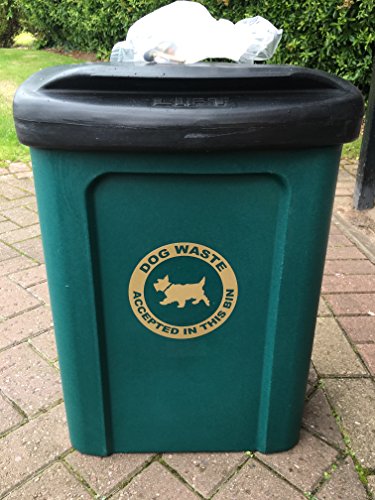
- Durable Plastic Construction
- Top Opening Hood
- Moulded Internal Plastic Liner
Clip-On Walk Carrier
Best for: the walk itself, and long routes with no bin until the very end.
This is the smallest category and arguably the most useful day to day: a rigid or semi-rigid pouch that clips to the lead or a belt loop and holds used bags in a sealed compartment until you reach a bin. Anyone who walks a route with no bins for two miles knows the alternative, which is carrying a swinging bag in one hand for forty minutes.
The good ones do the job properly. A hard-shell carrier with a hinged lid and a gasket contains odour completely, keeps the bag from touching your hand or your coat, and clips on and off the lead without fuss. Most take two or three standard bags, which covers a normal walk, and many include a roll dispenser in the same unit so fresh and used bags travel together. They wipe out easily and, being small and light, do not unbalance a lead the way a heavy pouch does.
The limitations are capacity and the sealing on cheaper models. Soft fabric carriers with a zip do very little for odour, and a hard-shell without a gasket is not much better once the sun is on it, so it is worth choosing carefully. Capacity is genuinely small, and multi-dog walks will fill one quickly. It also needs washing out often, and a carrier left in a warm car overnight with a full bag inside is a mistake nobody makes twice.
What we like:
- Keeps a used bag off your hands on long routes
- Hard-shell versions with a gasket seal properly
- Many include a fresh bag dispenser in the same unit
- Light enough not to unbalance the lead
Worth knowing:
- Soft zipped versions do little for odour
- Only holds two or three bags
- Needs washing out after most walks
Specifications:
- Material: ABS hard shell or coated fabric with gasket lid
- Typical capacity: 2-3 standard bags
- Attachment: lead clip, carabiner or belt loop
- Suitable for: long walks and routes with few public bins
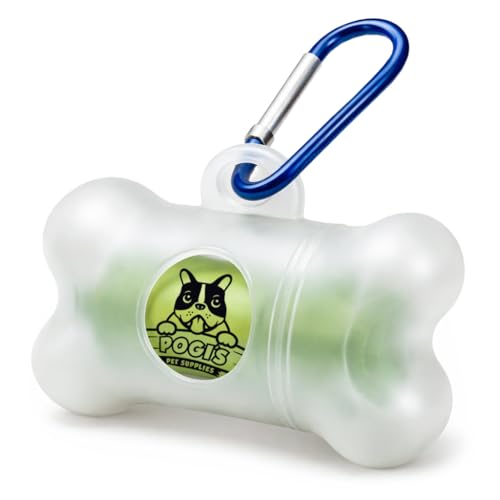
- Built Like a Tank, But Cuter – Tough, lightweight, and ready for daily walkies. Because style and function can absolutely co-exist.
- Clips On. Stays Put. – Features a sturdy metal carabiner that won’t bounce or break. Attaches securely to any lead, bag, or belt loop.
- One-Handed Wonder – Designed for quick pulls, even with an eager pup in tow. Fuss-free bag access when you need it most.
- Universal Fit – Works with all standard rolls of dog poo bags, scented or not. If it’s round, it’ll probably roll.
- Pogi-Approved Design – Sleek, compact, and colour-matched to your daily routine. It’s the holder that actually holds up.
Budget Pedal Bin with Liner
Best for: keeping costs down, and testing whether a dedicated bin is worth it.
Before spending £50, it is worth saying that a plain 20-litre outdoor pedal bin with a well-fitting lid and a supply of tie-handle liners does most of the job for under £20. There is no gasket and no clever mechanism, but a lid that fits closely, kept in a shaded spot and emptied weekly, is a substantial improvement on a bag hanging off the fence.
It also makes sense as a trial. Owners are often unsure whether the problem is bad enough to justify a purpose-made bin, and a cheap pedal bin answers that within a fortnight for very little money. It has the advantage of being useful for something else if it turns out you do not need it, which a buried digester emphatically does not. Double-bagging and a scoop of bicarbonate of soda in the base closes much of the gap to a sealed bin.
The gap that remains is odour and durability. Without a gasket, warm weather will get the better of it within a day or two, flies find their way in around the lid, and thin plastic goes brittle and cracks after a winter or two outdoors. The pedal linkage is usually the first thing to break. Treated as a stopgap or a second bin at the far end of the garden, it is perfectly reasonable value.
What we like:
- A fraction of the price of a sealed bin
- Answers the question before you spend more
- Still useful for something else if you upgrade
- Liners and bicarbonate close much of the gap
Worth knowing:
- No gasket, so odour escapes in warm weather
- Flies get in around the lid
- Thin plastic cracks after a winter or two
Specifications:
- Material: standard polypropylene bin body
- Typical capacity: 20-25 litres
- Features: pedal lid, standard tie-handle liners
- Suitable for: trial use, second bins and mild weather
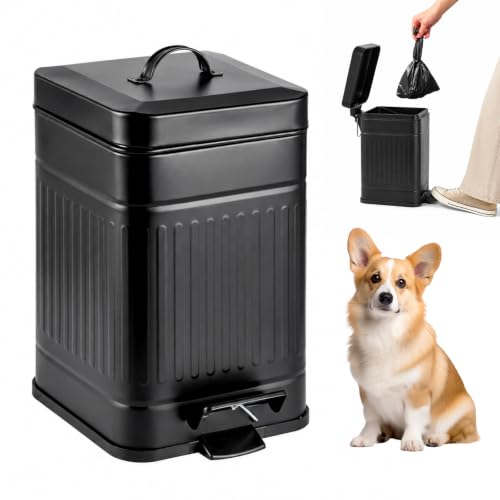
- 【Dedicated Pet Waste Disposal Solution】 Keep your outdoor space clean and organised with this pet waste bin designed for dog poop, garden waste, fallen leaves and general household rubbish. A practical outdoor trash can solution for pet owners, gardeners and families who need convenient waste management.
- 【Durable Metal Construction】 Made from sturdy iron material, this outdoor garbage bin is built to withstand daily use and changing weather conditions including sunlight and rain. The strong structure provides reliable durability for gardens, patios, yards, garages and indoor spaces.
- 【Hands-Free Foot Pedal Design】 Featuring a convenient step-on pedal mechanism, this dog waste bin allows you to open the lid without touching the surface. Simply press the pedal to open and release to close, helping maintain hygiene and making waste disposal quick and effortless.
- 【Removable Inner Bucket with Handle】 Equipped with a removable inner liner bucket and practical carrying handle, this trash can makes emptying and cleaning easier. The detachable design allows quick waste removal while keeping the outer bin neat and protected.
- 【Versatile Indoor & Outdoor Waste Bin】 With its large capacity and compact stylish design, this metal trash can is suitable for multiple environments including gardens, yards, kitchens, garages and utility areas. Ideal for pet waste, garden debris and everyday household rubbish storage.
Dog Waste Bin Buying Guide
What to look for when buying a dog waste bin
The seal is what you are really paying for. A proper rubber or foam gasket around the lid is the difference between a bin that contains odour through a warm week and one that does not, and it is worth checking whether the seal is replaceable, since gaskets flatten and perish long before the bin itself fails. Twist-lock mechanisms seal better still, at the cost of ongoing refill purchases. A lid that simply rests on the rim, however heavy, will not hold odour in July.
After that, think about capacity, emptying and siting. Work on roughly one to two litres of bin space per dog per week and size up from there, because a bin emptied under protest every three days quickly stops being used. A removable inner bucket makes emptying far less unpleasant than a fixed body. For outdoor bins, look for UV-stabilised plastic or galvanised steel, a base heavy or wide enough not to blow over, and a pedal or hands-free opening, since you will usually have a full bag in one hand.
Dog waste bin types explained
Containment bins — sealed outdoor bins, wall-mounted units and twist-lock pails — hold the waste until your normal collection. They are simple, need no installation and suit almost any home, and they differ mainly in where they can be sited and how well they seal. Twist-lock pails are the only ones genuinely suitable for indoor use, which makes them the flat-dweller’s answer.
Digesters are a different proposition, breaking waste down in the ground rather than storing it, and they are the only option that removes the waste stream entirely. They demand suitable soil, a fair amount of garden and a spade, and they slow down in winter. Walk carriers are a separate category again, solving the transport problem rather than the storage one, and most owners end up with a carrier plus one of the storage types rather than choosing between them.
Where to put a dog waste bin
Siting decides whether a bin gets used. Somewhere on the direct route between where the dog goes and where you go afterwards is the only placement that survives contact with a rainy Tuesday evening, which usually means beside the back door, at the corner of the patio or next to the existing wheelie bins. A bin at the bottom of the garden is a bin that stays empty while bags accumulate on the step.
Shade matters more than owners expect, since heat is what drives odour out past any seal, so the north side of a wall or shed is a better spot than a sunny patio corner. Keep it away from open windows, seating areas and the neighbours’ boundary, and off bare soil where the base will stain and sit damp. Digesters need their own logic: well away from vegetable beds, ponds, ditches and land drains, and at least a couple of metres from any building foundation.
What UK councils accept
Rules differ by authority, so it is worth a two-minute check of your own council’s website, but the general picture across the UK is consistent. Bagged dog waste is accepted in the general waste bin, not the food waste or garden waste bins, and never in kerbside recycling. It must be bagged and tied rather than loose. Many councils also allow bagged dog waste in any public litter bin, not only the red dog bins, though a minority still ask that you use dog waste bins specifically.
Compostable and biodegradable bags are widely sold but are not accepted in council food or garden waste streams, since those go to facilities not designed for pet waste, and in a general waste bin they end up in the same place as an ordinary bag. Home composting of dog waste is possible in a dedicated composter but the resulting material should never go near anything edible. Failing to pick up remains an offence under the Public Spaces Protection Order regime, with fixed penalties typically between £50 and £100 depending on the authority.
How much should you spend?
A basic outdoor pedal bin with liners costs under £20 and is a reasonable stopgap. A clip-on walk carrier is £8 to £18 and is worth owning whatever else you buy, since it solves a different problem. Wall-mounted garden bins run £20 to £40 and twist-lock indoor pails £20 to £45 before refills.
A good sealed outdoor bin with a replaceable gasket, a pedal and a removable inner bucket costs £25 to £60 and is the right choice for most households with a garden. In-ground digesters are £40 to £90 plus a few pounds a month in starter powder, and for a multi-dog household with the right soil they pay for themselves in bin bags and inconvenience within a year or two. Factor in around £30 to £60 a year for twist-lock refills if you go that route.
Frequently asked questions
Can you put dog poo in a normal wheelie bin?
In almost all UK council areas, yes, provided it is bagged and tied and goes into the general waste bin rather than food waste, garden waste or recycling. A handful of authorities have their own variations, so it is worth a quick check of your own council’s website. Never put dog waste in a food or garden waste caddy, as it contaminates the whole load.
Do dog waste bins really stop the smell?
A bin with a proper gasket seal makes a substantial difference, and a twist-lock pail that individually wraps each bag is better still. Neither is completely odourless in high summer, particularly once odour has soaked into the plastic itself. Siting the bin in shade, emptying weekly, washing it out with a disinfectant every few weeks and adding bicarbonate of soda or a charcoal filter all help considerably.
How does an in-ground dog waste digester work?
A perforated chamber is buried in the garden with its lid at ground level. Waste goes in with water and a weekly sachet of enzyme or bacterial starter, which breaks it down into a liquid that soaks away into the surrounding soil. They need free-draining ground, a low water table and careful siting away from vegetable beds and water courses, and they work much more slowly in cold weather.
Are biodegradable poo bags worth buying?
They are better in the sense that they are made from plant-based material rather than crude oil, but the practical benefit is limited because most end up in general waste going to landfill or incineration, where a compostable bag behaves much like an ordinary one. They are genuinely useful with an in-ground digester, which needs the bag to break down. Look for the EN 13432 certification rather than the vague word biodegradable, and be aware that compostable bags have a shelf life and can degrade in the roll.
How often should you empty a dog waste bin?
Weekly is the sensible default for a sealed outdoor bin with one or two dogs, timed to your general waste collection. In hot weather, or with three or more dogs, twice a week is better. Twist-lock pails can usually go one to two weeks because each bag is individually sealed. Whatever the type, rinse the inner bucket with a pet-safe disinfectant every few weeks, since odour eventually permeates the plastic.
Can I compost dog waste at home?
It is possible in a dedicated composter or digester, but the material produced must never be used on vegetables, herbs or anything else edible, because dog waste can carry parasites that survive normal composting temperatures. Keep any dog waste composter entirely separate from your garden compost, site it well away from vegetable beds and water courses, and wear gloves when handling it. For most households an in-ground digester is a simpler and safer approach.
Conclusion
For most households with a garden, a sealed outdoor bin at around £25 to £60 is the right answer. A proper replaceable gasket, a foot pedal and a removable inner bucket cover the three things that actually matter — odour, hands-free opening and easy emptying — and one bin comfortably takes a week of bags for two dogs.
If you have well-draining soil, a spade and more than one dog, an in-ground digester at £40 to £90 is the better long-term buy, because it removes the waste entirely rather than storing it until Thursday. Choose a twist-lock pail instead if you are in a flat with no outdoor space, and add a clip-on walk carrier whichever you pick.
This roundup is part of our Dog Walking Gear: The Complete Guide.