Walking a dog that pulls is exhausting and, for a large or strong dog, sometimes unsafe. A head collar is one of the most effective tools for dogs that pull, because it steers the head rather than fighting the whole body. Where the head goes, the body follows, so a gentle guide is enough to turn a determined dog away from a distraction.
Head collars are not for every dog, and they need careful fitting and gradual introduction. Used properly, they are a humane and effective training tool, and many owners find they transform walks. We have compared five head collars currently available at Amazon UK, from the classic Halti to the Gentle Leader and a premium UK-made design, with a full guide to fitting and use.
Quick Comparison Table
Product | Best For | Price Range | Rating |
Halti Optifit Headcollar (Large) | Padded fit for everyday walks | £13-£16 | 4.0/5 |
Halti Original Headcollar (Size 3) | Budget introduction | £12-£14 | 4.3/5 |
PetSafe Gentle Leader Headcollar | Strong, determined pullers | £15-£18 | 4.3/5 |
Big Dog Styles UK-Made Head Collar | Premium comfort, large breeds | £36-£40 | 4.7/5 |
Company of Animals Canny Collar | Dogs who dislike nose straps | £18-£21 | 4.2/5 |
Individual Product Reviews
Halti Optifit Headcollar (Large)
Best for: a padded fit for everyday walks
The Halti Optifit is a modern head collar with an adjustable sliding system, which makes it much easier to fit than the classic fixed-loop design. The padded nose band is designed to sit comfortably on the nose without rubbing, and a safety link clips to the collar for security.
A head collar steers the dog by the head rather than the chest, so a gentle guide is enough to turn a strong dog away from a distraction. When it is fitted well and introduced gradually, it is one of the most effective tools for a dog that pulls.
This large size costs around £14 and averages 4.0 out of 5 across more than 11,000 ratings. As with all head collars, take time to introduce it, and never use it with a long line or a flexi-lead.
What we like:
- Adjustable, easy-to-fit design
- Padded nose band
- Safety link for security
Worth knowing:
- Needs careful fitting and gradual introduction
- Lower average than the original Halti
Specifications:
- Type: adjustable head collar
- Size shown: Large
- Feature: padded nose band and safety link
- Brand: Halti
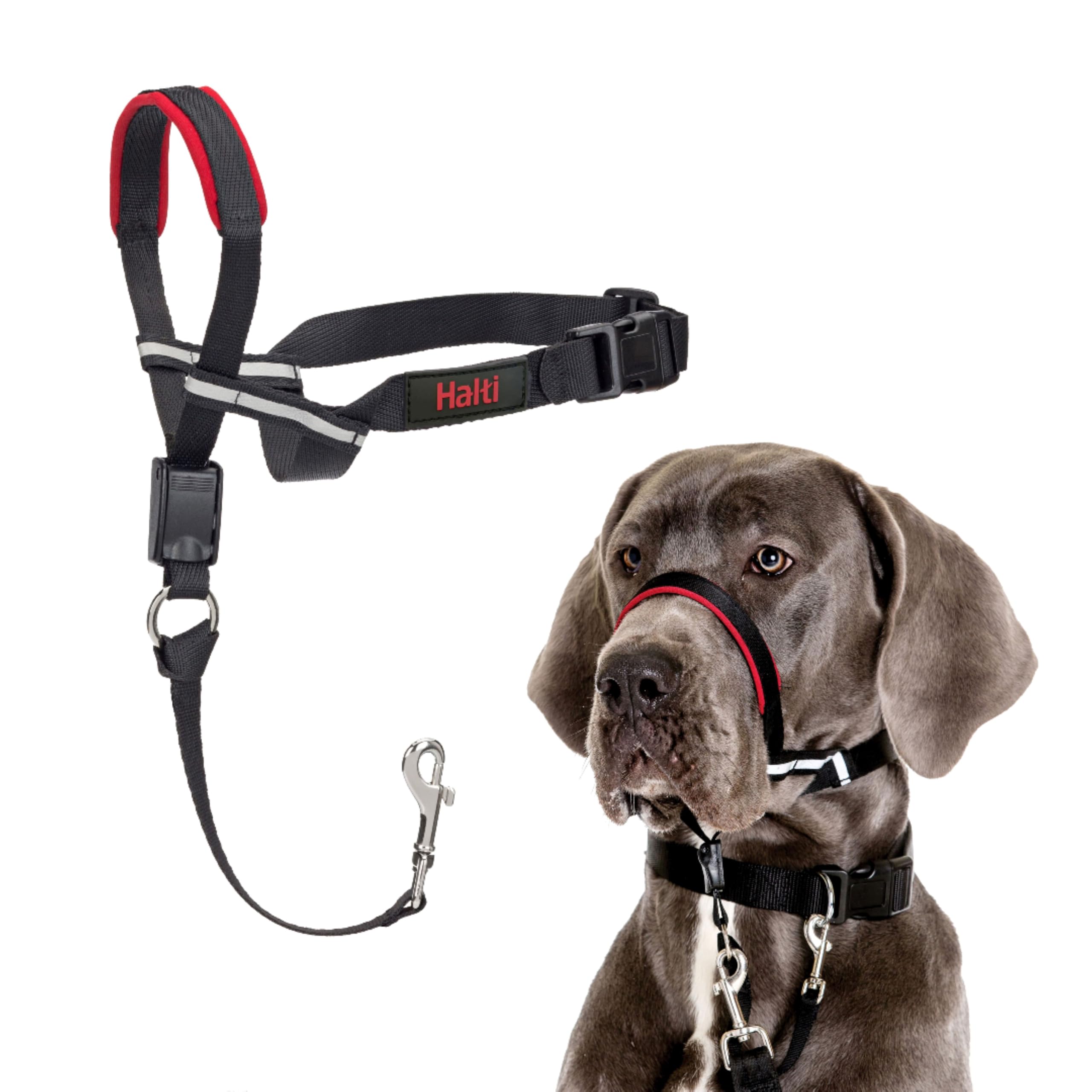

Halti Headcollar (Original, Size 3)
Best for: a budget introduction to head collar walking
The original Halti is the head collar that started it all. It has a simple fixed-loop design, made from lightweight nylon, and it is available in a wide range of sizes from 0 to 5. It is cheap, effective and used by trainers and owners all over the UK.
The nose loop applies gentle pressure to guide the dog’s head, and the neck strap sits high on the neck. Because it is light, most dogs tolerate it well once they have got used to it.
It costs around £13 and has an outstanding record, averaging 4.3 out of 5 across more than 42,000 ratings. It is a very sound first head collar.
What we like:
- Very well proven design
- Low price
- Wide size range
Worth knowing:
- Fixed sizing needs measuring carefully
- Can rub on some dogs without padding
Specifications:
- Type: fixed-loop head collar
- Size shown: 3
- Material: lightweight nylon
- Brand: Halti

PetSafe Gentle Leader Headcollar
Best for: strong, determined pullers
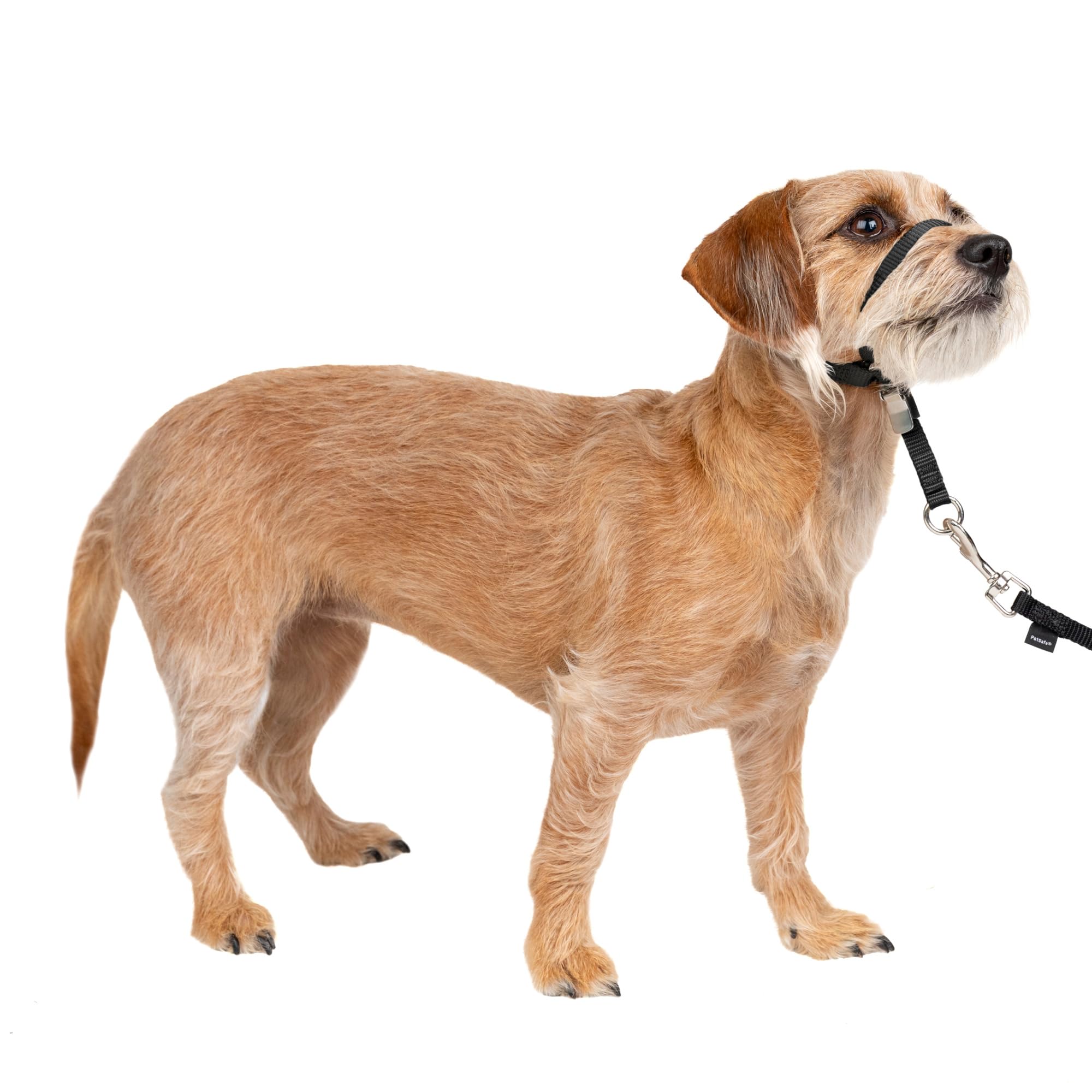
The Gentle Leader is the head collar most vets and trainers in the UK and US recommend. It has a high neck strap that sits behind the ears and a nose loop that sits low on the muzzle, which means it is harder for a determined dog to slip out of.
Its quick-snap buckle makes it easy to put on and take off, and there is a detailed fitting guide in the box. A well-fitted Gentle Leader gives excellent control over a strong dog, and many owners see an immediate improvement.
It costs around £16 and has an impressive record, averaging 4.3 out of 5 across almost 65,000 ratings.
What we like:
- Very secure fit
- Quick-snap buckle
- Huge base of positive reviews
Worth knowing:
- Takes time to fit properly
- Some dogs dislike the nose loop at first
Specifications:
- Type: head collar
- Feature: high neck strap and quick-snap buckle
- Fit: adjustable
- Brand: PetSafe
Big Dog Styles UK-Made Head Collar (Neoprene-Lined)
Best for: premium comfort and good eye clearance for large breeds
This UK-made head collar is handmade from strong, cushioned 20mm webbing, and it is lined with wetsuit-quality neoprene for comfort. The design helps prevent chafing, and it does not ride up into the dog’s eyes.
It is a good choice for large and giant breeds, which need a strong head collar, and for dogs that have rubbed on cheaper nylon versions. It has a fully adjustable neck strap and an extra safety strap that connects to the collar.
It costs around £38 and averages 4.7 out of 5 across almost 1,000 ratings, which is a very good record for a premium product.
What we like:
- Neoprene-lined for comfort
- UK made and strong
- Extra safety strap
Worth knowing:
- Priced above the mainstream options
- Sizes need careful checking
Specifications:
- Type: neoprene-lined head collar
- Made: UK
- Feature: extra safety strap
- Brand: Big Dog Styles

Company of Animals Canny Collar (Size 2)
Best for: dogs who dislike anything across the nose
The Canny Collar is a different take on the head collar. Instead of a loop over the nose, it uses a strap around the back of the head and a fastening under the chin, so nothing sits across the muzzle. It suits dogs that dislike having a strap on their nose.
It can be converted into a normal collar as your dog improves, which is handy. It gives good control and lets the dog pant, drink and eat while wearing it.
It costs around £19 and averages 4.2 out of 5 across more than 6,000 ratings.
What we like:
- No strap over the nose
- Converts to a normal collar
- Well reviewed
Worth knowing:
- Less immediate steering than a nose loop
- Takes some practice to fit
Specifications:
- Type: back-of-neck head collar
- Size shown: 2
- Feature: no nose loop
- Brand: Company of Animals

Buying Guide: How to Choose the Best Head Collar
What to Look For
The most important feature is a good fit. A head collar should sit high on the neck, just behind the ears, and the nose loop should sit low enough on the muzzle not to touch the eyes. Look for a design with plenty of adjustment, a padded nose band if your dog has a short coat, and a safety link that attaches to the collar.
Check the quality of the buckles and stitching, and look for a brand with clear fitting instructions. A head collar that is badly fitted will rub, slip or ride up, and it can put a dog off wearing one.
Head Collar Types Explained
Nose-loop head collars, such as the Halti and Gentle Leader, steer the dog by the muzzle and give the most control. Back-of-neck designs, such as the Canny Collar, avoid the nose strap and suit dogs that dislike it. Padded and neoprene-lined designs add comfort for long walks.
Size and Fit Guide
Measure around the muzzle, just below the eyes, and around the neck, and match the measurements to the manufacturer’s chart. Sizes differ between brands, so do not assume a size 3 from one brand will match a size 3 from another.
When fitted, you should be able to slide two fingers under the neck strap, and the nose loop should not slide down the muzzle towards the nose. Take your time and ask a trainer or pet shop for help if you are unsure.
How Much Should You Spend?
£12-£20 buys an excellent head collar from a mainstream brand. £35 and above buys a premium, UK-made neoprene-lined design, which suits large breeds and dogs that need extra comfort.
Frequently asked questions
Are head collars cruel?
Not when they are fitted and used properly. A head collar gives gentle guidance and does not choke or hurt the dog. However, a dog can hurt its neck if it hits the end of a long line at speed, so never use a head collar with a flexi-lead or a long line, and introduce it gradually.
How do I get my dog used to a head collar?
Introduce it in short, positive sessions. Let your dog sniff it, feed a treat through the nose loop, and then fasten it for a few seconds at a time, building up slowly. Only take it on a walk when your dog is comfortable wearing it.
Is a head collar better than a no-pull harness?
It depends on the dog. A head collar gives more control over a strong dog that pulls, but some dogs never accept it. A no-pull harness is often easier to introduce. Many owners try one and switch if it does not suit.
Can I attach the lead only to the head collar?
Most trainers recommend attaching the lead to both the head collar and a regular collar or harness with a double-ended lead, so that if the head collar comes off, the dog is still secure.
Will a head collar stop pulling completely?
It makes pulling much harder, but it does not teach a dog to walk on a loose lead on its own. Combine it with rewards and consistent training, and aim to phase it out as your dog improves.
Conclusion
The PetSafe Gentle Leader is our top pick for strong, determined pullers, thanks to its secure fit and enormous record of positive reviews. The Halti Original is a cheap and effective first head collar, and the Halti Optifit adds padding and easier adjustment.
For large breeds and dogs that have rubbed on standard head collars, the neoprene-lined Big Dog Styles design is worth the extra, and the Canny Collar is a good alternative for dogs that hate a strap on the nose.
Whichever you choose, take time to fit it, introduce it gently and never use it with a long line.
This roundup is part of our Dog Walking Gear: The Complete Guide and How to Choose a Dog Harness.