A puppy’s first British winter comes as a shock. Small bodies lose heat fast, coats are still coming through, and a fine, short-haired puppy can go from bouncy to shivering in a few minutes on a wet morning. The right coat helps a puppy enjoy their early walks, keeps them clean and dry and makes it easier to get them out of the door.
Choosing a coat for a puppy is not quite the same as choosing for an adult dog. Puppies grow fast, so you want something affordable and adjustable. They dislike heavy or fiddly clothing, so you want something soft and easy to put on. We have compared six puppy coats currently available at Amazon UK, from budget waterproofs to a premium insulated coat, with sizing guidance to help you pick the right one.
Quick Comparison Table
Product | Best For | Price Range | Rating |
Ancol Muddy Paws Stormguard (Black) | Budget first coat | £13-£16 | 4.5/5 |
Ancol Muddy Paws Stormguard (Hi-Vis) | Visibility on dark walks | £11-£14 | 4.5/5 |
Equafleece Dog Jumper (Small) | Dry-cold days, post-walk drying | £24-£27 | 4.3/5 |
Hurtta Extreme Warmer (Size M) | Severe winter conditions | £63-£68 | 4.8/5 |
Rosewood x Joules Quilted Coat | Lightweight, stylish warmth | £12-£14 | 4.4/5 |
HugglePets Legacy Quilted Coat | Adjustable, heritage style | £27-£30 | 4.6/5 |
Our Top Puppy Coat Picks for 2026
Ancol Muddy Paws Stormguard Puppy Coat (Black)
Best for: budget-conscious first-time buyers who want functional protection
Ancol’s Muddy Paws Stormguard is one of the best-known budget coats in the UK, and the puppy sizes make it a sensible first coat. It is a waterproof jacket with a soft fleece lining, fastened with Velcro, and it covers the back and part of the chest to keep the worst of the weather off a small puppy.
The waterproof outer is what makes it useful for early walks in the rain, and the fleece lining adds a little warmth without bulk. Because puppies grow fast, a low price matters, and this is one of the coats that is cheap enough to replace when your puppy shoots up in size.
It has an impressive record on Amazon UK, with an average of 4.5 out of 5 across almost 12,000 ratings, which is good evidence that it survives real puppy life. Check the size range carefully, since Ancol measures by back length in centimetres.
What we like:
- Waterproof with a soft fleece lining
- Excellent review record
- Cheap enough to replace as your puppy grows
Worth knowing:
- Basic cut, with less belly coverage than premium coats
- Sizing is by back length, so measure carefully
Specifications:
- Type: waterproof puppy coat
- Lining: fleece
- Fastening: Velcro
- Brand: Ancol


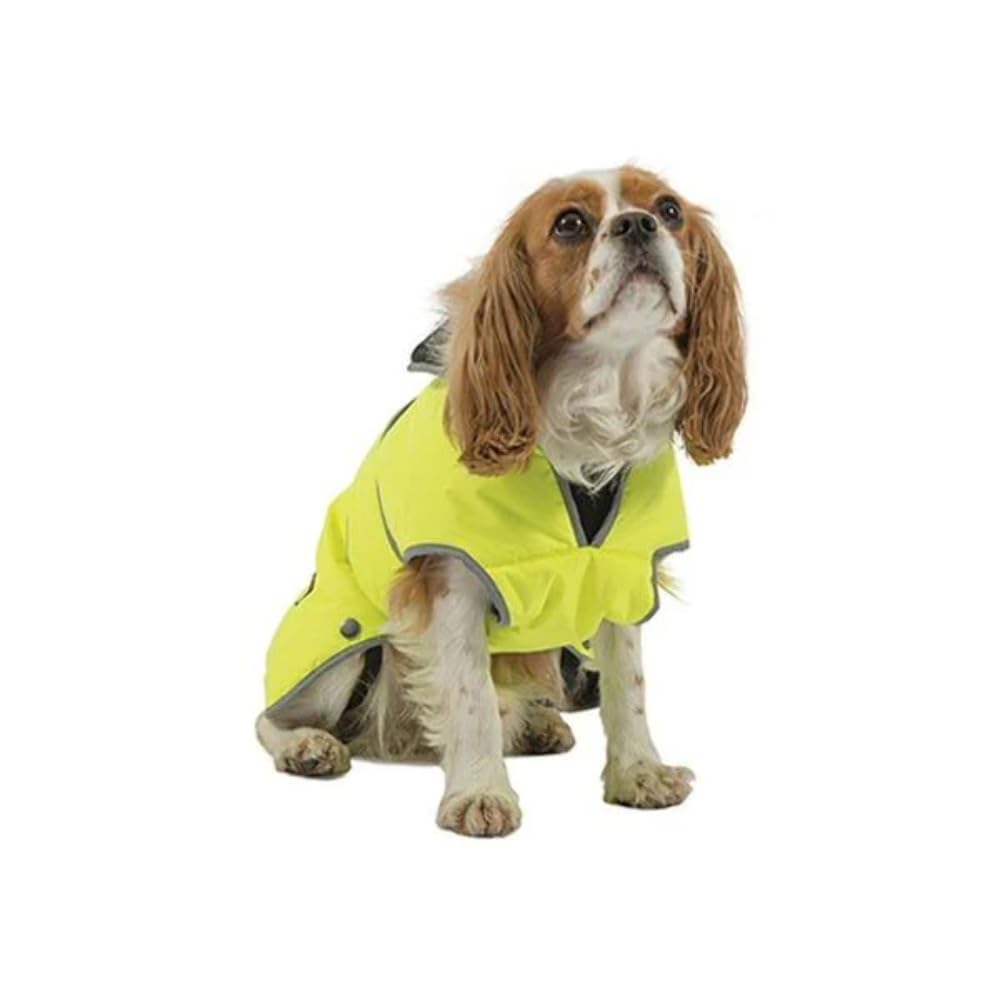
Ancol Muddy Paws Stormguard Puppy Coat (Hi-Vis)
Best for: first coats for puppies where visibility matters
The hi-vis version of the Stormguard adds a bright, fluorescent finish to the same waterproof design. Puppies that are learning to walk off the lead in dim light, or a puppy being introduced to a road-side walk in winter, are much easier to spot in a coat like this.
It has the same features as the standard coat: a waterproof outer, a fleece lining and Velcro fastening, so it is still a light, easy jacket. The bright colour also helps you keep track of a small puppy in long grass or on a muddy field.
Reflective and hi-vis clothing is not a substitute for supervision, and a puppy should still be on a lead near traffic, but it is a cheap and sensible extra layer of safety.
What we like:
- Bright hi-vis finish
- Waterproof and fleece-lined
- Very low price
Worth knowing:
- Fluorescent colour fades over time
- Check sizes as puppies grow quickly
Specifications:
- Type: hi-vis waterproof puppy coat
- Lining: fleece
- Colour: hi-vis
- Brand: Ancol
Equafleece Dog Jumper (Small)
Best for: warmth on dry, cold days and post-walk drying
A fleece jumper is a kinder first layer for a puppy than a stiff waterproof coat, because it is soft, stretchy and free of fastenings. Equafleece jumpers are made in the UK, and they pull on over the head with no zips or Velcro, which makes them very comfortable for a puppy that is still learning to accept clothes.
On a dry, cold day, a fleece is often all a small or short-haired puppy needs. After a wet walk it doubles as a drying layer, since fleece dries much faster than most fabrics. It works well in a cold house too.
It costs a little more than the Ancol coat, but its record is very good, with an average of 4.3 out of 5 across nearly 1,600 ratings. It is not waterproof, so for downpours it goes under a coat.
What we like:
- Soft, stretchy pull-on design
- Dries quickly after wet walks
- Made in the UK
Worth knowing:
- Not waterproof
- Puppies outgrow it fast
Specifications:
- Type: fleece pull-on jumper
- Size shown: Small
- Closure: none
- Brand: Equafleece (Hotterdog)

Hurtta Extreme Warmer (Size M)
Best for: small or short-haired breeds facing severe winter conditions
Hurtta is a Finnish brand that makes clothing for dogs that live in properly cold conditions, and the Extreme Warmer is its insulated winter coat. It has an insulated, windproof outer and extra coverage over the belly, which makes it the warmest coat here by a long way.
For a young puppy it is a specialist buy. Most puppies do not need this much insulation, but a small, short-coated puppy going through a hard winter, or a whippet or greyhound puppy, may well do. The coat is designed to stay in place, so it does not slip or ride up during play.
This listing is the Size 9 medium at around £66, so check the size chart carefully. It is the premium option in this list and the record on Amazon is excellent, with 4.8 out of 5 across more than 120 ratings.
What we like:
- Insulated, windproof and warm
- Extra belly coverage
- Excellent reviews
Worth knowing:
- Premium price for a growing puppy
- Sizing needs careful checking against the chart
Specifications:
- Type: insulated winter coat
- Model: Extreme Warmer
- Feature: windproof outer
- Brand: Hurtta

Rosewood x Joules Khaki Quilted Coat for Dogs
Best for: style-conscious owners who want a lightweight quilted coat
The Joules coat is a lightweight, quilted jacket that gives a puppy a smart, country look and enough warmth for a cold morning. It is washable, easy to put on and a good fit for owners who like a coat that looks good as well as working well.
Quilted coats add warmth without weight, so they are comfortable for puppies that dislike heavy clothing. It is not designed to be fully waterproof, so it suits dry, cold days rather than heavy rain.
It costs around £13 and has a very solid record, with an average of 4.4 out of 5 across more than 560 ratings. It is a lower-cost, stylish alternative to the pricier Barbour-style quilted coats.
What we like:
- Lightweight quilted warmth
- Washable
- Great price for a branded coat
Worth knowing:
- Not fully waterproof
- Check sizing carefully
Specifications:
- Type: quilted dog coat
- Colour: khaki
- Care: washable
- Brand: Rosewood x Joules
HugglePets Legacy Quilted Dog Coat
Best for: heritage-style quality with an adjustable fit
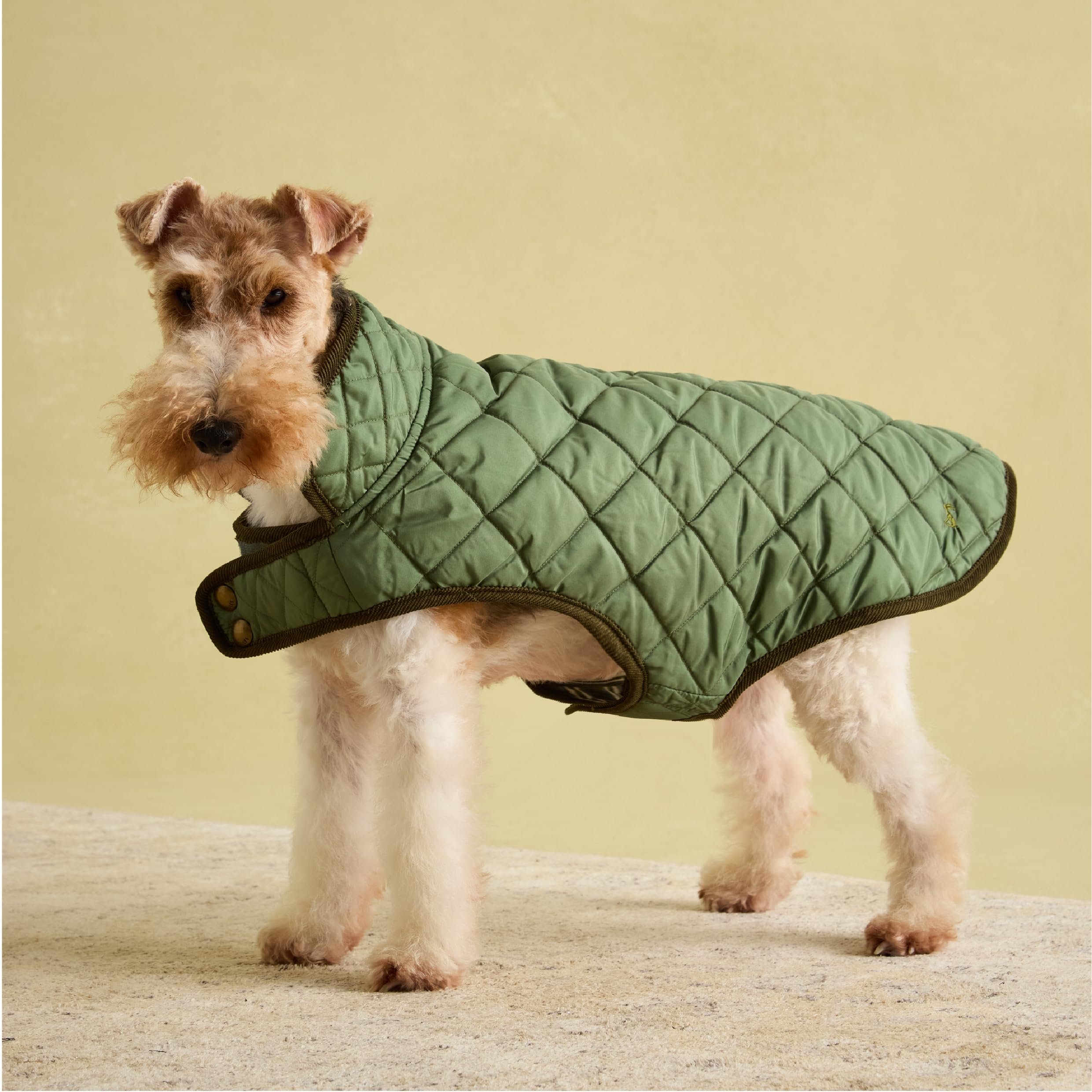
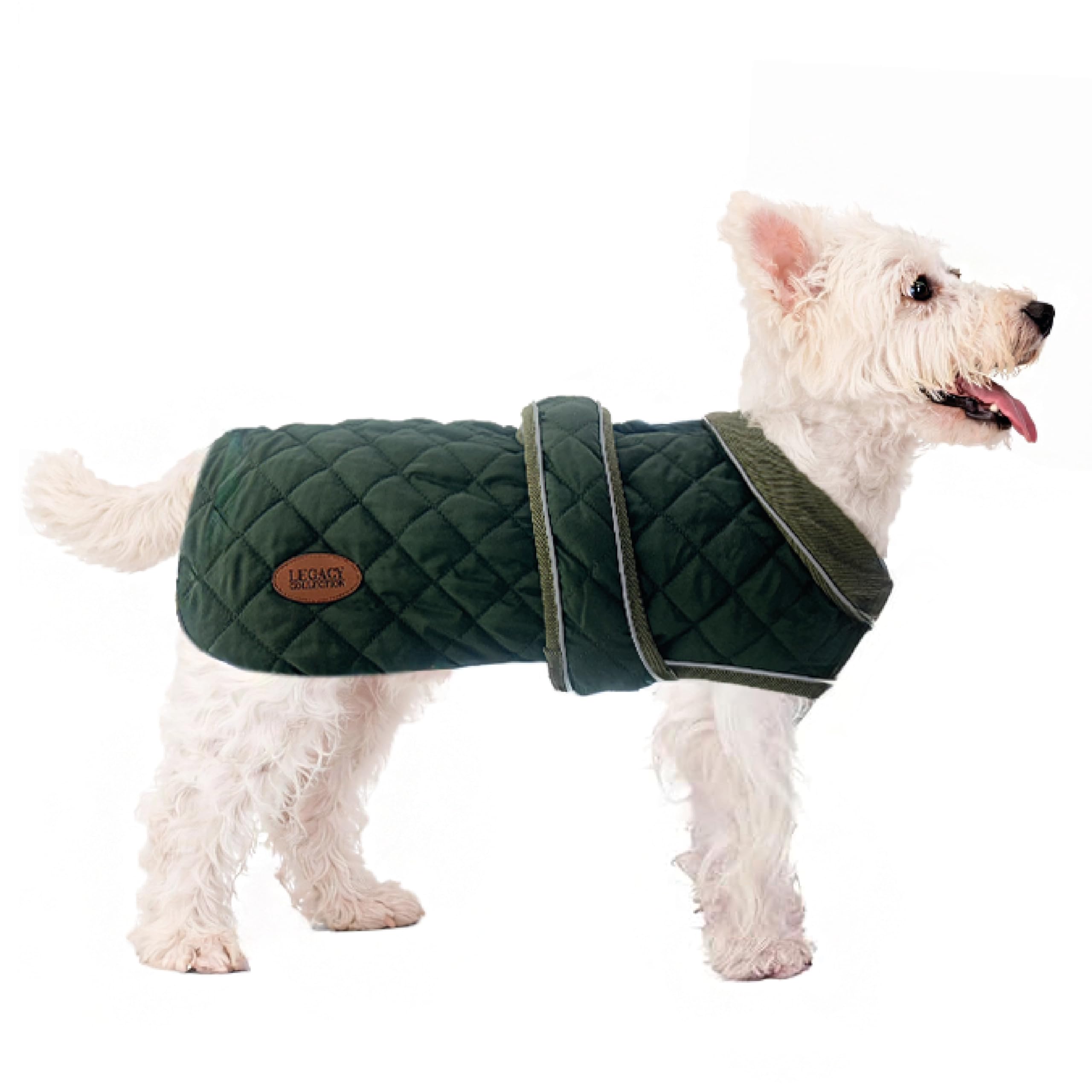
HugglePets’ Legacy quilted coat is a stylish khaki quilted design with an adjustable belly strap and a zipped fastening, which helps it stay in place on a wriggly puppy. It looks smart and feels well made for the price.
The adjustable belly strap makes it easier to get a comfortable fit on a growing puppy, and the quilting keeps the body warm on cold days. As with other quilted coats, treat it as a cold and dry-weather layer.
It costs around £29 and averages 4.6 out of 5, though on a smaller pool of ratings than the market leaders. It is a good choice if you want a smarter coat that will last through the first year.
What we like:
- Adjustable belly strap
- Smart quilted look
- Good reviews
Worth knowing:
- Fewer ratings so far
- Not fully waterproof
Specifications:
- Type: quilted dog coat
- Colour: khaki green
- Feature: adjustable belly strap
- Brand: HugglePets
Buying Guide: How to Choose a Puppy Coat
What to Look For in a Puppy Coat
Look for a coat that is light, soft and easy to fit. A puppy that has never worn clothing will notice heavy fabric, tight collars and noisy Velcro. A wide, soft neck opening and a snug but not tight belly strap make a first coat much easier to accept.
Check that the coat covers the back and chest and, if possible, part of the belly. A gap for a harness or lead attachment is useful, and reflective trim adds safety on dark mornings and evenings.
Waterproof or Fleece: Which Does Your Puppy Need?
A waterproof coat keeps rain and mud off the puppy and is easy to wipe clean. A fleece jumper is warmer on dry, cold days and dries fast after a wet walk. Many owners end up with one of each: a fleece for the house and dry walks, and a waterproof for rain.
Very small, short-haired or slim puppies feel the cold most and may benefit from an insulated coat with belly coverage. Thick-coated breeds often need nothing more than a waterproof for heavy rain.
Puppy Coat Size Guide
Measure your puppy’s back length from the base of the neck to the base of the tail, and the chest girth at the widest point. Use those measurements against the chart rather than an age or a size label, since puppies of the same age can be very different sizes.
Puppies grow quickly, so expect to change coats a few times in the first year. Choose an adjustable coat where possible, and do not buy a coat that is too big and hangs loosely, since it can get caught on things.
How Much Should You Spend on a Puppy Coat?
Under £15 buys a good waterproof coat that is fine for the growing months. £25-£30 buys a fleece jumper or a smarter quilted coat. Above £60 buys a specialist insulated coat, which is only worth it for very small, short-haired or exposed breeds.
Frequently asked questions
At what age can puppies wear a coat?
Puppies can wear a coat as soon as they are going outside for walks, which is usually after vaccinations at around 10-12 weeks. Introduce it gradually indoors first, with treats, so it becomes a pleasant thing.
Do puppies really need coats in the UK?
Many do not, particularly thick-coated breeds. Small, slim and short-haired puppies, and those going through the winter, often benefit. A coat also helps keep a puppy clean on muddy walks, which is a useful bonus.
How do I stop my puppy chewing their coat?
Keep the coat for supervised use, give the puppy something else to chew and take it off if the chewing continues. Choose a coat with as few loose parts as possible, since Velcro tabs and straps can be tempting.
Should a puppy coat cover the belly?
It helps on cold or wet days, since the belly loses heat fast and gets wet from puddles. However, many puppies dislike a belly strap at first, so choose a soft one and introduce it slowly.
Can I put a harness over a puppy coat?
Yes. Choose a coat that is slim enough for the harness to fit comfortably over it, or one with a gap for a lead attachment. Check that the harness does not rub through the coat on longer walks.
Conclusion
For most owners, the Ancol Muddy Paws Stormguard is our top pick. It is waterproof, fleece-lined, cheap and has one of the best review records on Amazon UK, which makes it an easy first coat that you will not mind replacing when your puppy grows. The hi-vis version adds visibility on dark walks.
If your puppy is small or short-haired, or you live somewhere cold, the Hurtta Extreme Warmer is the best-insulated coat here, though it is a specialist and costly. The Equafleece jumper is the best layer for dry, cold days and quick drying, and the two quilted coats offer smarter styling.
Whatever you choose, introduce the coat gradually, measure carefully and expect to replace it as your puppy grows.
This roundup is part of our Dog Coats & Clothing Guide.