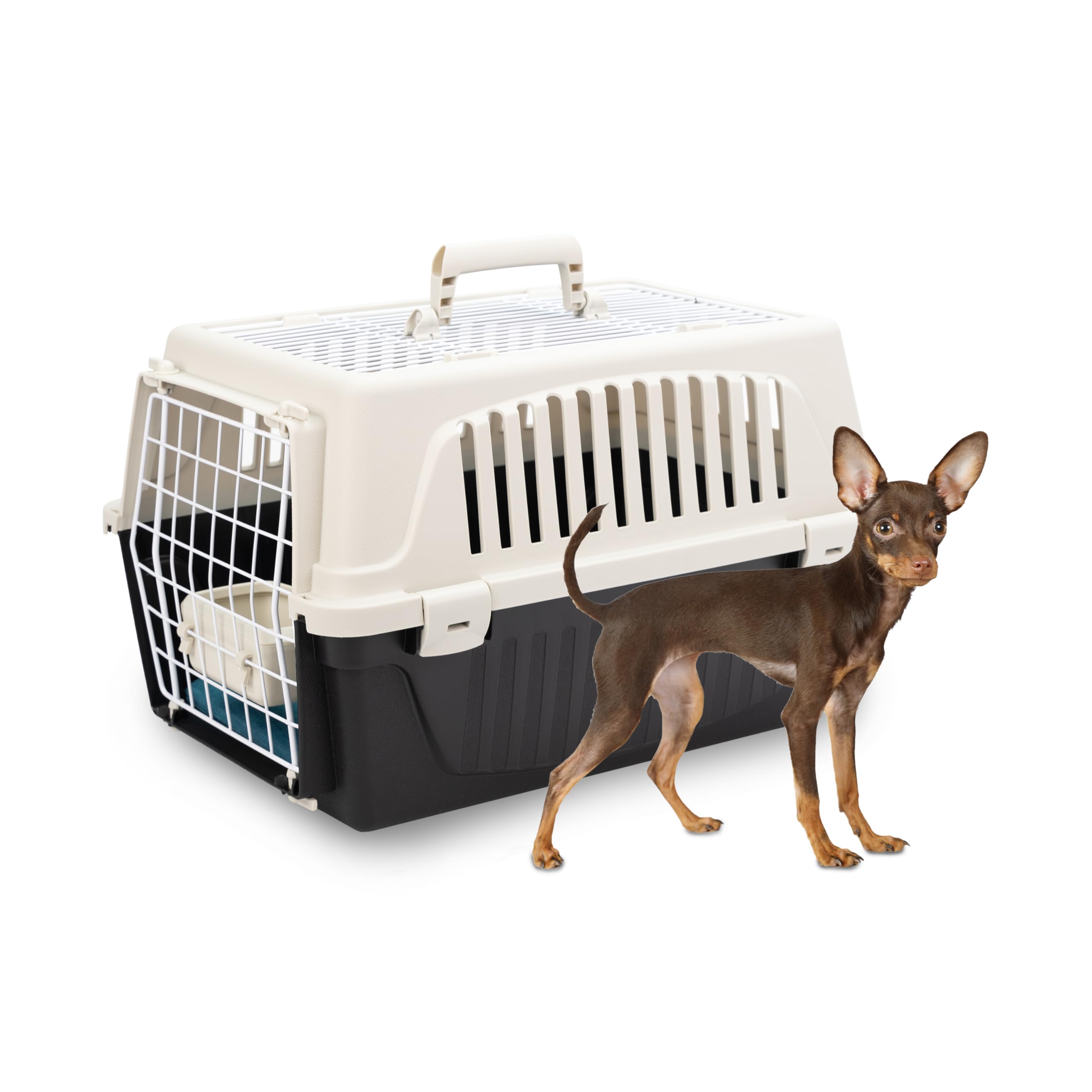
Bringing a puppy home is a noisy, sleep-deprived, deeply lovable few weeks — and a properly chosen crate sits at the centre of getting through it cleanly. A good puppy crate becomes the dog’s safe spot, smooths the toilet training, and ends night-time wandering in roughly half the time of a no-crate approach. The mistake most first-time pet parents make is buying a small ‘puppy size’ crate that the dog outgrows in six weeks — then a medium that lasts another three months — and only then committing to the adult crate. Two avoidable purchases, often three.
This round-up covers the best puppy crates you can buy in the UK in 2026, focused on crates with divider panels that grow with the dog, plus a couple of softer-sided options for travel and playpen use. We’ve factored in the realities of an eight-to-sixteen-week-old puppy — chewing, accidents, the 3 am bark — and picked accordingly. There’s no perfect ‘puppy crate’ as a separate product category; the right approach is an adult-size crate with the right divider and the right accessories.
Quick Comparison: Best Puppy Crate UK 2026
| Product | Best For | Price Range | Rating |
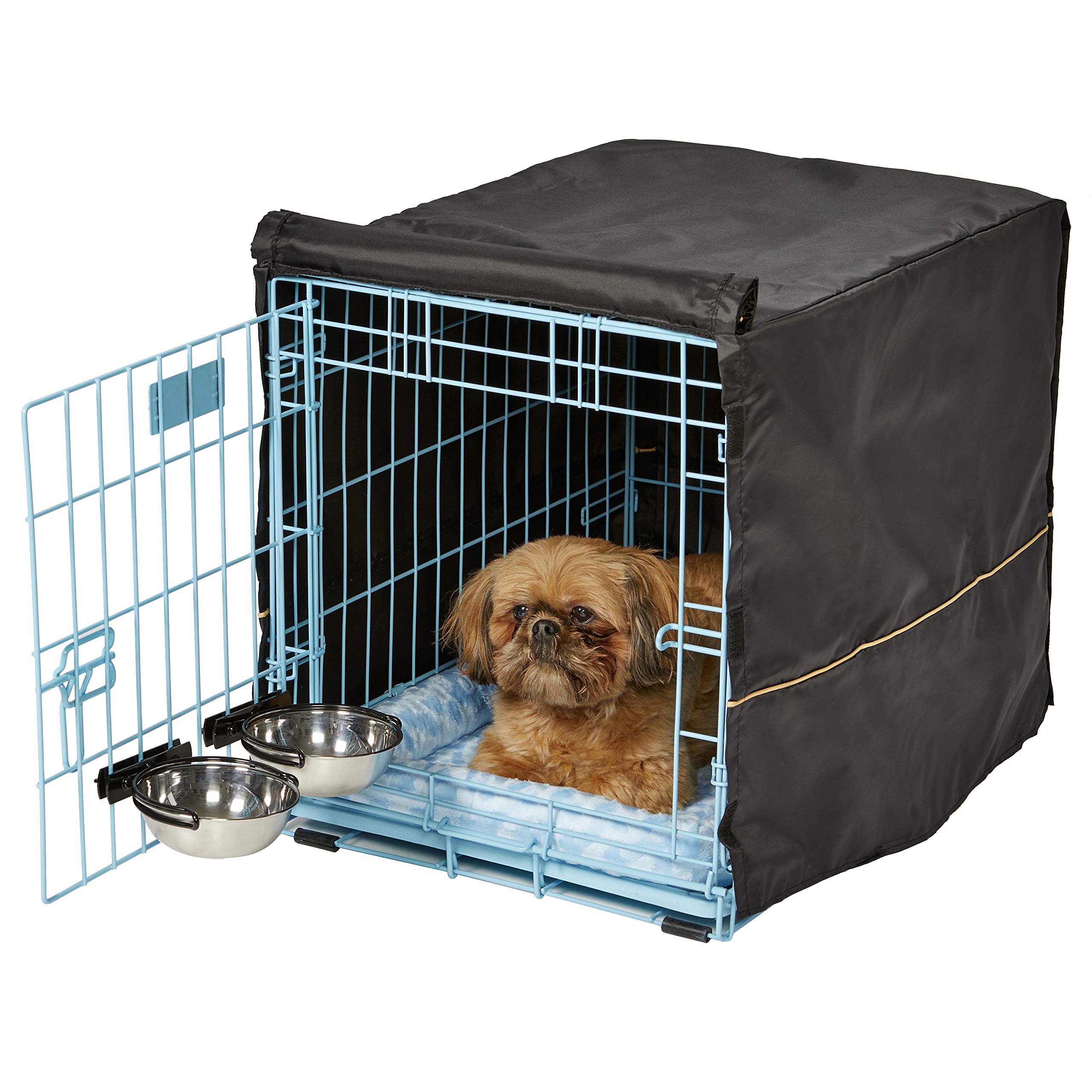
| MidWest iCrate Puppy Starter Kit | First-time pet parents — divider, tray, cover and water bowl in one box | £65–£110 | ★★★★★ |
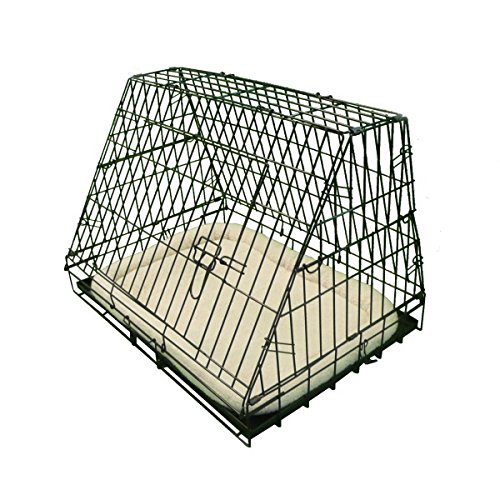
| Ellie-Bo Sloped Front Folding Crate | Households with estate cars — same crate for home and boot | £70–£140 | ★★★★★ |
| Pawhut Pet Playpen / Soft-Sided Crate | Daytime playpen and travel — quiet, light, fabric construction | £35–£70 | ★★★★ |
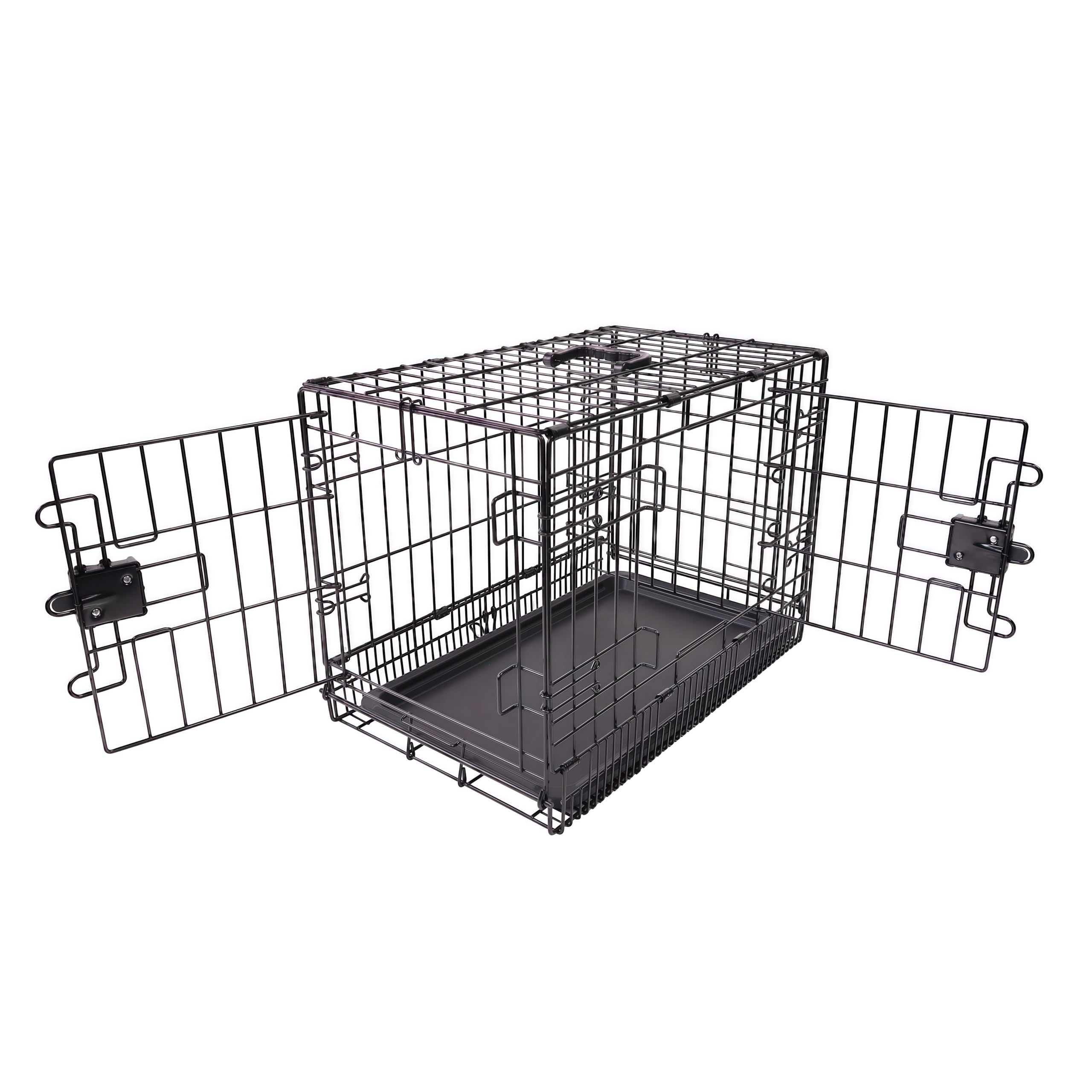
| Amazon Basics Folding Crate with Divider | Tightest budgets — proper divider crate for under £40 at small size | £28–£60 | ★★★★ |
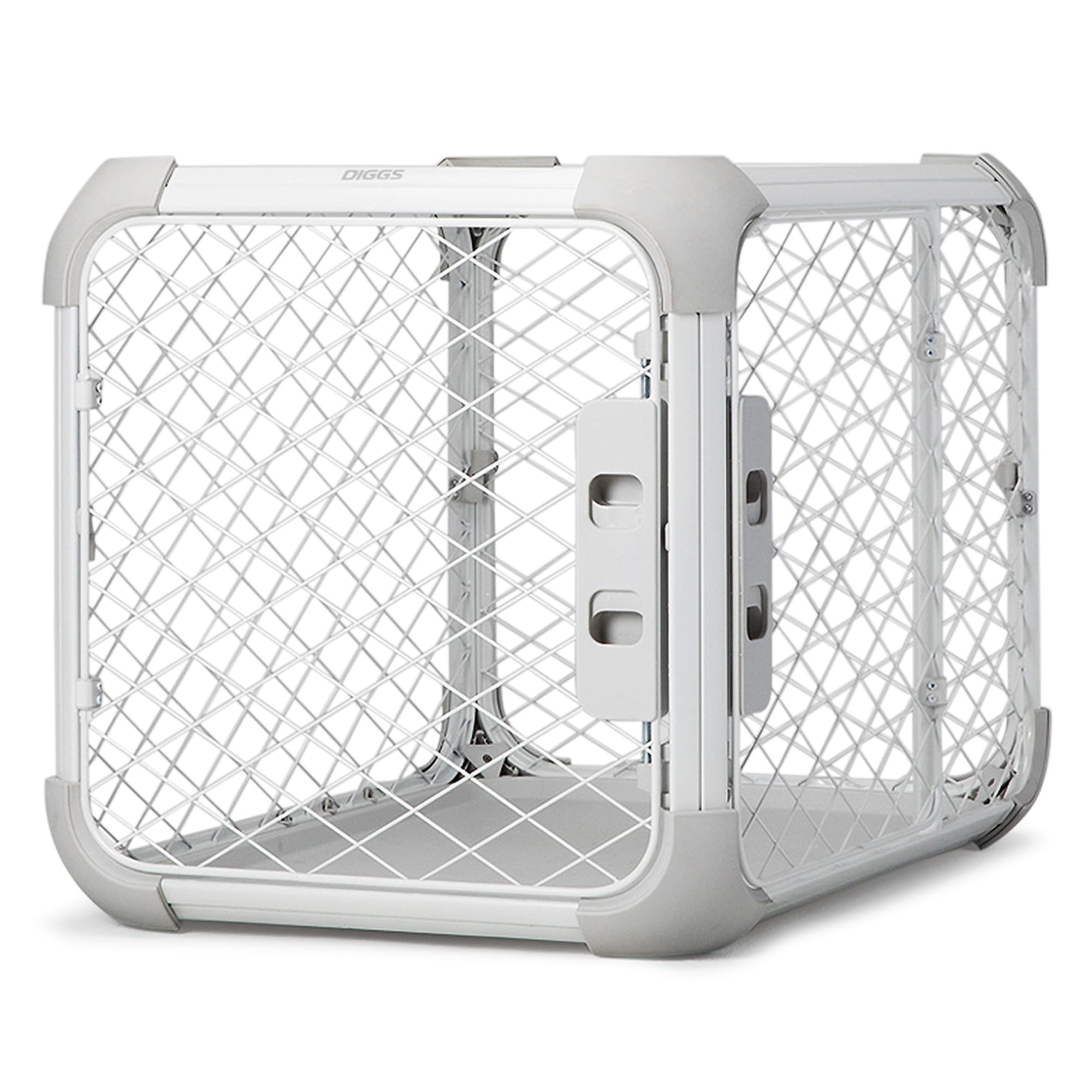
| Diggs Revol Collapsible Dog Crate | Anxious or sound-sensitive puppies — quieter, safer, design-led | £260–£330 | ★★★★★ |
Individual Product Reviews
MidWest iCrate Puppy Starter Kit
Best for: first-time pet parents — a single-box solution with divider, tray, cover and water bowl included
The MidWest iCrate Puppy Starter Kit is the most sensible first purchase for the majority of UK pet parents bringing a puppy home for the first time. It is the standard MidWest iCrate (double-door, folding wire, with divider) packaged with a fitted crate cover, a clip-on water bowl and a basic crate mat. Buying these pieces individually is roughly the same cost, and the kit removes the day-one anxiety of having three half-set-up purchases sitting around.
The divider is the centrepiece. Size the internal space to your puppy at eight weeks, then slide the divider out by a panel every few weeks as the puppy grows. A Labrador puppy who arrives at 6 kg will be 25 kg by six months, and a 42-inch iCrate with divider covers that entire growth curve without buying a second crate. We’ve used this kit with three puppies across two breeds and the divider is the single feature that justifies it.
The crate cover deserves a specific mention because it does real work — covering a puppy crate at night turns the bright wire box into a dim, enclosed den, and most puppies settle in noticeably less time. Buy the kit, use the cover from the first night, and the early weeks become measurably easier.
What we like:
- Single-box solution — crate, cover, water bowl and mat all matched and in one purchase.
- Divider panel covers the full puppy-to-adult growth curve in a single crate.
- Crate cover is genuinely useful for nighttime settling — most pet parents who try it never go back.
- MidWest build quality is consistent and the brand is widely stocked in the UK with proper warranty support.
Worth knowing:
- Not chew-proof — for puppies in active teething phase, expect the crate mat to be the first casualty (the wire and frame are fine).
- The water bowl included is a starter — most pet parents upgrade to a larger clip-on bowl by three months.
- Choose the adult-size crate matched to expected grown weight, not the puppy’s current size — see the size guide below.
- Latches are wire-bolt style; safe and secure but require a deliberate two-hand action that some pet parents find fiddly.
Specifications:
- Sizes: 24-inch (small breeds, adult under 11 kg) through 48-inch (giant breeds, adult 40 kg+)
- Suitable for: any puppy when size is matched to expected adult weight
- Materials: heavy-gauge wire, composite plastic tray, fabric cover, polyester crate mat
- Doors: two doors, both latching; divider panel included
- Folds flat; widely UK-stocked at Amazon UK, Pets at Home and independents
Ellie-Bo Sloped Front Folding Dog Crate
Best for: households with estate cars or SUVs — one crate that works at home and in the boot
If your puppy will travel by car regularly — vet trips, family visits, puppy classes — the Ellie-Bo Sloped Front Folding Crate is the natural choice. The sloped front matches the geometry of UK estate and SUV boots so the crate sits properly against the rear seats rather than at a frustrated angle. The same crate works at home as a daytime den, which keeps the puppy familiar with the crate when it appears in the car.
Like the MidWest iCrate, the Ellie-Bo supports a divider, has double-door access and folds flat. Build is a touch heavier and the powder coat is a touch thicker, which makes it the better choice if the crate will be loaded in and out of a vehicle frequently — folding and unfolding cycles do wear lighter crates over time.
It does not come as a starter kit, so you’ll need to add a crate cover and crate mat separately. For a multi-car or travel-heavy household this still works out as the right call; for a stay-at-home crate-training setup, the MidWest starter kit is the cleaner first purchase.
What we like:
- Sloped front is the right geometry for UK estate car boots — no wasted cargo space.
- Heavier wire gauge and thicker powder coat than budget alternatives — handles repeated load/unload cycles.
- Comes with a basic fleece bed at the price point — small thing, helpful at unpacking time.
- Strong UK availability — Amazon UK, Pets at Home, independent UK pet retailers.
Worth knowing:
- Sold as a crate only — buy the crate cover and a proper crate mat separately for crate training.
- Measure your boot in three dimensions before buying — sloped-front geometry isn’t standardised across brands.
- Not for confirmed chewers — wire is good but not heavy-duty welded.
- Heavier than the MidWest, which is fine in a car but harder to carry between rooms one-handed.
Specifications:
- Sizes: Small (61 × 46 × 51 cm) through XX-Large (122 × 76 × 84 cm)
- Suitable for: small breeds up to giant breeds when matched to expected adult size
- Materials: heavy-gauge powder-coated steel wire, ABS plastic tray, fleece bed insert
- Doors: front (sloped) and side, twin-latch system, divider compatible
- Folds flat for storage; carry handle on most sizes
Pawhut Pet Playpen with Soft-Sided Crate Insert
Best for: daytime playpen use, travel, and puppies in family homes who need a soft ‘middle ground’ between crate and free roaming
A wire crate is the right tool for sleeping, calm time and crate training. A playpen is the right tool for daytime supervised free-time when you can’t watch every footstep. The Pawhut soft-sided playpen is the most UK-available version of the foldable nylon-and-mesh playpen — a 60 cm tall fabric perimeter that creates a safe daytime zone in a kitchen, hallway or garden.
The version with the integrated soft-sided crate insert is the one worth highlighting. It gives the puppy a smaller den-style retreat inside the larger playpen — the equivalent of a sofa cushion fort inside a sitting room. Puppies who are still settling into a household tend to gravitate to the smaller insert for naps and emerge into the wider playpen for play.
It is not a substitute for a proper wire crate. The fabric will not survive a determined chewer, the doors are zipped (some puppies learn to unzip), and it is not appropriate for unsupervised crating. Think of it as an additional tool that solves daytime supervision and travel — particularly useful for grandparents’ houses, holiday cottages and garden time.
What we like:
- Folds flat into a slim carry bag — fits in a car boot or under a sofa.
- Soft-sided insert gives the puppy a den within the playpen — popular for nap time.
- Octagonal/hexagonal layout fits awkward room corners better than a rectangular wire pen.
- Light enough to move one-handed between rooms or out to the garden.
Worth knowing:
- Not for unsupervised crating — fabric and zips are not chew-proof.
- Best as a complement to a wire crate, not a replacement for one in puppy training.
- Mesh panels can be pawed open by a strong puppy if zips are not properly closed.
- Wash-down is harder than a wire crate — accidents soak into the fabric base.
Specifications:
- Sizes: Medium (approx. 142 cm diameter, 61 cm tall) and Large (approx. 162 cm diameter, 60 cm tall)
- Suitable for: puppies and small adult dogs for supervised playpen use
- Materials: polyester fabric, mesh panels, zipped doors, lightweight aluminium-style frame poles
- Doors: zipped main entry plus zipped roof panel; mesh ventilation across all sides
- Folds flat with carry bag included; widely stocked through Amazon UK
Amazon Basics Folding Metal Crate with Divider
Best for: tightest budgets — first-time pet parents who want a divider crate without paying mid-range prices
If the budget for the puppy’s first crate is genuinely tight, the Amazon Basics folding wire crate with divider is the right place to land. It is a cleanly executed copy of the MidWest iCrate at roughly half the price — wire gauge slightly lighter, powder coat slightly thinner, but the geometry is correct, the divider works, and it folds flat the way you’d expect.
The reason to pay more than this if the budget allows it is durability. We’ve tracked a small Amazon Basics crate used as a daily puppy-then-adult crate and the front latch became loose enough to need a cable tie at around two years. For puppies, two years often gets you past the chaotic chewing phase into the adult-dog years where the choice of crate matters less — so the maths can work even with a shorter lifespan.
Pair the crate with a separate cover, separate crate mat and separate water bowl and the total spend is still under what the MidWest Starter Kit costs. It’s a defensible choice for households where the alternative is delaying crate training because the kit feels expensive.
What we like:
- Cheapest sensible folding wire crate with divider that is widely stocked in the UK.
- Same broad geometry as the MidWest — accessories often interchange.
- Folds flat; light enough for one-handed carry; tray hose-down friendly.
- Same/next-day Prime delivery through Amazon UK — useful if puppy collection day is tomorrow.
Worth knowing:
- Lighter wire gauge — fine for most puppies, not for a powerful adolescent chewer.
- Latches are the first part to soften with daily use — watch for slack after eighteen months.
- Plastic tray is thinner than the mid-range crates and will crack if flexed when full.
- Returns are typically smoother than warranty claims — buy with the understanding that the brand is consumer-electronics-style support, not pet-specialist support.
Specifications:
- Sizes: 22-inch (small breeds) through 48-inch (giant breeds)
- Suitable for: most breeds when size is matched to expected adult weight
- Materials: powder-coated wire, plastic tray, divider panel included
- Doors: single or double depending on listing — confirm before checkout
- Folds flat; widely stocked through Amazon UK Prime
Diggs Revol Collapsible Dog Crate
Best for: anxious or sound-sensitive puppies, and households where the crate sits visibly in the living room
The Diggs Revol is the premium pick on the page and the right answer for two specific puppy profiles. The first is the puppy who is showing early signs of anxiety in a wire crate — flinching at the latch sound, struggling to settle, refusing to go in voluntarily. The second is the household where the crate will sit visibly in the living room and aesthetics are a real constraint.
The aluminium-and-mesh structure is noticeably quieter than wire — no jangling latches at 3 am — and the smaller-gauge mesh creates a more enclosed, den-like feel inside that anxious puppies often settle in faster. The sliding garage-style door removes the swing-arc safety issues of hinged crate doors, which matters in tight kitchen or hallway placements. The ceiling hatch lets you load or check on the puppy without blocking the only exit, which is meaningful for nervous dogs.
Price is the obvious caveat — around three to four times a mid-range wire crate of comparable size. The Revol is only available in two sizes (medium and large), so it will not span an entire puppy-to-giant-breed growth curve. For most households a MidWest iCrate with the puppy starter kit accessories does the same functional job. The Revol earns its price only when one of the two specific profiles above applies.
What we like:
- Quieter materials and smaller-gauge mesh settle anxious puppies in noticeably less time.
- Sliding ‘garage’ door avoids the swing-arc safety issues of standard hinged crate doors.
- Top hatch makes the crate accessible from above for nervous puppies.
- Assembles and collapses in under thirty seconds without tools.
- Looks like a piece of furniture in a living room — visually it disappears in the way wire crates do not.
Worth knowing:
- Premium price tier — around £260–£330 depending on size and accessories.
- Two sizes only (medium and large) — not suitable for giant-breed puppies who will outgrow the large size.
- Not chew-proof — the aluminium frame is structural but the mesh is not intended to resist sustained chewing.
- UK availability is patchier than US — buy through Diggs UK or authorised UK retailers for proper warranty.
Specifications:
- Sizes: Medium (approx. 76 × 53 × 53 cm) and Large (approx. 95 × 66 × 66 cm)
- Suitable for: puppies that will not exceed approx. 35 kg adult weight (Large size)
- Materials: aluminium frame, reinforced diamond mesh, BPA-free plastic base tray
- Doors: front sliding ‘garage’ door plus optional ceiling hatch
- Collapses to roughly the depth of two cereal boxes for storage or travel
Ferplast Atlas Plastic Pet Carrier (Travel Crate)
Best for: early vet visits, puppy collection day, and households who need a hard-sided travel carrier alongside a home crate
The Ferplast Atlas isn’t a ‘crate-training crate’ in the traditional sense — it’s a hard-sided plastic pet carrier in the IATA-style mould. We include it here because for the first six to twelve weeks of puppy ownership, a sturdy plastic carrier solves several specific problems that a wire crate doesn’t: collection day, the first vet trip, the first puppy-class commute, and any small-puppy travel where a 42-inch wire crate is overkill.
Build is hard plastic with a metal-grille door at the front, ventilation slots along the sides, and a properly secure latch. Sizes step from 20 (small puppies, cats) up to 70 (medium adult dogs). For a small or medium puppy, the Atlas 30 or 40 is the right starter for these specific travel tasks while the home crate stays in the kitchen.
Once the puppy is older and routinely travelling, most pet parents move to a boot-fitted wire crate (Ellie-Bo) or a properly fitted travel crate. The Atlas is a ‘first three months’ carrier, not a long-term solution, but it earns its place because those first three months involve more journeys than any other phase of a dog’s life.
What we like:
- Properly secure hard-sided construction — appropriate for early vet visits and any unsupervised transport.
- Stocked in nearly every UK pet retailer — Pets at Home, Amazon UK, independents.
- Multiple sizes from very small (cat-sized) up to medium dog — covers the early puppy months cleanly.
- Hose-down friendly — accidents wipe out rather than soaking in.
Worth knowing:
- Not a home crate-training crate — too dark, too enclosed, and not divider-compatible.
- Outgrown quickly by larger breeds — a Labrador puppy will exceed the Atlas 40 by around four months.
- Door latches require deliberate two-hand operation — secure but slower than a wire crate door.
- Best used alongside a home wire crate, not as a replacement for one.
Specifications:
- Sizes: Atlas 10 through Atlas 70, covering toy breeds through medium adult dogs
- Suitable for: early puppy travel, vet visits, puppy classes, collection day
- Materials: hard injection-moulded plastic shell, steel grille door, plastic latch
- Doors: single front-opening grille door with twin-point latch
- Stocked at Pets at Home, Amazon UK, Zooplus UK and independent pet retailers
Buying Guide: How to Choose the Best Puppy Crate
What to look for when buying a puppy crate
The single most important feature in a puppy crate is the divider panel. Puppies grow fast — a Labrador puppy will roughly quadruple in weight between collection day and six months — and a crate that fits at eight weeks will be wrong by twelve. A divider panel lets you buy the adult-size crate on day one and reduce the internal space to the right size for the current age, sliding the divider out by one panel every few weeks. This avoids the common (and expensive) mistake of buying two or three crates as the puppy grows.
Other features that matter: double-door access (front and side) gives flexibility in placement; a removable tray makes cleaning realistic during the accident-prone early weeks; folding-flat construction matters when the crate needs to move between rooms or travel. Wire gauge matters less for puppies than adult dogs because most chewing damage to crates comes from adolescent dogs around six to twelve months, not from puppies under sixteen weeks.
Puppy crate types explained
Folding wire crates with a divider are the default for home crate-training and what most UK trainers recommend. Hard-sided plastic carriers (Ferplast Atlas etc.) are the right tool for early travel — collection day, vet visits, puppy classes — but are not appropriate for home crate-training. Soft-sided fabric playpens are useful for daytime supervised play but cannot be used for unsupervised crating because puppies can chew or unzip them. Heavy-duty welded crates are usually unnecessary at the puppy stage and become a consideration only if a dog develops escape behaviour in adolescence.
Size guide — buy for the adult, divide for the puppy
The right approach to puppy crate sizing is to buy the crate for the dog’s expected adult size and use the divider panel to scale the internal space down to the current puppy. This saves money and means the crate becomes familiar territory rather than something new each time the dog graduates a size.
- Small breeds (adult under 10 kg, e.g. Yorkies, Cavaliers) — buy a 24-inch crate (approx. 61 × 46 × 51 cm) with divider.
- Medium breeds (adult 10–25 kg, e.g. Spaniels, Beagles, Border Collies) — buy a 36-inch crate (approx. 92 × 58 × 64 cm) with divider.
- Large breeds (adult 25–40 kg, e.g. Labradors, Retrievers, German Shepherds) — buy a 42-inch crate (approx. 107 × 71 × 76 cm) with divider.
- Giant breeds (adult 40 kg+, e.g. Great Danes, Mastiffs) — buy a 48-inch crate (approx. 122 × 76 × 84 cm) with divider.
- If you’re unsure of adult size (mixed-breed puppies, rescues), measure both parents if known or ask the breeder/rescue for an estimate; size up rather than down if the answer is unclear.
How much should you spend?
- Budget (under £50): Amazon Basics with divider, supermarket crates. Suitable for tight budgets and short-haul use; expect to replace within two years of daily use.
- Mid-range (£60–£150): MidWest iCrate Puppy Starter Kit, Ellie-Bo. The right tier for most UK households — proper build quality, divider included, often a starter kit with cover and mat.
- Premium (£200+): Diggs Revol, welded heavy-duty crates. Justified only by specific need — anxiety, design constraints, or expected escape behaviour.
Frequently Asked Questions
When should I start crate training a puppy?
From day one. The crate should be in place when the puppy arrives, with familiar bedding and the scent of the breeder or rescue if possible. Most trainers recommend feeding the first meals inside the crate (door open) to build positive associations, and using the crate for the first night’s sleep — this is the cleanest start for both crate training and toilet training. Delaying crate introduction by a week or two makes the process noticeably harder.
How long can a puppy be in a crate?
A useful rule is roughly one hour per month of age during the day, up to a maximum of around four hours, with toilet breaks before and after. An eight-week-old puppy can manage about two hours in a crate; a four-month-old can manage four. Overnight is different — most puppies will sleep six to eight hours from around twelve weeks if the crate is in your bedroom and you respond promptly to whining for toileting. Eight hours alone in a crate during the day is too long for any puppy.
Should I cover the puppy crate at night?
Yes, in most cases. A crate cover (or a draped blanket) turns the bright wire box into a darker, more den-like space, which most puppies settle in faster. Leave one side partly uncovered for ventilation and so the puppy can see out if they want to. If your puppy is anxious about being enclosed, introduce the cover gradually rather than fully covering on the first night.
Where should the puppy crate go?
In the bedroom for the first one to three weeks, then move to a quiet corner of the living room or hallway once the puppy is settled. Bedroom placement at the start is the single biggest predictor of fast overnight settling — the puppy hears you breathing, you hear them when they need toileting, and the separation feels much smaller. Avoid placing the crate in heavy foot traffic, near radiators, or in direct sunlight.
What should I put in the puppy crate?
A proper crate mat (washable, not stuffed), a familiar item with household scent, a safe long-lasting chew like a frozen stuffed Kong for occupied crate time, and a clip-on water bowl for sessions longer than an hour. Avoid loose stuffed toys with squeakers or button eyes — these are swallowing hazards if destroyed. Avoid putting food bowls in the crate for general use; meal-time-in-crate is fine as a training technique but free-feeding inside the crate undermines toilet training.
Is it normal for puppies to cry in the crate?
Some crying in the first one to three nights is normal and usually means ‘I’m lonely’ rather than ‘I need the toilet’ or ‘something is wrong’. Stay close (crate in bedroom helps), respond to brief settling whines with low calm reassurance but no eye contact or playful response, and respond promptly to escalating barks or whines that signal toileting need. Persistent distressed barking beyond a week, particularly if the puppy is refusing to settle even during the day, is worth a conversation with a positive-reinforcement trainer rather than ‘crying it out’.
Final Verdict
For the great majority of UK pet parents bringing a puppy home for the first time, the MidWest iCrate Puppy Starter Kit is the right purchase. The divider panel covers the full puppy-to-adult growth curve, the included cover and water bowl remove day-one friction, and the price sits in the mid-range where build quality and longevity make multi-year sense.
If your puppy will travel by car regularly, the Ellie-Bo Sloped Front earns its place for the boot geometry alone. For genuinely tight budgets the Amazon Basics with divider is a defensible starter. And for puppies showing early anxiety in wire crates — or households where the crate has to live visibly in a living room — the Diggs Revol is the premium pick that solves real problems other crates don’t.