
Quick Comparison: Plastic vs Wire Dog Crates
Choosing between a plastic and a wire crate is one of the first decisions every new dog owner faces. Both types keep your dog safe and give them a den of their own, but they suit different jobs. A plastic crate is enclosed, cosy and built for travel, while a wire crate is open, well ventilated and easy to fold away.
For most homes, a wire crate is the better everyday choice for training and for growing puppies. For car and air travel, and for dogs that like a snug, dark den, a plastic crate is the better pick. To make the comparison concrete, we have used two well-reviewed examples: the Petmate Ultra Vari Kennel and the MidWest iCrate.
The Two Crates We Compared
Petmate Ultra Vari Dog Kennel (Plastic)
The Petmate Vari Kennel is a well-known plastic travel crate. It has a moulded two-piece shell, a metal door and ventilation slots on the sides. The version we checked is aimed at small dogs, and it costs around £67, with a range of larger sizes available.
It averages 4.4 out of 5 across more than 3,600 ratings on Amazon UK.

MidWest iCrate Folding Wire Dog Crate
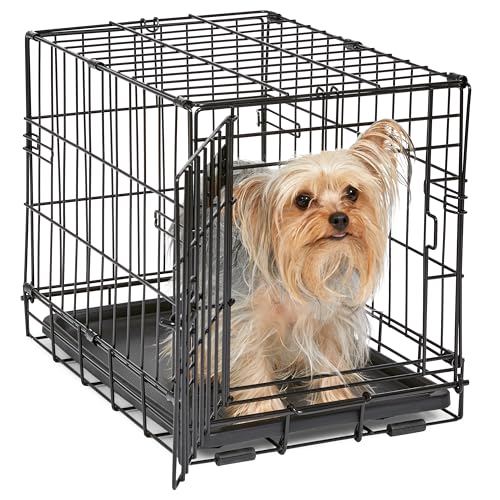
The MidWest iCrate is one of the best-selling wire crates in the world. It has a folding metal frame, a leak-proof plastic tray, a divider panel and a carry handle. The 18-inch version costs around £22, and larger sizes cost more.
It averages 4.6 out of 5 across more than 107,000 ratings on Amazon UK, an extraordinary record.

Head-to-Head Comparison
Round 1: Security and Durability
Plastic crates have solid walls and a metal door, which makes them good for dogs that are anxious about the outside world, and difficult to chew out of. Wire crates are strong, but a determined escape artist can bend the wire or push at the door. Good wire crates have double latches for security.
Round 2: Ventilation and Visibility
A wire crate is open on all sides, so air flows freely and your dog can see what is going on. This helps in hot weather, and it suits sociable dogs. A plastic crate has small vents, so it is warmer and more enclosed, which suits dogs that like a dark, quiet den, but it is less suitable in a hot house.
Round 3: Travel and Portability
Plastic crates are the standard for air travel, since they meet airline rules, and they are also a good choice for the car. Wire crates fold flat and are easy to carry, but they are less suitable for flights. In a car, a wire crate has the advantage of ventilation, and a plastic crate provides more protection from sudden movement.
Round 4: Training and Growing Puppies
Wire crates often come with a divider panel, so you can make the crate smaller for a puppy and move the panel as your dog grows. Plastic crates do not usually have this feature, so you may need to buy a bigger one later. For a growing puppy, the wire crate is more practical.
Round 5: Cleaning and Value
Wire crates have a removable tray, which makes cleaning easy, and they are usually cheaper. Plastic crates can be hosed down, but the shell is a single piece and harder to clean in corners. Prices for plastic crates start higher for the same size.
Specs at a Glance
Feature | Petmate Ultra Vari (plastic) | MidWest iCrate (wire) |
Price (size checked) | Around £67 | Around £22 |
Ventilation | Vents on the sides | Open on all sides |
Folds flat | No (splits into two halves) | Yes |
Growing puppy divider | No | Yes |
Customer rating | 4.4/5 (3,600+ ratings) | 4.6/5 (107,000+ ratings) |
The Verdict
For most owners, a wire crate is the better buy. It costs less, folds flat, has a divider for puppies and lets air flow freely. The MidWest iCrate is the standout, with an enormous review record.
Choose a plastic crate if you travel by air or car a lot, or if your dog prefers a cosy, enclosed space. The Petmate Vari Kennel is a proven, durable choice. Many owners end up with one of each: a wire crate at home and a plastic crate for travel.
Frequently Asked Questions
Is a plastic or wire crate better for a puppy? A wire crate with a divider is usually better, because you can adjust the size as your puppy grows.
Which crate is best for car travel? A plastic crate is more secure and enclosed, and it is required for air travel. A wire crate is well ventilated, so it is good for shorter journeys in a car with air conditioning.
Are wire crates safe for dogs that chew? They are safe for most dogs, but a determined chewer can damage the door or tray. Choose a strong crate, and never leave a dog that chews unsupervised.
Do I need to cover a wire crate? Many dogs like a cover, because it makes the crate feel like a den. Use a breathable cover, and leave one side open for air.