Getting the litter tray right matters more than most owners expect — the wrong shape, size or entry height is a common reason cats start going elsewhere.
We’ve checked five current cat litter trays on Amazon UK, confirming real prices, stock and reviews across budget, hooded and self-cleaning options.
Quick Comparison Table
Product | Best For | Price Range | Rating |
Vealind High Sided Cat Litter Tray | Budget buyers, scatter prevention | £15-17 | 4.6/5 |
Curver Litter Box | All-rounder for most households | £70-75 | 4.4/5 |
Catit AiRSiFT Cat Litter Pan | Large cats, odour control, multi-cat households | £32-35 | 4.2/5 |
IRIS USA Top Entry Litter Box | Scatter prevention, stylish appearance | £70-75 | 4.2/5 |
PetSafe ScoopFree Self-Cleaning (2nd Gen) | Minimal daily maintenance | £145-155 | 3.8/5 |
Our Top Picks
Vealind High Sided Cat Litter Tray
Best for: budget buyers, scatter prevention
Vealind’s tray uses genuinely high sides and a low, easy-access front opening to stop litter being kicked out onto the floor, all at one of the lowest prices in this list.
It’s a straightforward open tray rather than hooded, which suits cats who prefer an open, unenclosed space to use the toilet.
What we like:
- High sides genuinely cut down on scattered litter
- Low front entry stays accessible for kittens and older cats
- Very affordable for the scatter control it offers
Worth knowing:
- No hood, so it offers less privacy than covered options
- Basic design without extra features like odour filters
Specifications:
- Feature: high sides, low entry, leak-proof
- Design: open top
- Material: durable plastic
- Suitable for: kittens to adult cats

Curver Litter Box
Best for: all-rounder for most households
This covered igloo-style box from Curver gives a spacious, enclosed litter area with a swinging door flap, offering more privacy than an open tray for cats who prefer it.
It’s a well-reviewed, long-running product with a huge number of reviews backing up its reliability as an everyday litter box.
What we like:
- Enclosed design gives cats more privacy
- Spacious interior suits larger cats comfortably
- Extremely well-reviewed with a long track record
Worth knowing:
- Current pricing sits higher than a basic open tray
- Covered design needs regular cleaning to avoid trapped odours
Specifications:
- Size: 51 x 38.5 x 39.5cm
- Design: covered igloo-style with door
- Feature: spacious interior
- Style: enclosed

Catit AiRSiFT Cat Litter Pan
Best for: large cats, odour control, multi-cat households
The Catit AiRSiFT uses a raised, sifting design that lets urine drain away from solid waste, helping keep the tray drier and cutting down on odour between cleans.
The large size suits bigger cats or households running more than one cat through the same tray.
What we like:
- Sifting design helps control odour between cleans
- Large size suits bigger cats comfortably
- Hooded option available for extra privacy
Worth knowing:
- Sifting inserts need periodic replacement or cleaning
- Larger footprint needs more floor space than a basic tray
Specifications:
- Size: Large
- Feature: sifting drainage system
- Design: hooded litter box
- Suitable for: large cats, multi-cat households

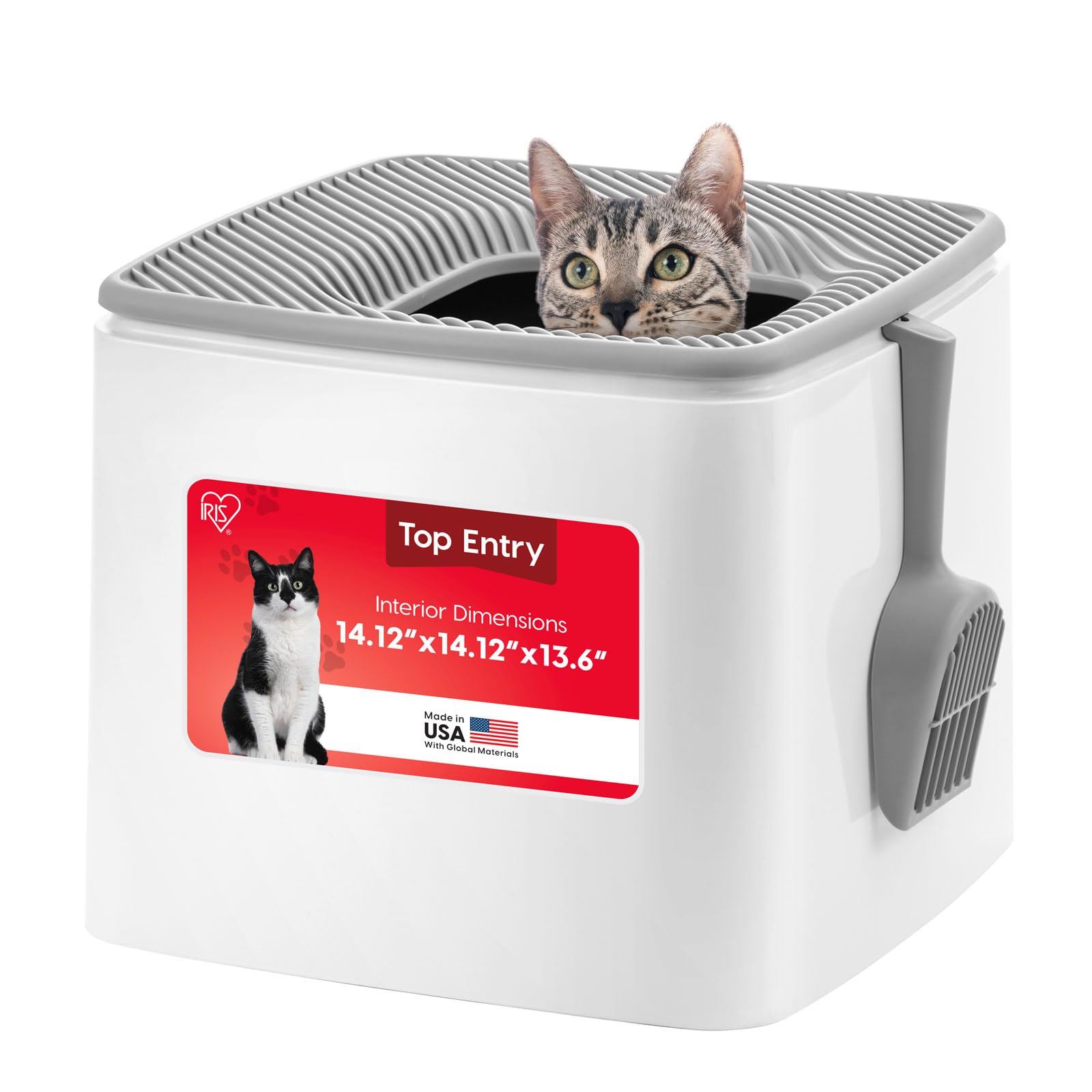
IRIS USA Top Entry Litter Box
Best for: scatter prevention, stylish appearance
This top-entry design forces cats to jump in and out from above, which dramatically cuts down on tracked litter compared with a front-entry tray, all wrapped in a smart, minimal white finish.
It suits agile cats well but may not be the best fit for older cats or those with mobility issues who struggle to jump in.
What we like:
- Top entry significantly reduces litter tracking
- Smart, minimal design blends into most rooms
- Enclosed sides contain scatter effectively
Worth knowing:
- Not ideal for older or less mobile cats
- Stock is currently limited, so check availability before ordering
Specifications:
- Design: top-entry, dog-free zone
- Colour: White
- Feature: mess containment system, odour trapping
- Model: PRCL-SQ

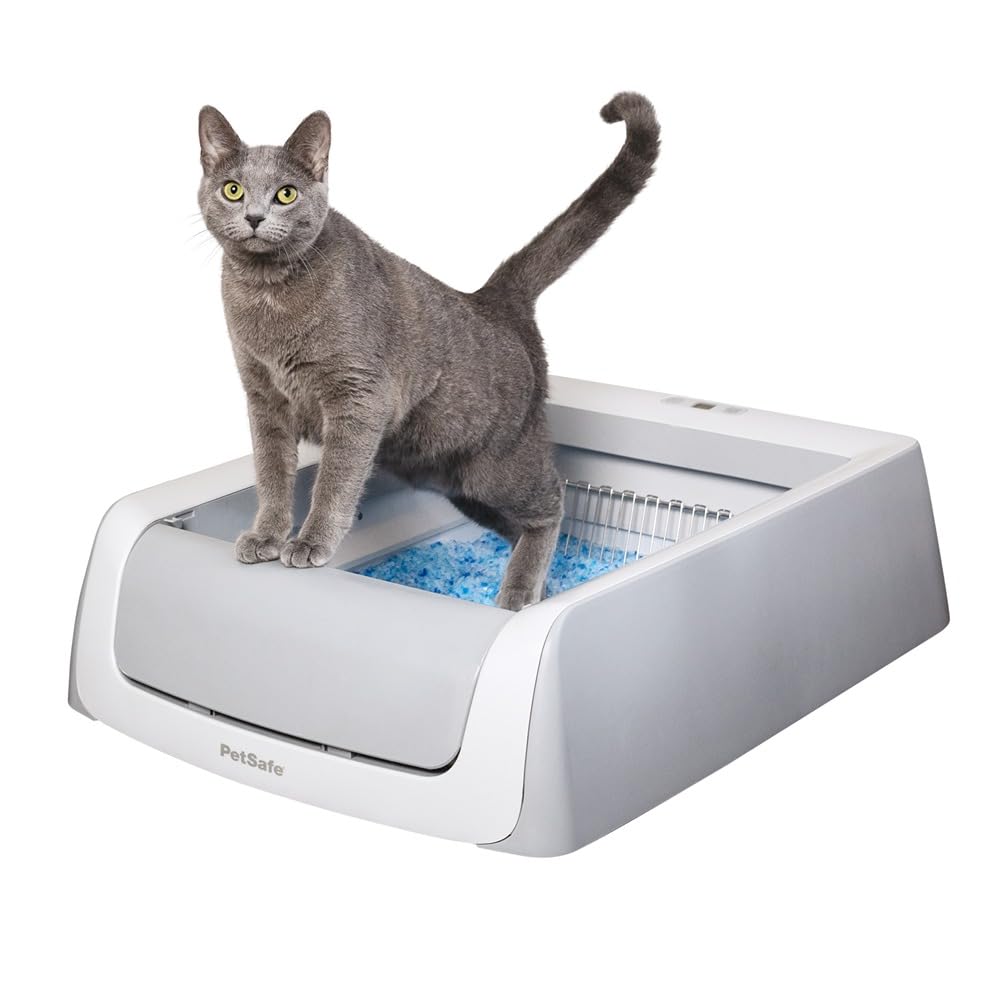
PetSafe ScoopFree Self-Cleaning Litter Box, 2nd Generation
Best for: owners seeking minimal daily maintenance
This automatic self-cleaning tray uses a rake mechanism and disposable crystal litter trays to handle daily cleaning, so scooping is reduced to swapping the tray every few weeks rather than daily.
It’s a step up in price from a manual tray, but a genuine time-saver for busy households.
What we like:
- Automatic raking cuts daily scooping almost entirely
- Disposable trays simplify deep cleaning
- Health monitoring available through the connected app
Worth knowing:
- Ongoing cost of disposable litter trays adds up over time
- A noticeably higher upfront price than a manual tray
Specifications:
- Feature: automatic self-cleaning, health monitoring
- Litter: disposable crystal trays
- Generation: 2nd
- Control: companion app available
Buying Guide: How to Choose the Best Cat Litter Tray
Open vs. Hooded vs. Top-Entry
Open trays suit cats who dislike enclosed spaces and are the easiest to clean, while hooded trays contain odour and scatter better at the cost of some airflow.
Top-entry boxes are the most effective at stopping tracked litter but aren’t suitable for older or less agile cats.
Size Guide
A litter tray should be at least one and a half times your cat’s body length, so they can turn around and dig comfortably.
Large or giant breeds need a genuinely oversized tray — a standard tray that looks fine for an average cat can feel cramped for a Maine Coon.
How Many Trays Do You Need?
The general rule is one tray per cat, plus one spare, so a two-cat household should ideally have three trays available.
Placement Matters
Keep trays away from food and water bowls, in a quiet, low-traffic spot the cat can access easily at any time.
Avoid placing multiple trays side by side — spreading them around the home works better for multi-cat households.
How Much Should You Spend?
A basic open tray starts from around £15, hooded and top-entry designs typically sit between £30-75, and self-cleaning automatic trays start from around £145.
Frequently asked questions
My cat keeps going outside the tray. What should I do?
Check the tray size and entry height first, since these are the most common causes, and make sure it’s cleaned regularly and kept away from noisy or high-traffic areas.
What litter works best?
Fine-grained clumping litter is generally preferred by most cats, though it’s worth testing a couple of types if a cat seems reluctant to use the tray.
How often should I clean the litter tray?
Solid waste and clumps should be scooped daily, with a full litter change and tray wash roughly once a week for a standard clumping litter.
Conclusion
The Curver Litter Box is the best all-rounder here, combining a spacious, private design with a long track record of strong reviews.
For owners who want to cut daily maintenance right down, the PetSafe ScoopFree Self-Cleaning tray is worth the extra investment.