Crate training tends to divide pet parents — half are evangelists, the other half feel uneasy putting their dog behind a door. In our experience the dogs decide quite quickly themselves: give them a properly sized crate, lined with something soft, in a quiet corner, and most adult dogs adopt it as their preferred snooze spot within a fortnight. The issue is almost always the crate itself: too small, too rattly, too cheap, or the wrong style for the job.
This round-up covers the best dog crates you can buy in the UK in 2026, with picks for home use, travel, anxious dogs and breeds at both extremes of the size chart. We’ve focused on crates that are stocked widely in the UK through Amazon UK, Pets at Home and reputable independents — and we’ve been honest about which models suit which dogs. Strong chewers, escape artists and giant breeds need different things to a calm Cavalier, and a single ‘best’ crate doesn’t exist.
Quick Comparison: Best Dog Crate UK 2026
| Product | Best For | Price Range | Rating |
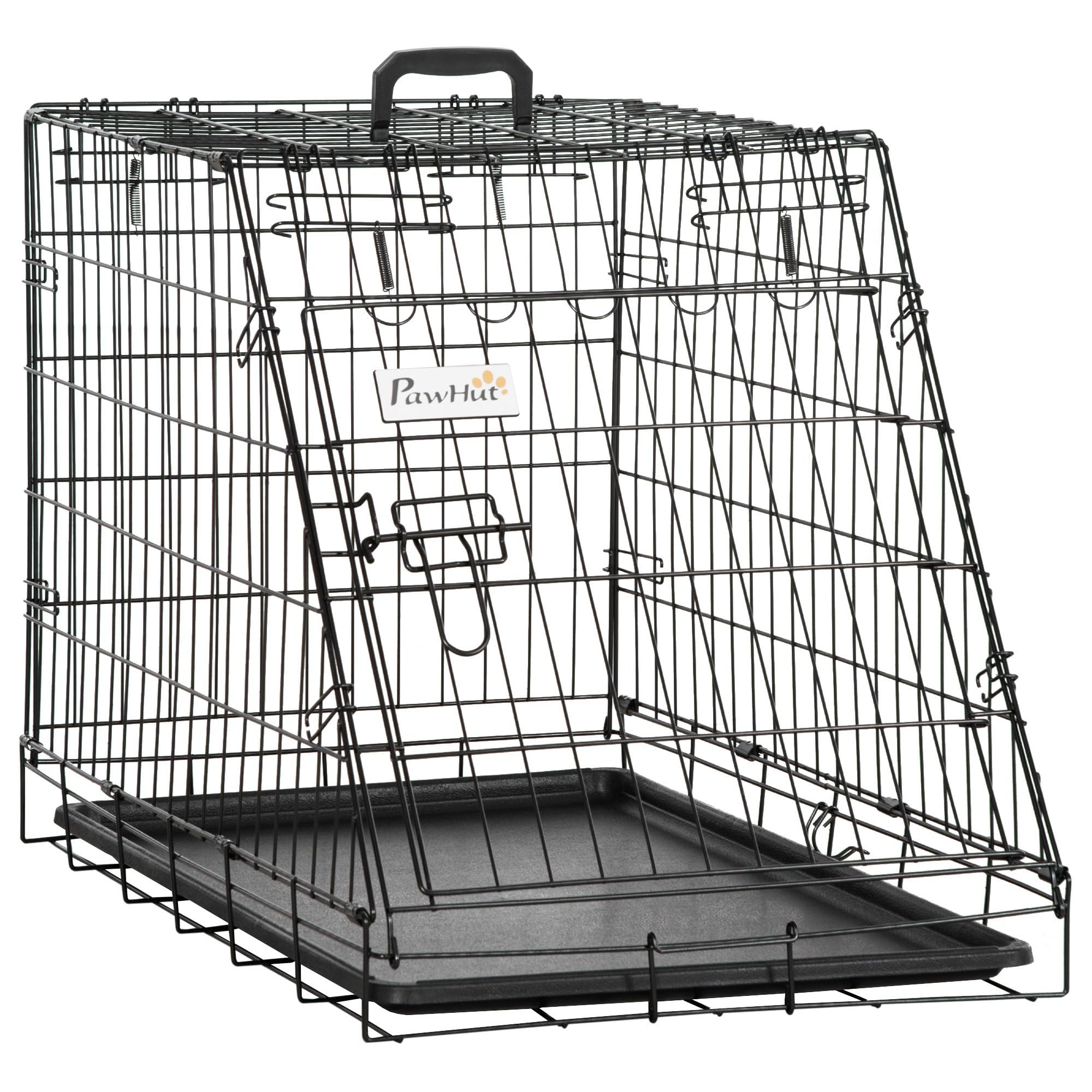
| Ellie-Bo Sloped Front Folding Crate | Estate cars and boot use — angled front fits sloped car boots | £70–£140 | ★★★★★ |
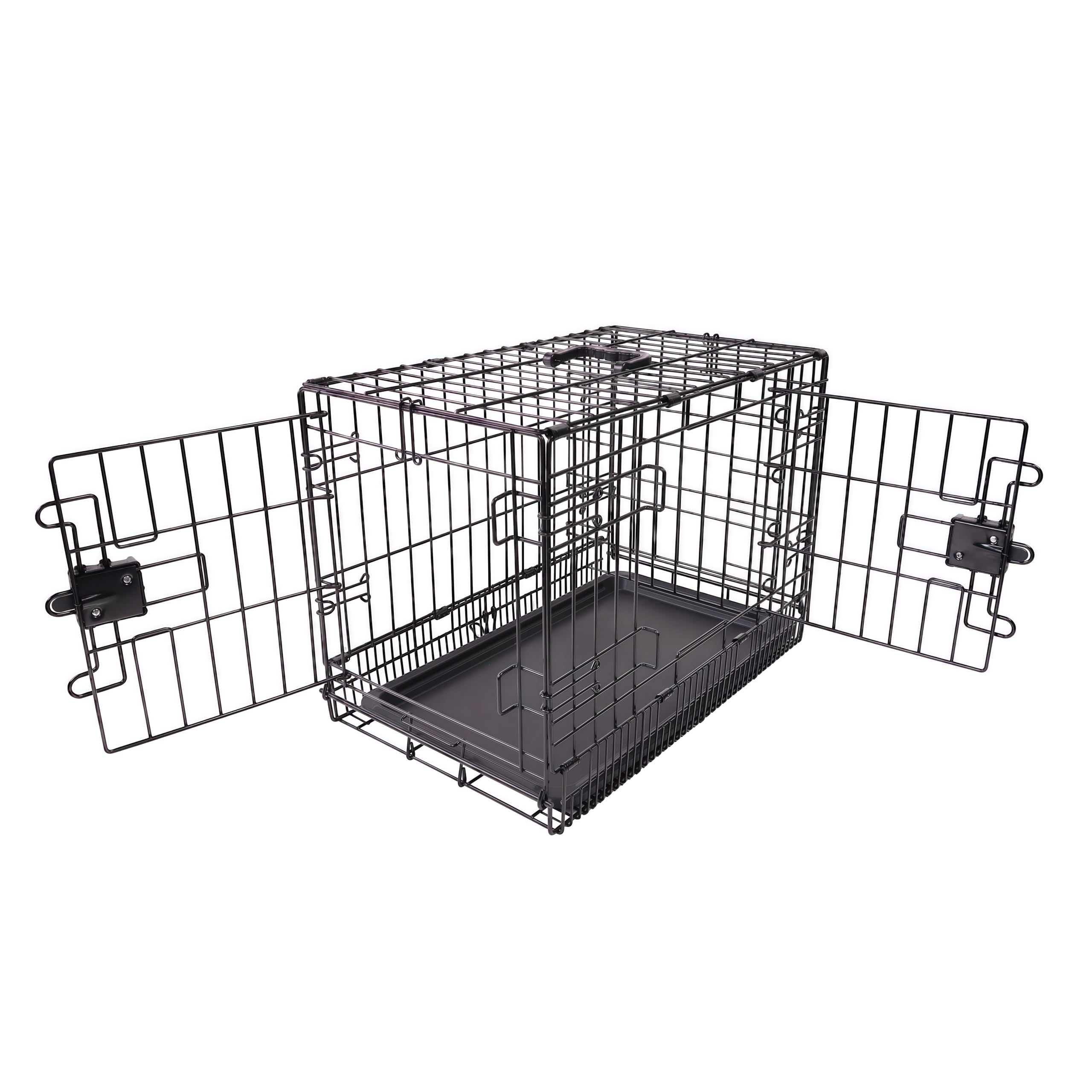
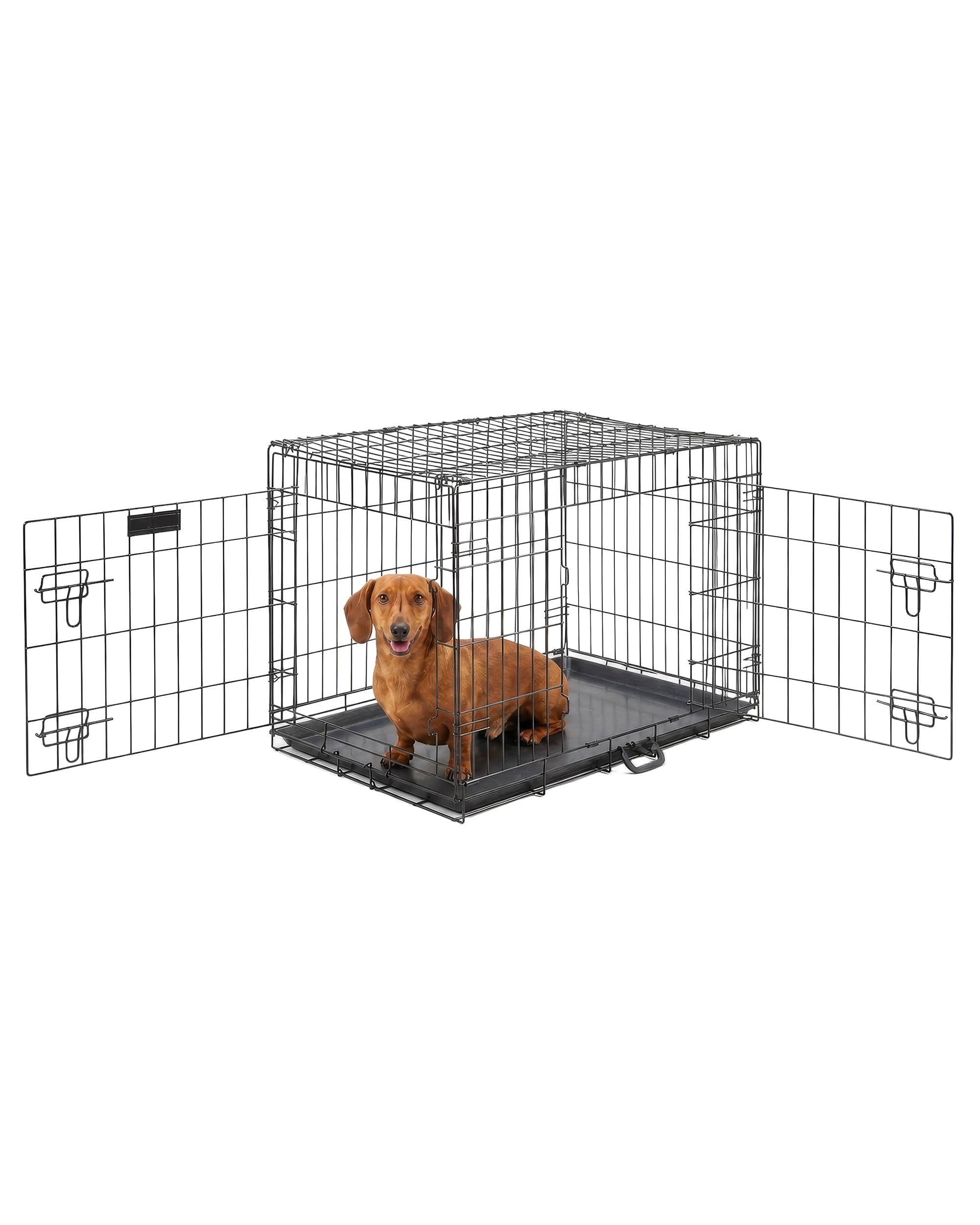
| MidWest iCrate Double Door | All-round home use — most flexible wire crate on the UK market | £45–£95 | ★★★★★ |
| Diggs Revol Collapsible Dog Crate | Modern homes and anxious dogs — quieter, safer, more design-led | £260–£330 | ★★★★★ |
| RAC Heavy Duty Folding Wire Crate | Strong pullers and escape risks — heavier gauge wire and twin latches | £65–£120 | ★★★★ |
| Amazon Basics Folding Metal Crate | Budget pick — proper-quality wire crate without the premium price | £28–£60 | ★★★★ |
Individual Product Reviews
Ellie-Bo Sloped Front Folding Dog Crate
Best for: estate-car owners, breeds carried in the boot, and rear-seat-loaders who need a tidy fit
Ellie-Bo is a long-standing UK pet brand that quietly dominates the boot-crate market because they got one detail right — the sloped front. Most car boots taper towards the rear seats, and a square wire crate either sits at an angle or wastes a wedge of cargo space. The Ellie-Bo sloped front matches the geometry of estate and SUV boots, sitting flat and locking the crate against the seat backs.
The build is heavy gauge wire with a black powder coat, double-door access (front and side), a removable plastic tray and a folding side-panel design that collapses in about a minute. It comes with a fleece bed insert as standard, which is a small touch but a welcome one given the price.
We’ve used the medium size with a Cocker Spaniel for boot transport over four years — finish has held up well, no rust on the tray, and the catches still feel solid. It is not, however, an escape-artist crate; a determined puller or wire-bender will defeat it.
What we like:
- Sloped front geometry actually fits UK estate boots properly — no wasted space, no awkward gap behind the seats.
- Comes with a fleece bed as standard at this price point, which is unusual.
- Double-door access is genuinely useful when loading from the back or from the side of the car.
- Folds flat in under a minute and re-erects cleanly when it’s time to use it indoors.
Worth knowing:
- Not suitable for confirmed escape artists or strong chewers — the wire gauge is good but not heavy duty.
- The fleece bed insert is a starter accessory, not a long-term bed — most owners upgrade after a year.
- Measure your boot in three dimensions before buying — sloped fronts vary by manufacturer and the wrong size still won’t fit.
Specifications:
- Sizes: Small (61 × 46 × 51 cm) through to XX-Large (122 × 76 × 84 cm), several intermediate sizes
- Suitable for: small breeds (Yorkies, Cavaliers) up to large breeds (Labradors, Retrievers, Boxers)
- Materials: heavy-gauge powder-coated steel wire, ABS plastic tray, fleece bed insert
- Doors: front (sloped) and side opening, twin-latch system
- Folds flat for storage; UK-stocked through Amazon UK and pet retailers
MidWest iCrate Double Door (with Divider)
Best for: all-round home crate-training — growing puppies, adult dogs, and households that want one crate to last
MidWest is the American crate brand most UK trainers point new pet parents towards, and the iCrate is the workhorse. It’s a wire crate done properly — two latching doors, a removable composite plastic tray, rounded edges so paws don’t catch, and a moveable divider panel that lets you size the inside down for a puppy and expand it as the dog grows.
The divider is the bit that makes this our home-use top pick. Crate training a puppy works best when the dog has just enough room to stand, turn and lie down comfortably — too much space and they’ll toilet at one end and sleep at the other. With the divider you buy the adult size on day one and downsize the interior, sliding the panel out as the dog grows. It saves you buying two crates in eighteen months.
Build quality is consistent — we’ve set up the 42-inch model for a working Labrador and the gauge is heavier than the discount-end wire crates. Latches are firm. The tray is dishwasher-safe (in theory) and certainly hose-down friendly.
What we like:
- Divider panel lets a single crate grow with a puppy — meaningful saving over the first eighteen months.
- Genuine double-door access (front and side) — useful in awkwardly-placed crates against a wall.
- Heavier wire gauge than most budget alternatives at a similar price point.
- Folds completely flat and includes a carry handle for transport between rooms or to relatives.
Worth knowing:
- Not an escape-artist or strong-chewer crate — for those see the RAC Heavy Duty further down the page.
- Bare wire base with a plastic tray is correct for crate training but uncomfortable without bedding — budget for a proper crate mat.
- The ‘iCrate’ name is overused on Amazon — make sure the listing says MidWest Homes for Pets to avoid the lookalikes.
Specifications:
- Sizes: 22-inch (small breeds) through to 48-inch (giant breeds)
- Suitable for: Yorkies and Chihuahuas (22-in) up to Great Danes and Mastiffs (48-in)
- Materials: heavy-gauge wire, composite plastic tray, divider panel included
- Doors: two; both latch with secure hinge-and-slide bolts
- Folds flat; carry handle integrated; widely stocked at Amazon UK and major UK pet retailers
Diggs Revol Collapsible Dog Crate
Best for: design-conscious households, anxious dogs, and pet parents who want the quietest, safest wire-style crate available
Diggs is the New York start-up that decided modern dog crates didn’t have to look like cages, and the Revol is their flagship. It’s the most expensive crate on this page by some distance — but it solves real problems other crates don’t. The aluminium-and-diamond-mesh structure assembles in seconds, has rounded corners (no sharp wire ends), a sliding garage-style door that won’t trap paws, and an optional ceiling hatch for top-loading anxious dogs.
Pet parents with reactive or anxious dogs tend to be the ones who write the most lyrical reviews of the Revol. The mesh is smaller-gauge than typical wire crates, which makes the inside feel more den-like and less prison-like; many anxious dogs settle in a Revol when they refused a standard wire crate. The materials are also notably quieter — no jangling when a restless dog shifts in the night.
Worth a frank note on price: the Revol is around three to four times the cost of a wire crate of comparable size, and you’re paying for design, materials and quieter operation rather than capacity. For confident, low-anxiety dogs in a working household, a MidWest iCrate does the same functional job. For dogs who haven’t taken to a wire crate, or for households where the crate sits visibly in the living room, the Revol genuinely earns its price.
What we like:
- Assembles and collapses in under thirty seconds without tools — actually quicker than folding a wire crate.
- Aluminium frame and diamond mesh look like furniture rather than a cage — visually acceptable in a living room.
- Sliding ‘garage’ door eliminates the swing-arc safety issues of standard hinged crate doors.
- Materially quieter than wire crates — no jangling latches at 3 am.
- Top hatch makes the crate accessible for nervous dogs who don’t want a person blocking the only exit.
Worth knowing:
- Price is significant — expect £260–£330 depending on size and accessories.
- Two sizes only (medium and large); not suitable for giant breeds.
- Not a chew-proof crate — the aluminium is structural but the mesh is not designed for sustained chewing.
- UK availability is patchier than US — buy through the Diggs UK store or authorised UK retailers to ensure proper warranty coverage.
Specifications:
- Sizes: Medium (approx. 76 × 53 × 53 cm) and Large (approx. 95 × 66 × 66 cm)
- Suitable for: small to medium breeds in Medium; large breeds up to around 35 kg in Large
- Materials: aluminium frame, reinforced diamond mesh, BPA-free plastic base tray
- Doors: front sliding ‘garage’ door plus optional ceiling hatch
- Collapses to roughly the depth of two cereal boxes for storage or travel
RAC Heavy Duty Folding Wire Dog Crate
Best for: escape-prone dogs, strong pullers, and households that need a wire crate with reinforced security
RAC’s pet range is one of the better surprise crossover stories — branded versions of upgraded wire crates that took the standard MidWest-style design and added thicker gauge wire, twin-latch security and reinforced corners. For the dog who got out of a standard wire crate, this is the right next step before you escalate to a fully welded heavy-duty crate.
The twin latch on each door is the key feature. Most crate escapes happen because a confident dog learns to nose-lift the single hinge bolt; the RAC adds a secondary slide bolt on each door that has to be operated independently. We have not seen one defeated in genuine domestic use.
It’s still a folding wire crate, so a determined chewer can damage the corners over time — for that profile of dog see the comments on welded crates in the buying guide. But for escape behaviour driven by anxiety, boredom or smart problem-solving rather than aggression, the RAC sits in the right spot between standard wire and full welded heavy-duty.
What we like:
- Twin-latch doors meaningfully reduce escape attempts compared with single-latch crates.
- Heavier wire gauge than standard MidWest or Ellie-Bo crates at a similar price point.
- Removable plastic tray is one of the more robust ones on the market — handles long-term boot use.
- Sold widely in the UK through Halfords, Amazon UK and independent pet retailers — easy to source replacements.
Worth knowing:
- Not chew-proof — for confirmed destructive chewing, you need a welded heavy-duty crate, not folding wire.
- The ‘heavy duty’ badge means heavier than standard, not industrial — set expectations accordingly.
- Heavier than equivalent MidWest crates, which is good for stability but harder to lift one-handed.
Specifications:
- Sizes: Small through Extra Large (61 × 46 × 51 cm up to 107 × 71 × 76 cm)
- Suitable for: medium to large breeds; not aimed at toy breeds at the small end or giants at the top end
- Materials: heavy-gauge powder-coated steel wire, twin-latch doors, removable composite tray
- Doors: two doors, each with primary hinge bolt plus secondary slide bolt
- Folds flat with carry handle; widely UK-stocked
Amazon Basics Folding Metal Dog Crate
Best for: budget-conscious pet parents — first crate trial, second crate for a holiday let, or a backup
Amazon Basics is the right call when you need a perfectly serviceable wire crate at the lowest sensible price. We resisted including it for a long time because the brand is hit-and-miss across categories, but the folding dog crate is one of the consistent wins. It is a clean copy of the MidWest iCrate at roughly half the price, with single or double door variants, a divider panel on the larger sizes, and a removable plastic tray.
The compromises are visible if you look — wire gauge is a notch lighter, the powder coat is thinner, and the tray is the first thing to crack if it’s flexed when full. For most pet parents these are acceptable trade-offs for the price.
Where the budget shows is durability over multi-year ownership. We’ve tracked one used as a daily home crate over three years and the front door latch became loose enough to need a cable tie. As a starter crate, second-home crate or short-term solution it’s solid; as a forever-home crate for a 35 kg dog, the MidWest or RAC is the better long-term call.
What we like:
- Lowest sensible price for a folding wire crate that actually works — under £30 for small, under £60 for large.
- Includes divider panel on larger sizes, like the more expensive MidWest equivalent.
- Double-door variant available at most sizes — useful flexibility for the price point.
- Folds flat for easy storage; light enough to carry one-handed.
Worth knowing:
- Lighter wire gauge than the MidWest or RAC — fine for most dogs, not for escape artists or strong chewers.
- Latches are the first part to wear after eighteen months to two years of daily use.
- The plastic tray is thinner than mid-range crates; replace before flexing if it cracks rather than continuing to use.
- Customer service experience is variable — buy with the understanding that returns may be more straightforward than warranty claims.
Specifications:
- Sizes: 22-inch through 48-inch (matches MidWest sizing for accessory compatibility)
- Suitable for: most breeds when matched to size; not recommended for confirmed escape behaviour
- Materials: powder-coated wire, plastic tray, optional divider panel
- Doors: single or double depending on listing — confirm at checkout
- Folds flat; widely available through Amazon UK with same/next-day Prime delivery
Rosewood Options Wooden Pet Crate
Best for: households where the crate stays in the living room — combines crate function with side-table looks
The Rosewood Options is the answer to the recurring pet-parent question ‘is there a dog crate that doesn’t look like a dog crate’. It is built from MDF and pine with vertical wooden bars on the front and sides, with a wide flat top that genuinely works as a side table for a lamp, books or a plant. Several finishes are available — white, oak and dark walnut effect — and the proportions are closer to a piece of furniture than a kennel.
The function-to-aesthetics trade-off is real. The wooden bars are wider apart than wire crate bars, which means a small dog can get a paw through; medium-and-up dogs are fine. The MDF construction is heavier and not foldable — once it’s assembled, it stays where it is. The door is single-latch and on the front only.
We’ve used the medium size with a calm Spaniel as a living-room daytime crate and it works very well — visually it disappears into the room and the dog treats it as a den. We would not pick it for crate-training a puppy (the wooden bars and MDF panels would not survive a strong chewer) nor for a dog who hasn’t already accepted a basic crate. Think of it as the upgrade once crate training is complete.
What we like:
- Looks genuinely like a piece of furniture — works in a living room without dominating it.
- Wide flat top is functionally useful as a side table — holds a lamp or a small plant.
- Solid feel; heavier than wire crates and less prone to being shoved across the floor by a restless dog.
- Multiple finishes (white, oak, walnut effect) so it can be matched to existing furniture.
Worth knowing:
- Not suitable for puppies in active crate training — the MDF and wooden bars won’t survive a chewer.
- Not foldable — once assembled, it’s a permanent piece of furniture and difficult to move alone.
- Wider bar spacing means it isn’t recommended for very small breeds who could squeeze a paw or muzzle through.
- Cleaning is harder than a wire crate — no tray to lift out; spills go into the wood.
Specifications:
- Sizes: Medium and Large (approx. 78 × 55 × 62 cm and 92 × 65 × 70 cm)
- Suitable for: calm adult dogs of medium and large size; not for puppies, chewers or very small breeds
- Materials: MDF panels, solid pine bars and frame, painted or wood-effect finish
- Doors: single front door with latch; no side door, no top hatch
- Sold through Pets at Home, Argos, Amazon UK and selected UK independents
Buying Guide: How to Choose the Best Dog Crate
What to look for when buying a dog crate
Three factors decide whether a crate is right for your dog: size, build, and door layout. Get the size wrong and crate training will fail — a crate that is too big lets a dog toilet at one end, while a crate too small risks pressure points and refusal. Build determines whether your dog can damage the crate or be injured by it; wire gauge, weld quality and the smoothness of internal edges all matter. Door layout sounds like a detail but matters daily — a front-only door is fine against a wall, but a side door is essential if the crate sits in the middle of a room.
Dog crate types explained
Folding wire crates are the default for home and indoor use — well-ventilated, fold flat, and accessible from multiple sides. Plastic airline crates are sturdier and travel-rated but darker inside and less ventilated. Soft-sided fabric crates are light and quiet but unsuitable for crate-training or unsupervised use. Heavy-duty welded crates are the answer for confirmed escape artists or strong chewers and are usually around three times the price. Wooden ‘furniture’ crates trade function for aesthetics and are best as upgrade crates rather than training crates.
Size guide for dog crates
Crate sizing is measured by length, width and height of the dog itself, with a small allowance added. Measure your dog from nose to base of tail and add roughly 10 cm; measure from floor to top of head when sitting and add 5–10 cm. The dog should be able to stand without crouching, turn around without contortion, and lie down fully stretched on the side. Anything significantly larger encourages toileting inside; anything smaller is uncomfortable.
- Small (under 10 kg) — typically a 24-inch crate (approx. 61 × 46 × 51 cm). Suits Chihuahuas, Yorkies, Toy Poodles, miniature Dachshunds.
- Medium (10–25 kg) — 30 to 36-inch crate (approx. 76–92 cm long). Suits Spaniels, Beagles, Border Collies, smaller Lurchers.
- Large (25–40 kg) — 42-inch crate (approx. 107 cm long). Suits Labradors, Golden Retrievers, German Shepherds.
- Giant (40 kg+) — 48-inch crate (approx. 122 cm long). Suits Great Danes, Mastiffs, larger Bernese Mountain Dogs.
- Puppies — buy the adult-size crate with a divider panel rather than buying twice.
How much should you spend?
- Budget (under £60): Amazon Basics, supermarket crates, unbranded eBay options. Suitable as starter, second-home, or trial crates. Expect to replace within two years of daily use.
- Mid-range (£60–£150): Ellie-Bo, MidWest iCrate, RAC. The right tier for most UK households — proper build quality, multi-year lifespan, and easy UK availability of spares.
- Premium (£150+): Diggs Revol, welded heavy-duty crates, custom Rosewood furniture units. Justified by specific need — design constraints, anxiety, escape behaviour or chewing.
Frequently Asked Questions
Is it cruel to crate a dog?
No — provided the crate is correctly sized, used for short to medium periods, and introduced gradually with positive associations. Dogs are den animals by nature and most adults voluntarily use a crate as their preferred rest spot when one is available. Crating becomes problematic when it is used for very long periods, when the crate is too small, or when it is used punitively rather than as a safe space. The Kennel Club and most UK trainers consider crate use appropriate when these conditions are met.
How long can a dog stay in a crate?
Adult dogs comfortably handle four to five hours during the day, and overnight sleeping is fine for most. Puppies need much shorter periods — roughly one hour per month of age, up to a maximum of around four hours, with regular toilet breaks. Dogs in crates for full working days will need a midday break, a dog walker visit, or alternative arrangements; eight hours alone in a crate is too long for any dog.
What size crate do I need for my dog?
The dog should be able to stand without crouching, turn around without contortion, and lie down on its side fully stretched. As a rough rule, length should be the dog’s nose-to-tail-base measurement plus about 10 cm. For puppies, buy the adult-size crate and use the divider panel to reduce internal space — this saves buying a second crate later. Most UK Labradors and Retrievers fit a 42-inch crate; Spaniels and Border Collies fit a 36-inch.
Should the crate be in the bedroom or living room?
For puppies in early crate training, the bedroom usually works better — the puppy hears you breathing, settles faster overnight, and you hear them when they need to toilet. For adult dogs the living room or a hallway nook is typical. The key is that the crate sits in a calm corner away from heavy foot traffic but not entirely isolated — dogs are social and a crate hidden in a back room often goes unused.
What should I put in the crate?
A proper crate mat or thick blanket as the floor, a familiar item with the household’s scent (an old jumper works well), and a safe long-lasting chew like a stuffed Kong for occupied crate time. Avoid loose stuffed toys for unsupervised crate periods — the stuffing is a swallowing hazard if the toy is destroyed. Keep food and water bowls out of the crate for most dogs except for short, supervised meal periods if you’re using the crate for feeding.
Final Verdict
For most UK households crate-training a puppy or setting up a home crate for an adult dog, the MidWest iCrate Double Door with divider is the right purchase. The divider panel removes the question of ‘puppy size or adult size’, the build holds up to multi-year daily use, and the price sits in the mid-range where the value-to-quality curve is steepest.
If your dog will mostly be crated in the car, the Ellie-Bo Sloped Front earns its place for the boot geometry alone. For escape-prone dogs the RAC Heavy Duty is the right next step before welded heavy-duty becomes necessary. And if the crate has to live visibly in a living room or you have an anxious dog who has refused wire crates, the Diggs Revol is the premium pick that solves real problems other crates don’t.