Cats that gulp their food can end up bringing it straight back up, and a cat that gets bored at mealtimes may overeat or lose interest in food. A slow feeder addresses both problems by making your cat work for each mouthful, whether that is by dodging obstacles in a bowl, licking a textured mat or batting a ball around the floor.
We have compared five slow feeders for cats currently available on Amazon UK, covering digger feeders, ceramic slow bowls, lick mats and a feeder ball. We explain who each suits, what we like and what to watch out for.
Quick Comparison Table
Product | Best For | Price Range | Rating |
Catit Senses 2.0 Digger | Foraging hunters | £11-£13 | 4.4/5 |
Lusifaco Raised Ceramic Slow Feeder (2 Pack) | Whisker-friendly ceramic | £19-£21 | 4.7/5 |
LickiMat Felix for Cats | Wet food and licking | £6-£8 | 4.3/5 |
Trixie Slow Feeding Bowl | Simple ceramic bowl | £5-£7 | 4.4/5 |
PetSafe SlimCat Feeder Ball | Active, play-and-eat cats | £6-£8 | 4.2/5 |
The Best Slow Feeder Cat Bowls Reviewed
Catit Senses 2.0 Digger
Best for: indoor cats that like to hunt for their food
The Catit Senses Digger is a foraging feeder that hides treats or dry food in a series of holes, so your cat has to dig and hook the food out with a paw. It taps into a cat’s natural hunting instinct and turns feeding into a game.
It is a good choice for indoor cats that get bored, and it makes mealtimes last far longer than a bowl. It is small, easy to clean and sits neatly on the floor.
It costs around £12 and averages 4.4 out of 5 across nearly 15,000 ratings.
What we like:
- Encourages natural hunting behaviour
- Very well reviewed
- Easy to clean
Worth knowing:
- Suited to dry food and treats, not wet food
- Some cats need encouragement at first
Specifications:
- Type: digger foraging feeder
- Best for: dry food and treats
- Cleaning: rinse or wipe
- Brand: Catit

Lusifaco Raised Ceramic Slow Feeder Cat Bowl (2 Pack)
Best for: a wide, shallow ceramic bowl with a raised base
This pair of ceramic bowls has a wide, shallow shape with a raised base and a slow-feeding pattern in the centre. The wide, shallow design is kind to a cat’s whiskers, which many cats dislike brushing against the sides of a deep bowl.
The ceramic is heavy, easy to clean and does not hold smells. The raised base tilts the bowl slightly and is a comfortable eating height.
It costs around £20 for the pair and averages 4.7 out of 5 across more than 150 ratings.
What we like:
- Whisker-friendly shape
- Two bowls in the pack
- Ceramic is hygienic
Worth knowing:
- Breakable if dropped
- Not suited to very fast eaters that flip bowls
Specifications:
- Type: raised slow feeder bowl
- Material: ceramic
- Pack: 2
- Brand: Lusifaco
No products found.
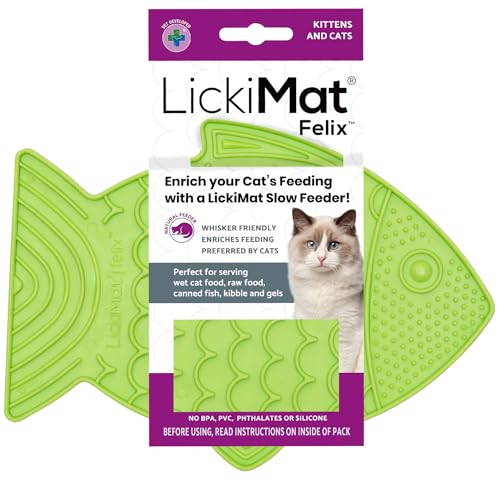
LickiMat Felix for Cats
Best for: wet food and treats, a calming licking activity
LickiMat’s Felix is a fish-shaped lick mat made for cats. You spread wet food, a lick treat or a paste over the textured surface, and your cat licks it off slowly. It is a simple and effective way to slow eating.
Licking is soothing for many cats, so a lick mat can help with boredom and anxiety as well as with fast eating. It is flexible, easy to wipe and can be popped into the dishwasher.
It costs around £7 and averages 4.3 out of 5 across nearly 8,000 ratings.
What we like:
- Works with wet food
- Calming activity
- Dishwasher safe
Worth knowing:
- Not suited to dry food
- Needs to be washed after each use
Specifications:
- Type: lick mat
- Shape: fish
- Best for: wet food and treats
- Brand: LickiMat
Trixie Slow Feeding Bowl (Ceramic)
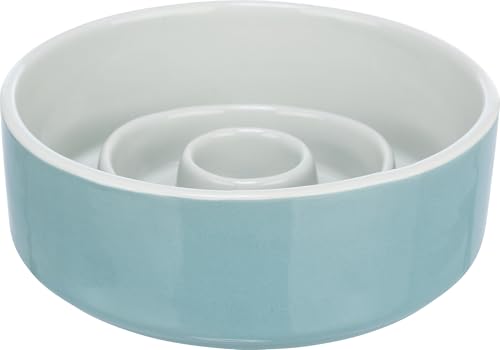
Best for: a simple ceramic bowl with an obstacle in the middle
The Trixie slow feeding bowl is a small ceramic dish with a raised pattern that makes a cat work around the ridges to reach their food. It is a very simple design, and it works with both dry and wet food.
The ceramic is heavy and stable, so it does not slide when a cat eats. It is easy to wash and suits cats that eat too quickly.
It costs around £6 and averages 4.4 out of 5 across nearly 200 ratings.
What we like:
- Very cheap
- Heavy and stable
- Works with wet and dry food
Worth knowing:
- Breakable
- A simple design that some cats will quickly master
Specifications:
- Type: slow feeding bowl
- Material: ceramic
- Capacity: 0.45 litres
- Brand: Trixie

PetSafe SlimCat Interactive Feeder
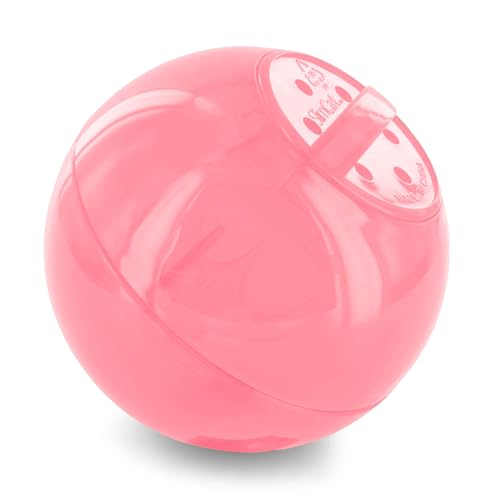
Best for: active cats that need exercise as well
The SlimCat is a feeder ball. You fill it with dry food, and your cat has to roll and bat it around to get pieces to fall out through an adjustable opening. It turns mealtimes into playtime.
It is popular with owners of overweight or bored indoor cats, since the extra activity helps burn calories. The opening can be adjusted to make it easier or harder.
It costs around £7 and averages 4.2 out of 5 across more than 20,000 ratings.
What we like:
- Combines play and mealtime
- Adjustable difficulty
- Huge number of ratings
Worth knowing:
- Dry food only
- Can be noisy on hard floors
Specifications:
- Type: feeder ball
- Best for: dry food
- Feature: adjustable opening
- Brand: PetSafe
Slow Feeder Cat Bowl Buying Guide
What to look for when buying a slow feeder cat bowl
Think about what your cat eats. Dry food works in bowls, diggers and feeder balls, while wet food suits lick mats and simple slow bowls. Choose a design that is hygienic and easy to wash.
Cats are particular about whiskers, so a wide, shallow bowl is usually the most comfortable. Avoid deep, narrow bowls that press against the whiskers.
Slow feeder types explained
Slow-feeding bowls have raised ridges or obstacles that a cat must eat around. Digger and puzzle feeders hide food in holes that a cat hooks out. Lick mats spread wet food over a surface. Feeder balls dispense dry food as a cat rolls them.
Try one or two different types to see what your cat prefers, since cats have strong opinions.
Size and portion guide
Always measure your cat’s daily food allowance, and use the feeder for part or all of it. Cats need small, frequent meals, and slow feeders are a good way to spread them out.
If your cat is on a diet, a feeder ball or digger can help by making the food last longer and adding a little exercise.
How much should you spend?
Slow feeders for cats are cheap. A simple bowl costs £5 to £7, a lick mat or feeder ball £6 to £8, and a digger feeder around £12. A pair of raised ceramic bowls costs around £20.
Frequently asked questions
Do slow feeders work for cats?
Yes. They slow eating, reduce vomiting from gulping and provide mental stimulation. Most cats take to them quickly, especially if you introduce them gradually.
Can I use a slow feeder for wet food?
Yes. A lick mat or a simple ceramic slow bowl works well for wet food. Diggers and feeder balls are designed for dry food.
My cat ignores the feeder. What should I do?
Start with a very easy setup, with food that is easy to reach, and let your cat get used to it. Make it a little harder each day. You can also put treats in and around it to build interest.
How often should I clean a slow feeder?
Wash it after every wet meal and at least daily for dry food. Most bowls and mats are dishwasher safe, but check the packaging.
Are slow feeders good for overweight cats?
They can help by slowing eating and adding activity. They are a useful part of a weight-management plan, but ask your vet for advice on portion sizes and diet.
Conclusion
For most owners, the Catit Senses Digger is the best choice for a cat that enjoys hunting, with thousands of positive ratings and a simple design. If you feed wet food, the LickiMat Felix is a low-cost, calming option, and the Trixie ceramic bowl is a simple, cheap slow-feeding dish.
For a whisker-friendly bowl, the Lusifaco ceramic pair is our pick, and for an active cat, the PetSafe SlimCat turns mealtime into play. Whichever you choose, introduce it gradually and your cat will soon be enjoying their food more slowly.