A good brush is the difference between a cat that glides through moulting season and one that leaves drifts of fur on every cushion. Regular brushing lifts out the loose hair before your cat swallows it during a wash, keeps the coat from matting, and turns into a bit of quiet bonding time that most cats grow to enjoy. The tricky part is choosing the right brush, because a slicker, a de-shedder, a detangler and a simple comb all do slightly different jobs.
The best brush for your cat depends on coat length, how much your cat sheds, and how patient they are about being groomed in the first place. Below we round up the best cat brushes in the UK for 2026, from self-cleaning slickers to serious de-shedding tools and gentle everyday options, with a buying guide to help you match the brush to your cat.
Quick Comparison Table
| Product | Best For | Price Range | Rating |
| Hertzko Self-Cleaning Slicker Brush | Most cats, best all-rounder | £9-14 | ⭐⭐⭐⭐⭐ |
| FURminator deShedding Tool for Cats | Heavy shedders and thick undercoats | £28-42 | ⭐⭐⭐⭐⭐ |
| Pet Teezer Cat Detangling & Deshedding Brush | Nervous cats and gentle daily use | £12-16 | ⭐⭐⭐⭐ |
| Trixie Double-Sided Cat Brush | Budget pick under £10 | £5-8 | ⭐⭐⭐⭐ |
| Ancol Cat Grooming Comb | Finishing, faces and small knots | £4-8 | ⭐⭐⭐⭐ |
The Best Cat Brushes Reviewed
Hertzko Self-Cleaning Slicker Brush
Best for: most cats and owners who want one brush that does almost everything.
The Hertzko is the brush most people should buy first, and it is easy to see why it is such a popular choice. Fine, angled wires packed across the head reach through the top coat to lift out loose hair and gently tease apart small tangles, so it works on short and long coats alike. Because it does the everyday job so well, it suits the majority of cats without you having to think too hard about coat type.
Its headline feature is the self-cleaning back. Press the button on the handle and the bristles retract into the head, pushing the collected fur up so you can wipe it straight into the bin instead of picking hair out of the wires by hand. The handle is rubberised and comfortable to hold, which matters during a longer session, and the whole thing feels sturdier than its modest price suggests.
As a slicker, the wire tips need a light touch, because pressing too hard on a fine-coated or sensitive cat can be uncomfortable, so let the brush do the work rather than leaning on it. It also lifts loose surface and mid-coat hair rather than stripping a dense undercoat the way a dedicated de-shedder does. For gentle, regular grooming that covers most cats and most coats, it is hard to beat for the money.
What we like:
- Fine wires suit short and long coats alike
- Self-cleaning button clears the fur in one press
- Comfortable rubberised, non-slip handle
- Sturdy build for a modest price
Worth knowing:
- Wire tips need a light hand on sensitive cats
- Lifts loose hair rather than stripping deep undercoat
- Not ideal as your only tool for a heavy moulter
Specifications:
- Type: self-cleaning slicker brush
- Suitable for: short, medium and long coats
- Feature: retractable bristles, one-press cleaning
- Handle: rubberised anti-slip grip
FURminator deShedding Tool for Cats
Best for: heavy shedders and thick, double-coated breeds that leave fur everywhere.
If your cat has a dense undercoat and moulting season feels like a losing battle, the FURminator is the tool that finally makes a dent. Rather than wire pins, it uses a fine stainless-steel edge that reaches below the top coat to grab and pull out the loose undercoat hair that ordinary brushes glide straight over. The amount it removes in a few minutes can be genuinely startling the first time you use one.
It comes in versions sized for short-haired and long-haired cats, and in small and large head widths, so you can match it to your cat rather than making do. Like the Hertzko, it has a button that ejects the collected fur in one motion, which keeps the tool clear during a heavy session. Used once or twice a week in spring and autumn, it makes a real difference to shedding around the house and to the number of hairballs your cat brings up.
The catch is that it is a powerful tool and needs a gentle, sensible hand. Short, light strokes in the direction of the coat are the way to use it, avoiding bony areas and never pressing hard, and it is not meant for daily use or for a cat with a thin, single coat. It is also the priciest option here. For a heavy-shedding, thick-coated cat, though, nothing else on this list comes close.
What we like:
- Reaches and removes the loose undercoat
- Dramatically cuts loose fur and hairballs in season
- Sizes for short-haired and long-haired cats
- Fur-ejector button keeps it clear
Worth knowing:
- Powerful, so use a light touch and short strokes
- Not for daily use or thin, single coats
- The most expensive option on this list
Specifications:
- Type: de-shedding tool with stainless-steel edge
- Suitable for: heavy shedders, double-coated breeds
- Options: short-hair and long-hair, small and large
- Feature: one-push fur-ejector button
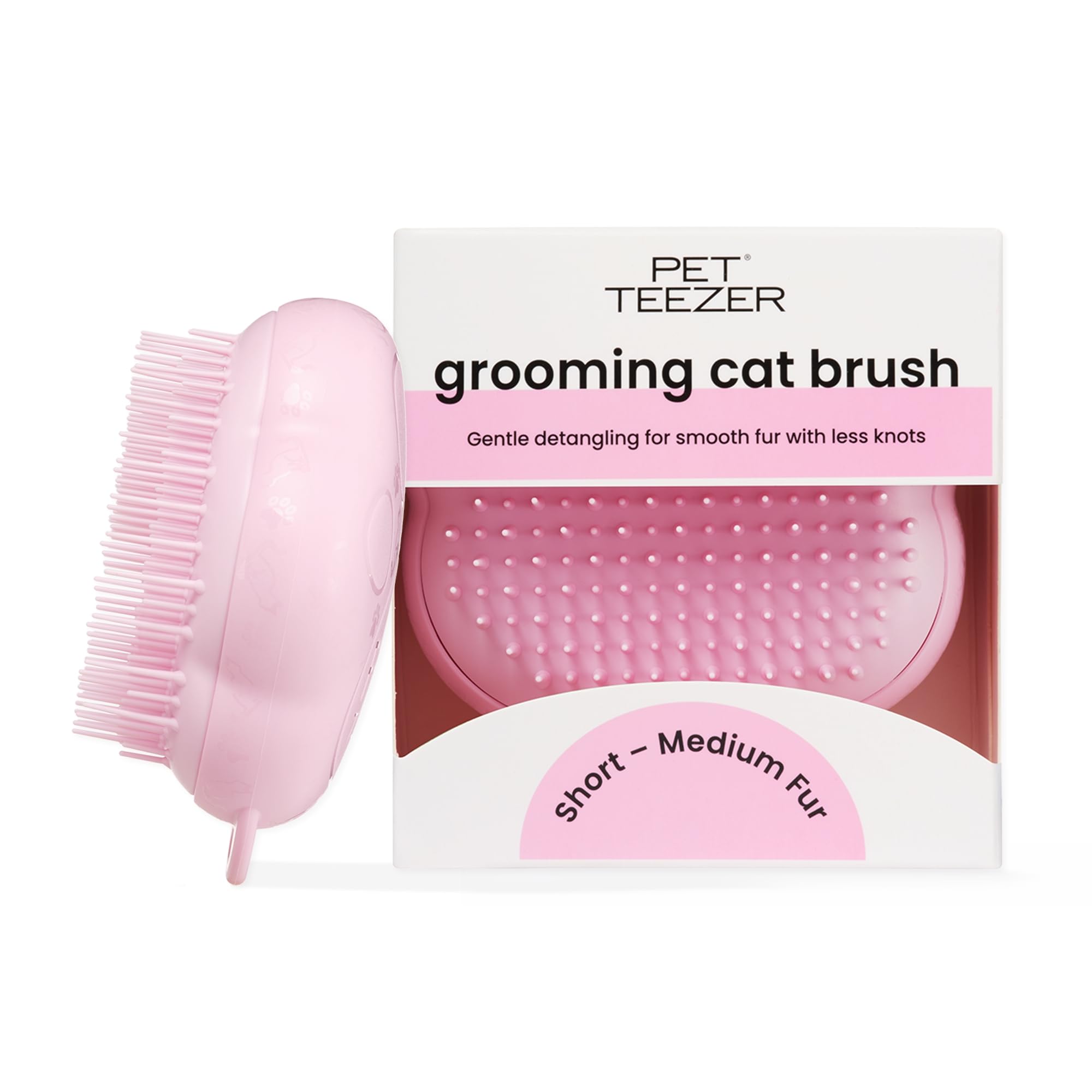
Pet Teezer Cat Detangling & Deshedding Brush
Best for: nervous cats and gentle daily grooming that feels like stroking.
Not every cat will tolerate a wire slicker, and this is where a softer detangling brush earns its place. The Pet Teezer uses flexible plastic teeth of two different lengths, so it works through the coat to catch loose hair and ease out minor tangles without the scratchy feel of metal pins. For a jumpy cat that bolts at the sight of a firmer brush, that gentler sensation often makes all the difference.
The flexible teeth glide over the skin rather than digging in, which makes it a comfortable choice for daily use and for cats with finer or more sensitive coats. It sits neatly in the hand thanks to a palm-friendly shape, and because there are no sharp wires to pick fur out of, cleaning is a quick wipe. Used little and often, it keeps loose hair under control and helps a cat that dislikes grooming learn to sit through it.
Being gentle by design, it lifts less hair per stroke than a slicker or a de-shedder, so a very heavy moulter will still want a firmer tool for peak season. It is a maintenance and comfort brush rather than a deep-grooming one. For nervous cats, sensitive skin and pleasant everyday sessions, it is a lovely thing to reach for.
What we like:
- Flexible teeth feel gentle, like stroking
- Wins over nervous and sensitive cats
- Comfortable palm-friendly shape
- Quick to wipe clean, no sharp wires
Worth knowing:
- Lifts less hair per stroke than a slicker
- Not enough on its own for a heavy moulter
- Best as a daily maintenance brush
Specifications:
- Type: detangling and deshedding brush
- Suitable for: nervous cats, sensitive or fine coats
- Teeth: flexible plastic, two lengths
- Use: gentle daily grooming
Trixie Double-Sided Cat Brush
Best for: a low-cost brush from a familiar UK brand that covers the basics.
Trixie is a name you will spot in most UK pet shops, and its double-sided brush is the sensible budget way into cat grooming. One face carries fine slicker-style pins for lifting loose hair and easing small tangles, while the other has soft bristles for smoothing the coat and bringing up a bit of shine. Two tools in one keeps the cost down and covers day-to-day grooming for most short and medium coats.
It is a good first brush if you are not sure how much grooming your cat will accept and would rather not spend much finding out. The bristle side is gentle enough to win over a cautious cat and works nicely as a finishing stroke after the pin side has done the lifting. Being from an established brand, it is easy to find in shops and online, so replacing it or picking one up on a normal pet-shop trip is no trouble.
At this price the build is naturally more basic than the premium tools, with no self-cleaning mechanism, so you clear the pins by hand. It is a light-duty brush best suited to routine tidy-ups rather than a thick, heavily shedding coat. As an affordable, do-it-all starter that handles everyday grooming, though, it is excellent value.
What we like:
- Pin and bristle sides in one brush
- Very affordable and widely stocked
- Bristle side gentle enough for cautious cats
- Handy for finishing after the pin side
Worth knowing:
- No self-cleaning, so clear the pins by hand
- Light-duty, best for routine tidy-ups
- Not up to a thick, heavily shedding coat
Specifications:
- Type: double-sided pin and bristle brush
- Suitable for: short and medium coats
- Sides: slicker pins plus soft bristles
- Brand: Trixie, widely available in the UK
Ancol Cat Grooming Comb
Best for: finishing, working around the face, and easing out small knots.
A comb is the quiet workhorse of cat grooming, and every kit benefits from one. The Ancol grooming comb has a row of rounded metal teeth, usually with a wider-spaced and a finer-spaced section, which lets you tease apart small tangles with the wide teeth and then smooth and finish the coat with the fine ones. It reaches the fiddly spots a brush skims over, such as behind the ears, under the chin and around the ruff.
It is the tool to reach for when your cat has a small knot starting to form, because you can work at it gently from the tip inwards before it turns into a proper mat. The rounded teeth are kinder to the skin than they look, the metal build feels solid, and from a trusted, widely stocked UK brand it costs very little. It also makes a tidy finishing tool after a slicker or de-shedder has done the heavy lifting.
A comb is slower than a brush over a large area, so it is a companion tool rather than your main one for a full-body groom. On a badly matted coat it will only take you so far, and stubborn mats are a job best left to a groomer or vet nurse. For finishing, faces and catching knots early, though, it is a cheap essential.
What we like:
- Wide and fine teeth for tangles and finishing
- Reaches faces, ears and other fiddly spots
- Catches small knots before they mat
- Solid metal build at a very low price
Worth knowing:
- Slower than a brush over large areas
- Won’t clear a badly matted coat on its own
- Best as a companion to a main brush
Specifications:
- Type: dual-spacing grooming comb
- Suitable for: all coat lengths, finishing and knots
- Teeth: rounded metal, wide and fine sections
- Brand: Ancol, widely available in the UK
Cat Brush Buying Guide
What to look for when buying a cat brush
Start with your cat’s coat and shedding, because that decides the type of brush more than anything else. A slicker suits most cats as an all-rounder, a de-shedding tool is for thick undercoats and heavy moulters, a soft detangler is for nervous or sensitive cats, and a comb is the finishing and knot-catching companion to whichever brush you choose.
After that, look at comfort and upkeep. A non-slip, cushioned handle makes a longer session far easier on your hand, and a self-cleaning head that ejects the fur at the push of a button saves a lot of fiddling. Rounded pin tips or flexible teeth are kinder on the skin, which matters for cats that are wary of grooming, and anything that rinses or wipes clean quickly is more likely to get used.
Cat brush types explained
Slicker brushes have fine, angled wires packed close together and are the best all-round choice, lifting loose hair and teasing out small tangles on almost any coat. Self-cleaning versions add a button that clears the collected fur. Bristle brushes use softer natural or synthetic bristles to smooth the coat and are gentle finishing tools rather than heavy-duty de-shedders.
De-shedding tools use a fine metal edge to reach below the top coat and pull out the loose undercoat, which makes them ideal for thick-coated, heavy-shedding cats but too much for daily use. Detangling brushes with flexible teeth are the gentlest option and suit nervous or sensitive cats, while combs handle finishing, faces and early knots. Many owners end up with a slicker or de-shedder for the main job and a comb for the detail.
Coat length and sizing guide
Short-haired cats generally need the least, and a slicker or a double-sided brush used a couple of times a week keeps loose hair in check. If they have a dense undercoat, a de-shedding tool during spring and autumn moults makes a big difference to the fur around your home.
Long-haired and double-coated breeds such as Persians, Ragdolls and Maine Coons need more regular attention to stop tangles turning into mats, ideally a little every day. A slicker plus a comb is a good pairing here, and a long-hair de-shedder for peak season. Whatever the coat, choose a brush head that suits your cat’s size, and pick a comfortable handle if you will be grooming often.
How much should you spend?
You do not need to spend much for a good everyday brush. Budget double-sided brushes and combs start from around £4 to £8, and a quality self-cleaning slicker such as the Hertzko sits at roughly £9 to £14, which covers most cats comfortably. For a short-haired, light-shedding cat, that is all you really need.
Premium de-shedding tools such as the FURminator cost £28 or more, and the outlay is worth it only if you have a heavy shedder or a thick double coat where a standard brush cannot keep up. Many owners settle on a mid-priced slicker plus an inexpensive comb, which handles almost everything without overspending, and add a de-shedder only if their cat truly needs one.
Frequently asked questions
How often should I brush my cat?
A couple of times a week suits most short-haired cats, while long-haired cats benefit from a little grooming every day to keep tangles at bay. During the spring and autumn moults, stepping sessions up helps control loose hair and cuts down on hairballs. Little and often works far better than one long session.
What is the best brush for a cat that hates being brushed?
A soft detangling brush with flexible teeth, such as the Pet Teezer, is usually the gentlest place to start because it feels more like being stroked. Keep sessions short, stop before your cat has had enough, and build up slowly so grooming becomes something they tolerate and then enjoy.
Do I really need a de-shedding tool?
Only if your cat is a heavy shedder or has a thick double coat. For a short-haired, light-shedding cat, a slicker or double-sided brush is plenty. If you are forever finding fur on the furniture and your cat brings up frequent hairballs, a de-shedder used in moulting season can transform things.
Can I use one brush for a long-haired and a short-haired cat?
A self-cleaning slicker works reasonably well across both, which is why it is such a popular all-rounder. That said, long-haired cats really benefit from a comb as well to catch tangles early, and heavy-coated cats may need a de-shedder, so the ideal kit is often a slicker plus a comb rather than a single brush.
How do I get my cat used to a new brush?
Let your cat sniff the brush first, then start with a few gentle strokes along the back where most cats are happy to be touched, and stop while it is still going well. Pair it with a calm moment or a treat afterwards, and keep early sessions short so grooming builds up as a positive routine rather than a battle.
Conclusion
For most cats and owners the Hertzko Self-Cleaning Slicker Brush is the one to buy first: it works across short and long coats, the self-cleaning button makes it a pleasure to use, and it costs very little. Pair it with an inexpensive Ancol comb for faces and early knots and you have a kit that handles the vast majority of grooming.
If you have a heavy shedder or a thick double coat, the FURminator deShedding Tool is worth the extra to keep loose fur and hairballs in check during moulting season, while nervous or sensitive cats do best with the gentle Pet Teezer. On a tight budget, the Trixie double-sided brush covers the basics for next to nothing.