A well-fitted harness spreads pressure across the chest instead of the neck, which makes it a safer everyday choice than a collar for most dogs, and a genuinely useful training tool for dogs who pull. The right harness depends heavily on your dog’s size, temperament and how much they pull on the lead.
We’ve compared six current dog harnesses sold on Amazon UK, from an all-round daily harness to dedicated no-pull designs, checking real prices, stock and reviews across a wide size range.
Quick Comparison
Product | Best For | Price Range | Rating |
Julius-K9 IDC Powerharness | All-round daily use, all sizes | £25-£35 | 4.7/5 |
Rabbitgoo No-Pull Dog Harness | Budget-conscious, still quality | £18-£25 | 4.5/5 |
Halti No Pull Dog Harness | Dogs that pull on the lead | £18-£22 | 4.2/5 |
Embark Adventure No Pull Harness | Active dogs and hikers | £20-£25 | 4.5/5 |
Kurgo Tru-Fit Smart Walking Harness | Joint issues or mobility concerns | £24-£29 | 4.2/5 |
Our Top Picks
1. Julius-K9 IDC Powerharness
Best for: all-round daily use across all dog sizes
The IDC Powerharness is a genuine industry favourite, used widely by working and assistance dog handlers as well as pet owners, thanks to its one-click fit and interchangeable hook-and-loop ID patches for labelling (‘In Training’, ‘Do Not Pet’, and so on).
What we like: the shatterproof buckle and reflective elements feel genuinely built for daily, heavy use rather than occasional walks, and the huge review base reflects years of real-world trust in the design.
Worth knowing: it isn’t a dedicated no-pull harness with a front clip, so dogs who pull hard may need training alongside it rather than relying on the harness alone. Sizes run S through XL/2.
Specifications:
- Sizes: S to XL/2 (chest 49-67cm on Size S)
- Material: nylon with shatterproof buckle
- Feature: interchangeable ID patches, reflective elements
- Fit: one-click adjustment


2. Embark Adventure No Pull Dog Harness
Best for: active dogs, hikers and outdoor adventures
A heavy-duty padded vest harness built for dogs who spend as much time on trails as pavements, with front and back leash clips so you can switch between no-pull training and a standard walking connection.
What we like: it’s a genuinely well-reviewed harness at a sub-£25 price point, and the padded vest design holds up well on longer, more active walks than a slim strap harness.
Worth knowing: the padded vest style is bulkier than a minimal harness, which some owners prefer for comfort but others find less breathable in hot weather. Sizes run X-Small to X-Large.
Specifications:
- Sizes: X-Small to X-Large (Medium: 60-77cm chest)
- Feature: front and back leash clips, adjustable
- Design: heavy-duty padded vest
- Also: a solid budget pick under £25

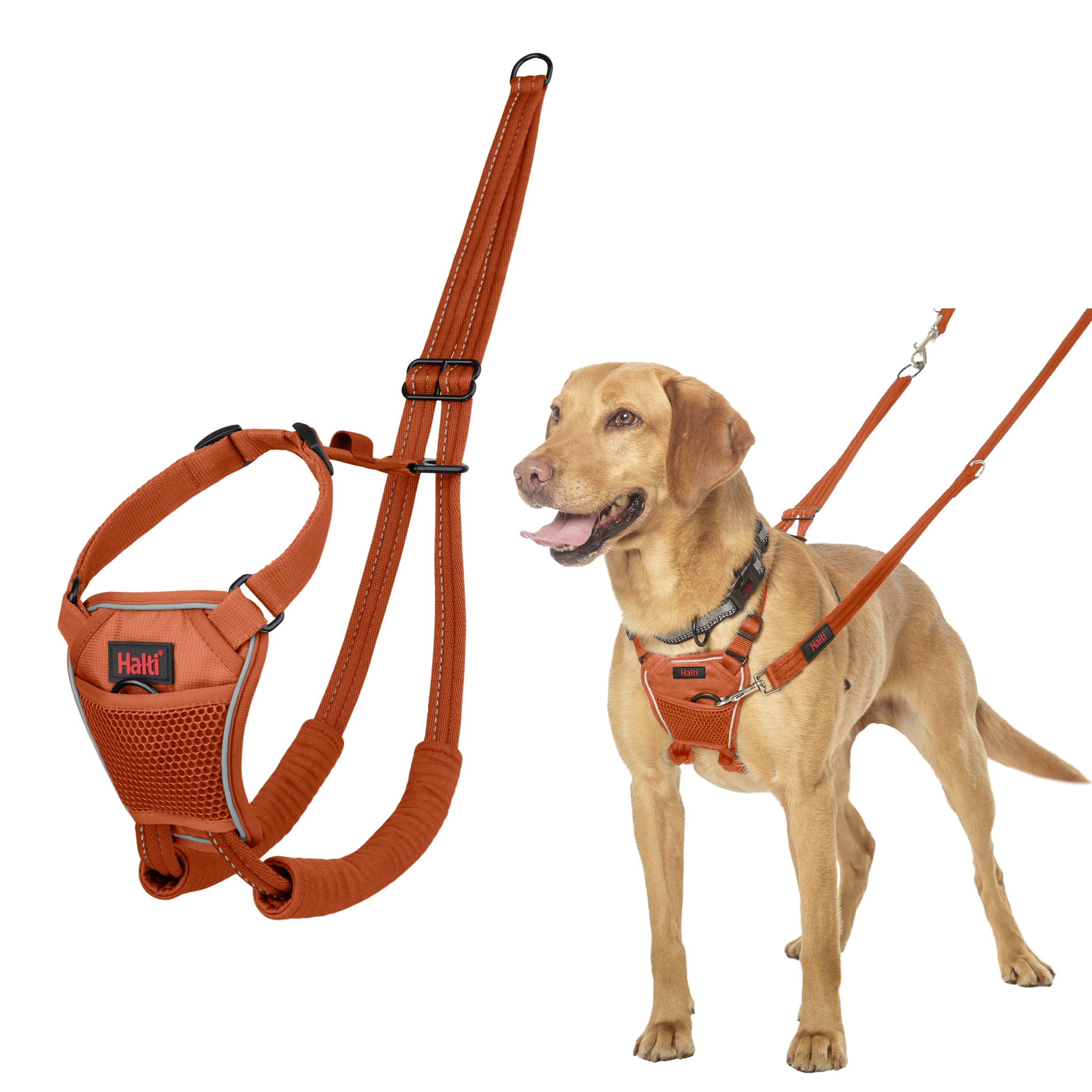
3. Halti No Pull Dog Harness
Best for: dogs that pull on the lead
Made by the Company of Animals, the team behind the well-known Halti head collar, this front-clip harness is built specifically to discourage pulling by redirecting a dog’s momentum back toward you when they lean into the lead.
What we like: a genuinely huge number of reviews back up its reputation as a reliable no-pull option, and it’s lightweight enough for everyday comfort rather than feeling like a heavy training aid.
Worth knowing: front-clip harnesses work best alongside some basic loose-lead training rather than as a total fix on their own. Sizes run XS to L, so check the fit guide for your dog’s chest measurement.
Specifications:
- Sizes: XS to L
- Feature: front-clip anti-pull design, reflective trim
- Material: lightweight adjustable nylon
- Also: a solid budget pick under £25
4. Rabbitgoo No-Pull Dog Harness
Best for: budget-conscious owners who still want quality
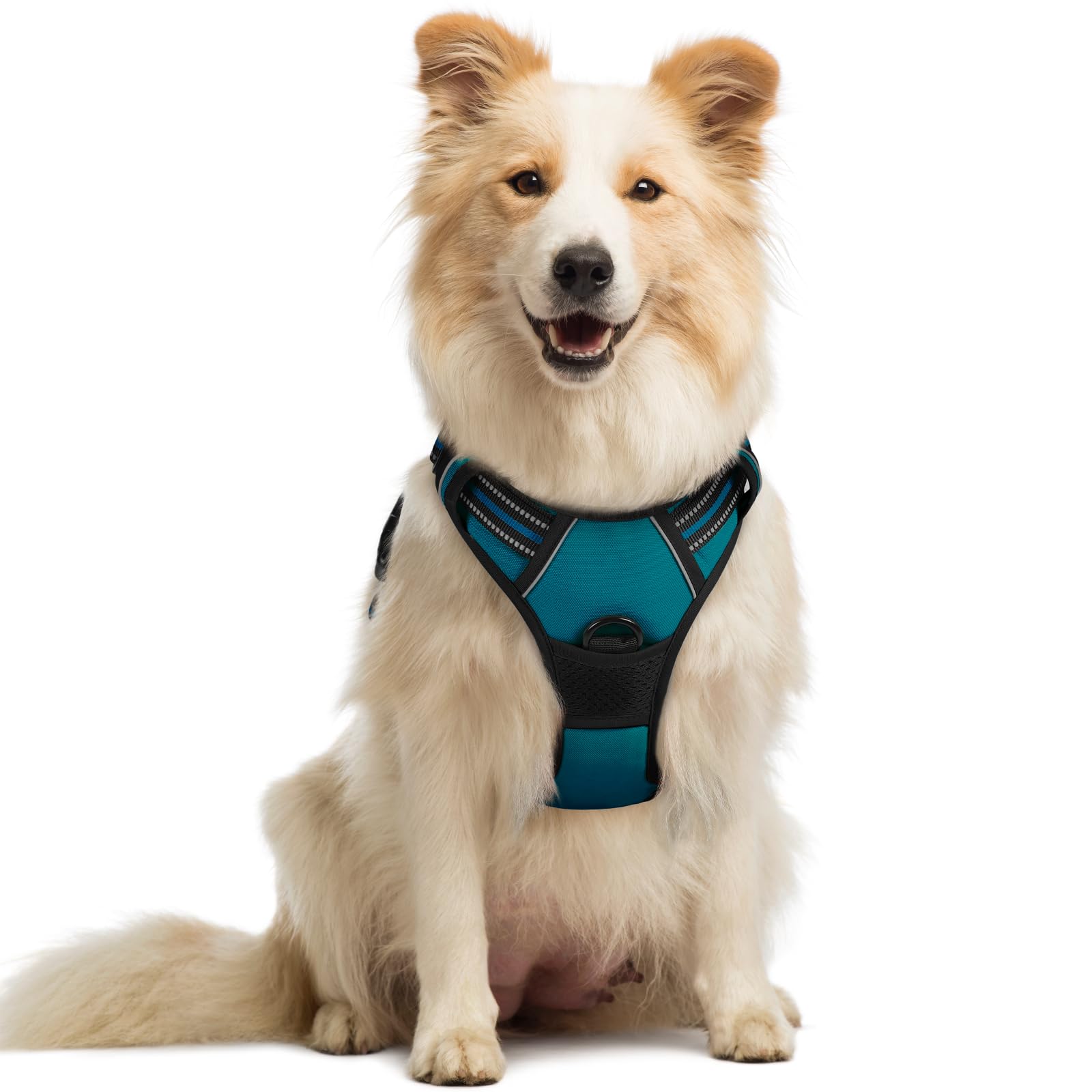
One of the best-selling dog harnesses on Amazon UK, this Rabbitgoo design combines a no-choke front clip with a top handle for extra control, built from breathable padded mesh that stays comfortable on warmer days.
What we like: an enormous number of reviews and a genuinely strong rating give real confidence in day-to-day durability, and two lead rings (front and back) add flexibility for training or relaxed walks.
Worth knowing: as with any budget harness, check the fit carefully against the size chart rather than guessing, since a loose fit reduces how effective the no-pull design actually is. Sizes run XS to XL.
Specifications:
- Sizes: XS to XL
- Feature: front-clip no-choke design, top handle, 2 lead rings
- Material: breathable padded mesh
- Also: a strong budget pick under £25
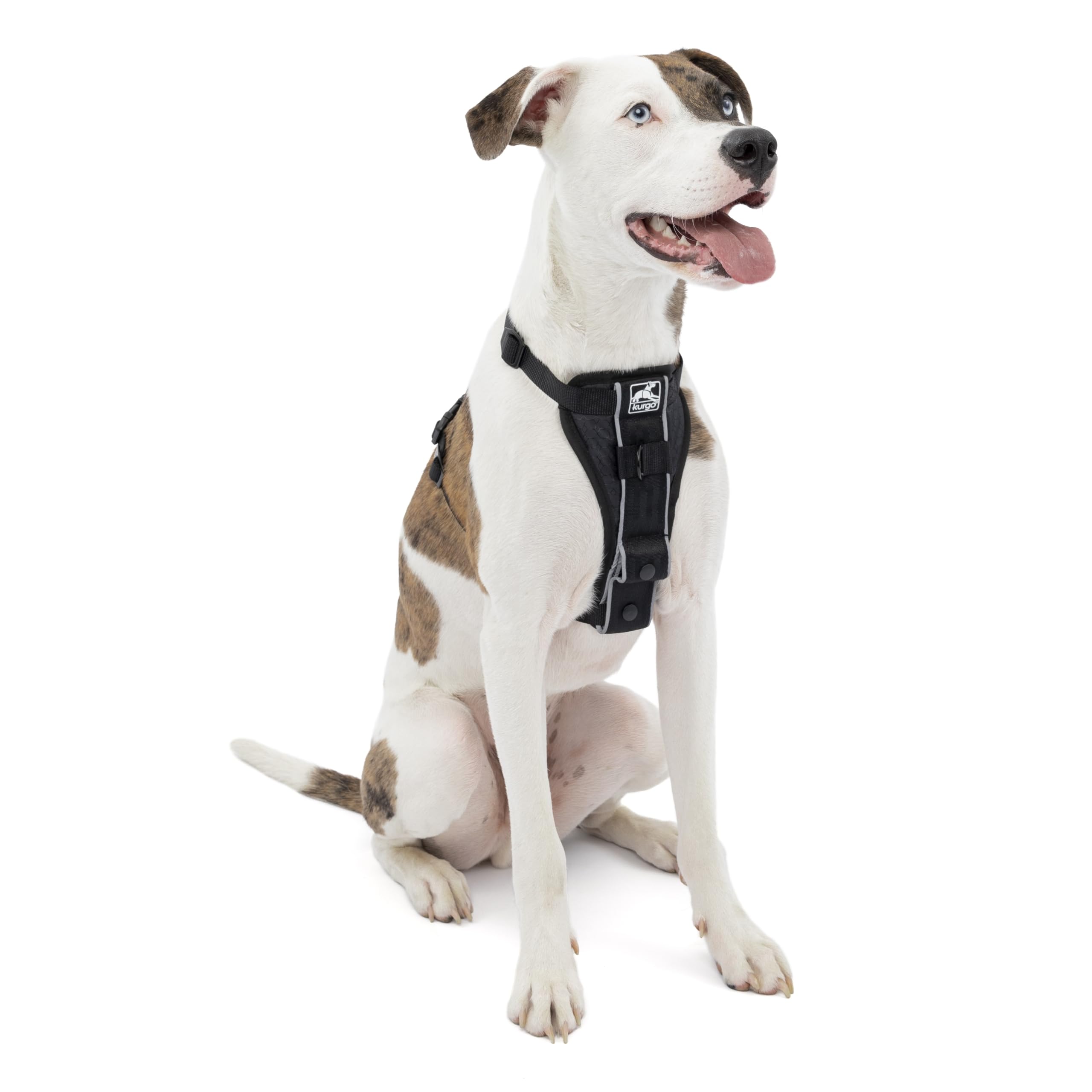
5. Kurgo Tru-Fit Smart Dog Walking Harness
Best for: dogs with joint issues or mobility concerns
Kurgo’s Tru-Fit uses five points of adjustment and a padded chest panel specifically designed to spread pressure evenly across the body, which suits older dogs or those with joint sensitivities who need a gentler fit than a standard harness.
What we like: it doubles as a car-seatbelt-compatible harness, so it’s genuinely useful beyond just walks, and the quick-release buckles make getting a stiffer or older dog in and out easier.
Worth knowing: stock on the Medium size can run low at times, so check current availability. Sizes run XS to XL, and it’s worth measuring carefully given the five-point adjustment system.
Specifications:
- Sizes: XS to XL
- Feature: 5-point adjustment, padded chest support, quick-release buckles
- Also usable as: a car-seatbelt harness
- Material: reflective trim nylon
6. Ancol Viva Padded Harness
Best for: casual everyday walks on a budget
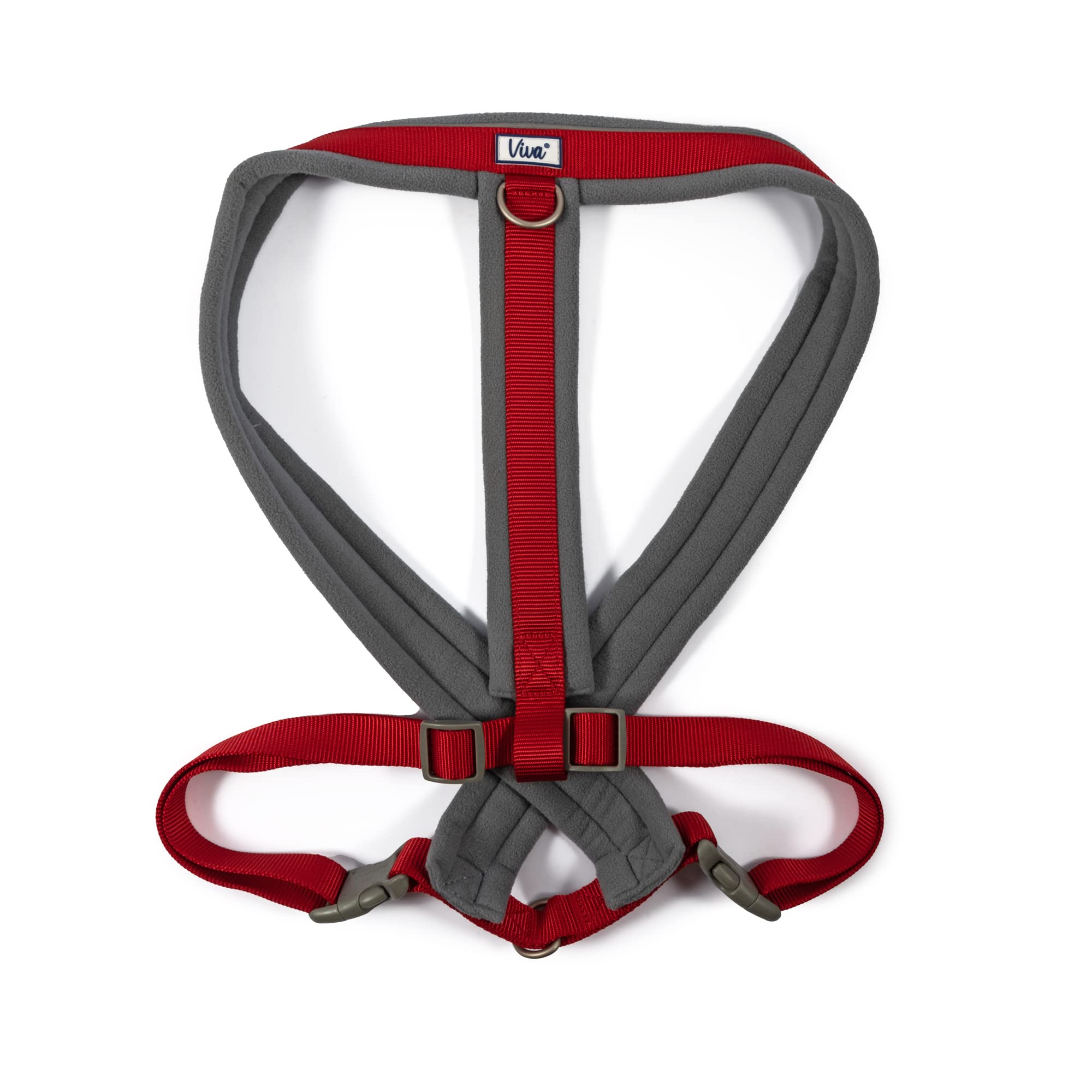
A straightforward, no-frills padded harness from Ancol, one of the UK’s longest-established pet brands, built from weatherproof poly-weave webbing with a soft micro-fleece lining.
What we like: it’s the most affordable harness on this list by a clear margin, and the option of a front or rear-loading D-ring gives some flexibility for lead attachment.
Worth knowing: this isn’t a dedicated no-pull design, so it suits dogs who already walk well on the lead rather than strong pullers. Sizes run S to XXL.
Specifications:
- Sizes: S to XXL
- Material: poly-weave webbing, micro-fleece padding
- Feature: front or rear D-ring option, reflective band
- Also: a strong budget pick under £25
Buying Guide: How to Choose the Dog Harness
What to Look For
Measure your dog’s chest girth before buying rather than relying on breed-based size guesses, and decide whether you need a front-clip no-pull design or a standard back-clip harness. Padded panels matter more for dogs who wear a harness for long periods or have sensitive skin, while lightweight mesh suits hot weather and shorter walks.
Dog Harness Types Explained
Back-clip harnesses are the simplest and most comfortable for dogs who already walk well on the lead. Front-clip no-pull harnesses redirect a dog’s momentum sideways when they lean into the lead, discouraging pulling. Dual-clip harnesses offer both options in one product, and step-in harnesses (not covered here) skip over-the-head fitting for dogs who dislike it.
Size Guide
Measure around the widest part of your dog’s ribcage, just behind the front legs, for chest girth — this is almost always the key measurement on a harness size chart. A correctly fitted harness should allow two fingers of space underneath the straps without being loose enough to twist or slip over the head.
How Much Should You Spend?
Genuinely solid budget harnesses start around £14-£22 and cover most everyday needs well, including several of the best-selling and best-reviewed options in this category. £25-£35 buys premium materials and hardware from established brands like Julius-K9, which is worth it for dogs who wear a harness daily or for years of heavy use.
Frequently Asked Questions
Is a harness better than a collar for walking?
For most dogs, yes — a harness spreads pulling pressure across the chest rather than the neck, reducing the risk of tracheal damage, especially for dogs who pull or have respiratory sensitivities like flat-faced breeds.
Can puppies wear harnesses?
Yes, provided the harness is correctly sized and adjusted as they grow — many brands offer specific puppy or extra-small sizes. Check the size chart regularly since puppies can outgrow a harness within weeks.
How do I stop my dog pulling on the harness?
A front-clip no-pull harness helps by redirecting momentum, but pairing it with basic loose-lead training — stopping or changing direction when the lead tightens — gets the best long-term results.
How often should I replace a dog’s harness?
Check regularly for fraying webbing, worn buckles or stretched stitching, and replace immediately if you spot damage, since a compromised harness can fail under sudden pressure.
Should I leave the harness on all day?
It’s generally better to remove it when your dog is relaxing at home, both for comfort and to check the skin underneath regularly for any rubbing or irritation.
Final Verdict
The Julius-K9 IDC Powerharness is our top pick for most dogs — a genuinely trusted, well-built harness for daily use across sizes. For a dog who pulls, the Halti No Pull Harness is a proven front-clip option, and the Rabbitgoo No-Pull Harness remains an excellent budget-friendly alternative with a huge track record of positive reviews.
This roundup is part of our Dog Walking Gear: The Complete Guide and How to Choose a Dog Harness.