Few toys earn their place in a UK dog household quite like a rope. It costs little, it doubles as a tug game and a fetch toy, and the woven texture gives most dogs something satisfying to work at on a wet afternoon when the walk was cut short. It is also the toy owners worry about most, because a rope that has been chewed down to loose threads is no longer really a toy at all.
The difference between a rope that lasts months and one that shreds in an evening comes down to construction, fibre and matching the size to the dog. Below we have rounded up the best dog rope toys available in the UK for 2026, covering heavy three-knot ropes for large breeds, training tuggers, and lighter options for puppies, plus how to tell when a rope needs retiring.
Quick Comparison Table
| Product | Best For | Price Range | Rating |
| Kong Signature Rope Dual Knot | Overall build quality and everyday tug | £10-16 | ⭐⭐⭐⭐⭐ |
| Mammoth Flossy Chews 3-Knot Rope | Large breeds and determined chewers | £12-20 | ⭐⭐⭐⭐⭐ |
| Tug-E-Nuff Sheepskin Ragger | Training and recall reward games | £15-24 | ⭐⭐⭐⭐ |
| Nylabone Power Play Rope Tug | Two-handed and two-dog tug | £12-18 | ⭐⭐⭐⭐ |
| Ancol Cotton Rope Tug | Budget pick under £25 | £4-8 | ⭐⭐⭐⭐ |
The Best Dog Rope Toys Reviewed
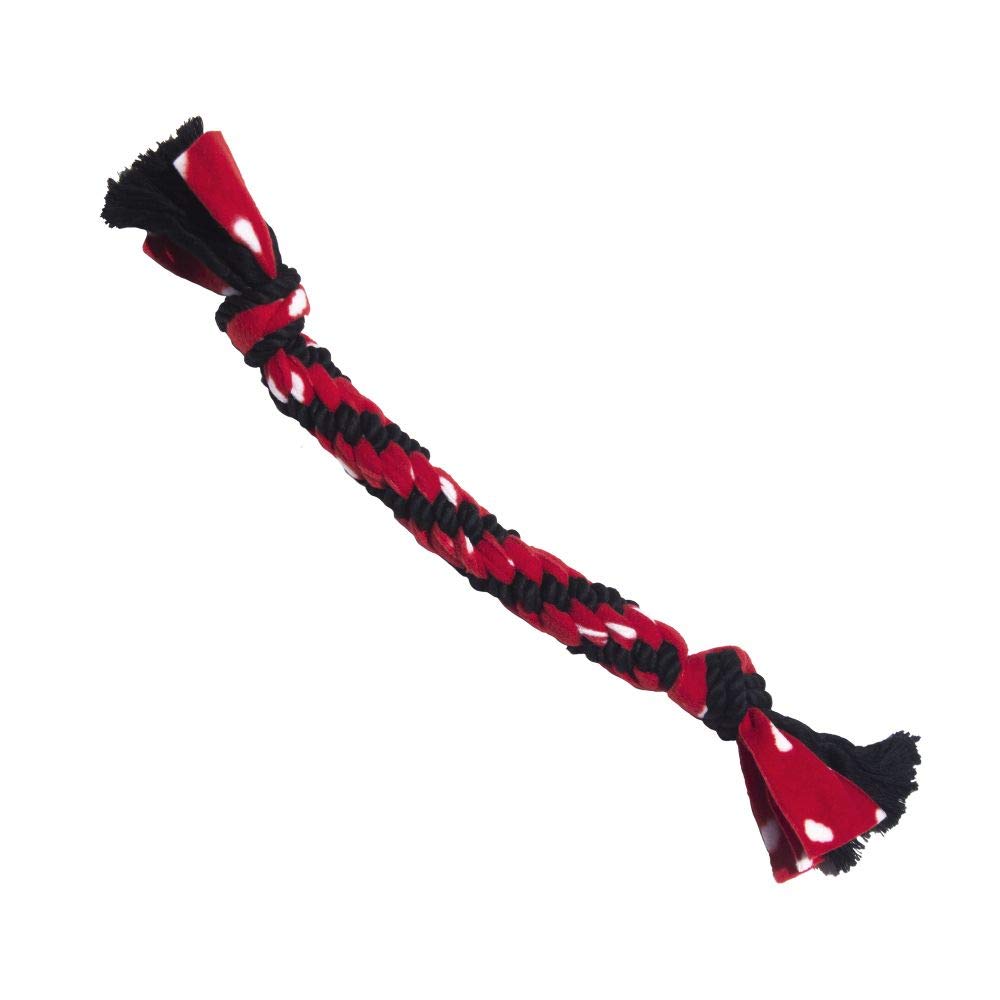
Kong Signature Rope Dual Knot
Best for: owners who want one dependable rope for daily tug and fetch.
Kong’s rope range uses a tighter weave than most supermarket ropes, and the difference shows after a few weeks of use. Where a loosely woven rope starts shedding strands almost immediately, the Signature holds its shape, and the two chunky knots give both dog and owner something solid to grip during a tug session.
The proportions are the quiet strength here. The rope is thick enough that a medium or large dog cannot get a full-mouth grip and start grinding through it, and the knots sit far enough apart that a game of tug does not end with fingers in the way of teeth. It also floats reasonably well, which makes it a decent option for dogs who like water.
It is not indestructible, and no rope is. A committed chewer left alone with it will still work the ends loose eventually, so this is a supervised-play toy rather than something to leave in the crate. The cotton blend also holds moisture, so it needs drying out properly between sessions or it will start to smell.
What we like:
- Tighter weave than most budget ropes, so it frays more slowly
- Two well-spaced knots give a secure grip for tug
- Thick enough to resist a full-mouth chewing grip
- Floats well enough for water play
Worth knowing:
- Still a supervised toy, not one to leave unattended
- Holds moisture and needs drying between sessions
- Smaller sizes are outmatched by large breeds
Specifications:
- Suitable for: small, medium and large breeds, sizes accordingly
- Material: woven cotton blend
- Design: dual-knot straight rope
- Best use: tug, fetch, supervised solo play
Mammoth Flossy Chews 3-Knot Rope
Best for: large breeds and dogs that go through ordinary ropes in days.
Mammoth’s Flossy Chews are the heavyweight of the category and a fixture in UK rescue kennels for good reason. The rope is noticeably denser than a standard cotton toy, and the three-knot format means that even when one end starts to soften there is still plenty of intact rope left to play with.
For a Labrador, German Shepherd, Rottweiler or similar, this is usually the first rope that lasts long enough to feel like value. The extra length also makes it the safest choice for tug with a big dog, since it keeps hands well clear of the business end. Mammoth make it in a genuine range of sizes, and going a size up from what looks right is rarely a mistake.
The trade-offs are weight and price. It is heavy for a small dog to carry, and the largest sizes cost noticeably more than a basic rope. The dense weave is also harder to dry out, so it is worth keeping two and rotating them rather than putting a damp one back in the toy box.
What we like:
- Denser weave than standard cotton ropes
- Three knots mean plenty of usable rope as it wears
- Extra length keeps hands clear during tug with big dogs
- Wide genuine size range, including very large options
Worth knowing:
- Too heavy for small breeds and most puppies
- Larger sizes cost more than a basic rope
- Dense weave takes longer to dry out
Specifications:
- Suitable for: medium, large and giant breeds
- Material: cotton and polyester blend
- Design: three-knot rope, multiple lengths
- Best use: heavy tug, supervised chewing, kennel play
Tug-E-Nuff Sheepskin Ragger
Best for: recall training and structured reward-based games.
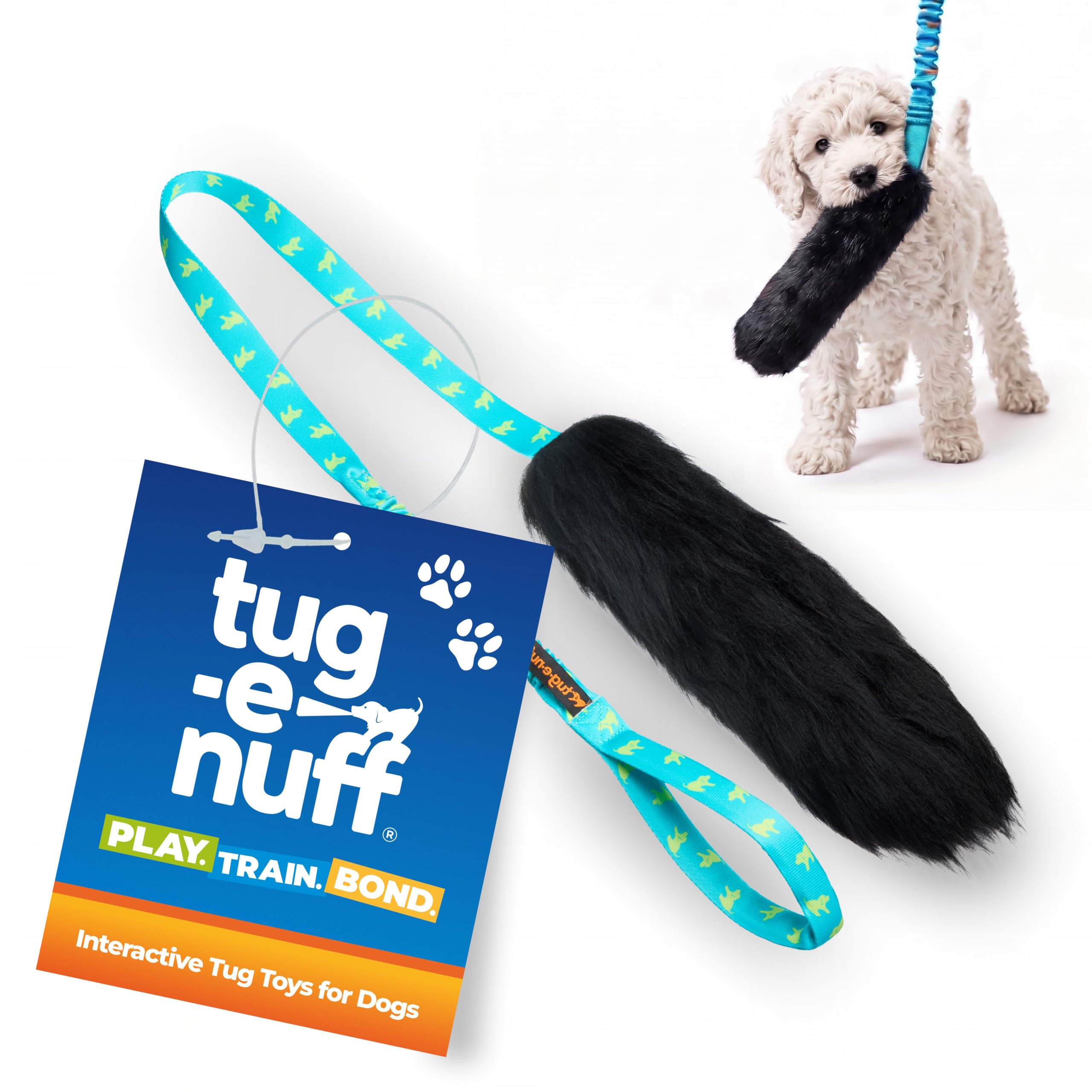
Tug-E-Nuff is a UK brand built around a specific idea: that the toy is a training tool, not just something to chew. The Ragger pairs a rope handle with a sheepskin or faux-fur head, and that combination is far more interesting to most dogs than plain cotton, which is precisely the point when the toy is competing with a field full of distractions.
Used as a reward, it does something a plain rope struggles to. The handle gives a long, safe grip for the owner, the fur head is the part the dog targets, and the toy can be produced, played with and put away in a way that keeps its value high. Trainers working on recall, focus and impulse control tend to reach for something like this rather than a supermarket rope.
It is a proper training toy rather than a leave-out chew, and it is priced accordingly. The fur head will not survive being treated as a chew toy, so it needs to come out for games and go away afterwards. For owners who simply want a rope for the toy box, this is more toy than the job requires.
What we like:
- UK brand designed specifically for reward-based training
- Fur head holds interest far better than plain cotton
- Long handle gives a safe grip and good leverage
- Ideal for recall, focus and impulse-control work
Worth knowing:
- Not a leave-out chew toy, the fur head will not last
- Costs more than a standard rope
- More toy than needed for casual play
Specifications:
- Suitable for: puppies through to adult dogs, sized by strength
- Material: sheepskin or faux fur with woven rope handle
- Design: handled tugger with fur head
- Best use: training rewards, tug, recall games
Nylabone Power Play Rope Tug
Best for: two-handed tug and households with two dogs who play together.
Nylabone’s rope tugs are built around a longer format with a knot or handle at each end, which changes how the toy gets used. One person can hold both ends, two people can play from either side, or two dogs can take an end each without either being crowded into the other’s face.
That length is genuinely useful in a multi-dog household, where a short rope tends to end with two dogs nose to nose over the same knot. The weave is a step up from budget ropes without reaching Mammoth’s density, which puts it in a sensible middle ground for medium dogs who play hard but are not dedicated destroyers.
The ends soften before the middle does, as with most double-ended ropes, so it tends to need retiring while a good length of rope still looks fine. It is also bulky to store, and the longer format is unwieldy for a small dog to carry around.
What we like:
- Long format suits two-dog and two-person tug
- Knotted ends at both sides give even grip
- Weave sits above budget ropes without the weight of Mammoth
- Good middle option for hard-playing medium dogs
Worth knowing:
- Ends wear out well before the middle does
- Bulky to store in a small toy box
- Unwieldy for small breeds to carry
Specifications:
- Suitable for: medium and large breeds
- Material: woven cotton and synthetic blend
- Design: long double-ended knotted tug
- Best use: tug, two-dog play, fetch
Ancol Cotton Rope Tug
Best for: a budget pick and a spare to keep in the car or the garden.
Ancol is a long-established UK pet brand, and their basic cotton ropes are the ones to buy when the job is simply having a rope to hand. At a few pounds each, they are cheap enough to keep one in the car, one in the garden and one in the house without thinking about it.
For light chewers, older dogs and casual games of tug, a basic rope does the job perfectly well. Buying two or three at once also solves the drying problem, since a damp rope can go in the wash while a dry one stays in circulation. Cheap ropes also make retiring a worn one a much easier decision.
The weave is looser than the premium options, so a strong chewer will get through it quickly and it will shed strands sooner. Sizes tend to run small, and colours fade in the wash. Treat it as a consumable rather than a long-term toy and it is good value.
What we like:
- Very low price, easy to buy several at once
- Established UK brand widely stocked
- Perfectly adequate for light chewers and casual tug
- Cheap enough to retire without hesitation
Worth knowing:
- Looser weave frays faster than premium ropes
- Not suitable for determined chewers
- Sizes run small and colours fade in the wash
Specifications:
- Suitable for: small and medium breeds, light chewers
- Material: woven cotton
- Design: knotted rope tug, several styles
- Best use: casual tug, fetch, spare toy
Trixie Playing Rope with Ball
Best for: puppies and small breeds learning to play tug.
Trixie’s rope-and-ball combinations pair a short length of lighter rope with a tennis-style or rubber ball threaded through the middle, and for a small dog or a puppy that combination works better than a plain rope. The ball gives a clear target, and the rope tail makes the toy easy to throw much further than a ball alone.
The lighter weave matters for young dogs. A heavy three-knot rope is simply too much for a puppy to pick up and carry, whereas this size lets them succeed at the game, which is most of the point at that stage. The rope tail also makes it a gentle introduction to tug without the leverage of a full-size tugger.
The ball is the weak point, and on most versions it will be separated from the rope eventually. The light weave is not meant for adult chewers, and puppies graduating to stronger jaws will outgrow it quickly, usually within a few months. It is a stage toy rather than a lasting one.
What we like:
- Light enough for puppies and small breeds to carry
- Ball gives a clear target and adds fetch distance
- Gentle introduction to tug games
- Inexpensive and widely stocked in the UK
Worth knowing:
- Ball usually separates from the rope in time
- Light weave is not for adult chewers
- Most puppies outgrow it within a few months
Specifications:
- Suitable for: puppies and small breeds
- Material: woven cotton with rubber or felt ball
- Design: short rope with threaded ball
- Best use: puppy play, fetch, light tug
Dog Rope Toy Buying Guide
What to look for when buying a dog rope toy
Weave density is the single best predictor of how long a rope will last. Squeeze it: a good rope feels solid and springs back, while a cheap one compresses easily and shows gaps between the strands. Loose weaves shed strands from the first session.
Knot count and placement matter almost as much. Knots are the strongest points on a rope, so more of them means more usable toy as the ends wear. They also set how far apart hands and teeth stay during a tug game, which is worth thinking about with a big dog.
Fibre content is the third factor. Pure cotton is soft, absorbent and kind on teeth but wears faster; cotton blended with polyester lasts longer but is slightly harsher. For most UK households a blend is the sensible middle ground.
Rope toy types explained
Straight knotted ropes are the classic format, usually with one, two or three knots. They suit tug, fetch and general play, and the knot count broadly tracks with size and durability.
Handled tuggers add a loop or bar at one end so the owner has a secure grip. These are the training-oriented designs, and they give far better leverage and control than gripping a bare rope.
Rope-and-ball or rope-and-fur combinations add a target the dog is drawn to. They tend to be more interesting to dogs who ignore plain rope, but the added component is usually the first part to fail.
Ring and figure-of-eight ropes spread wear across a loop rather than two ends. They can be easier for flat-faced breeds to pick up, though they offer less length for safe tug with large dogs.
Size guide
Sizing a rope is about the dog’s mouth, not just its weight. The rope should be thick enough that the dog cannot close its back teeth around the full width, since that grinding grip is what shreds a rope fastest.
- Small breeds under 10kg: short, light ropes around 20-25cm, single or double knot
- Medium breeds 10-25kg: double-knot ropes around 30-40cm
- Large breeds 25-40kg: three-knot ropes 45-60cm, denser weave
- Giant breeds over 40kg: heavyweight three-knot ropes 60cm and up
When a dog falls between two sizes, size up. A rope slightly too large is awkward but safe, while one slightly too small is easier to destroy and easier to swallow pieces of.
How much should you spend?
Basic cotton ropes from brands like Ancol sit at around £4-8, and for a light chewer or an occasional game that is often all that is needed. Buying two or three at this price is a sensible approach.
The £10-20 bracket covers Kong, Nylabone and Mammoth, and this is where the weave quality improves enough to change how long the toy lasts. For a medium or large dog who plays hard, spending here usually works out cheaper over a year than replacing budget ropes repeatedly.
Above £20, the money generally buys a training toy rather than a tougher rope. Tug-E-Nuff and similar handled tuggers are priced for what they do in a training context, so they make sense for owners doing structured work and less sense for casual play.
Keeping a rope toy in good condition
Most cotton ropes can go through a washing machine on a cool cycle in a laundry bag, and drying them fully afterwards stops the musty smell that damp ropes develop. Keeping two in rotation makes this practical.
Check ropes over weekly. Trim loose strands with scissors as they appear, and retire the rope entirely once it is unravelling faster than it can be trimmed, once a knot has worked loose, or once the dog is pulling free lengths of thread rather than tugging the toy.
Rope toys are supervised toys. Loose strands can be swallowed, and a dog who has learned to strip a rope rather than tug it should be moved to a solid rubber toy instead. If a dog is swallowing pieces of any toy, speak to a vet.
Frequently asked questions
Are rope toys safe for dogs?
For supervised tug and fetch with a dog who plays with the toy rather than dismantling it, rope toys have been a household staple for decades. The risk comes from loose strands being swallowed, so the safety of a rope depends almost entirely on retiring it promptly once it starts to unravel and not leaving it with a dog unsupervised.
How long should a rope toy last?
A good-quality rope matched properly to the dog typically lasts a few months of regular play, while a budget rope with a strong chewer may last days. Condition matters more than age, so replace on the state of the weave rather than on a schedule.
Does playing tug make a dog aggressive?
Tug played with rules is widely used by trainers as a reward and an outlet, not something to avoid. Teaching a reliable release, starting and ending the game on the owner’s terms and keeping teeth away from hands turns tug into a useful training tool rather than a problem.
Can puppies have rope toys?
Yes, in a size and weight they can actually pick up, and with supervision. Lighter ropes suit teething puppies well, but they wear through quickly as adult teeth come in, so expect to move up to a sturdier rope at around six months.
Can rope toys go in the washing machine?
Most plain cotton ropes wash well on a cool cycle in a laundry bag with no detergent or a pet-safe one. Ropes with balls, fur heads or glued components are better washed by hand, and everything should be dried fully before going back in the toy box.
Final Verdict
For most UK households the Kong Signature Rope Dual Knot is the rope to beat, with a tighter weave and better proportions than the budget options at a price that still makes sense. Large breeds and serious chewers are better served by the Mammoth Flossy Chews 3-Knot Rope, which is the only rope here dense enough to last with a big dog.
Owners doing recall or focus work should look at the Tug-E-Nuff Sheepskin Ragger instead, since it is built as a training reward rather than a chew, while the Ancol Cotton Rope Tug remains the sensible budget spare to keep in the car.