Watch a hamster discover a sand bath for the first time and you will understand why it is the one accessory almost every keeper ends up recommending. There is a pause, a cautious sniff, and then the whole animal disappears into a rolling, wriggling, sand-flinging frenzy that looks like pure joy. It is also one of the few enrichment items that a hamster uses every single day without ever getting bored of it.
Sand baths are how hamsters keep their coats in condition naturally, and most keepers find they double as a tidy toilet corner once the hamster picks a spot. The tricky part is choosing a container that is big enough, heavy enough not to tip, and low enough for a dwarf to climb into — and using the right sand, which is the single most common mistake. Here are the best hamster sand baths available in the UK, plus what to put in them.
Quick Comparison Table
| Product | Best For | Price Range | Rating |
| Ceramic Sand Bath House | Best all-rounder for Syrians and dwarves | £12-25 | ⭐⭐⭐⭐⭐ |
| Glass Baking Dish | Best budget pick under £8 | £4-8 | ⭐⭐⭐⭐⭐ |
| Clear Acrylic Sand Bath | Best for watching and for large enclosures | £15-30 | ⭐⭐⭐⭐ |
| Wooden Sand Bath Box | Best for natural-look setups | £12-22 | ⭐⭐⭐⭐ |
| Corner Sand Bath | Best for small or crowded cages | £8-15 | ⭐⭐⭐ |
The Best Hamster Sand Baths Reviewed
Ceramic Sand Bath House
Best for: keepers who want one item that works as a sand bath, a hide and a toilet.
The ceramic sand bath is the format most hamster keepers settle on eventually. It is a glazed ceramic box or dome with an entrance cut into one side, heavy enough that a determined Syrian cannot shove it around, and with walls tall enough to keep most of the sand inside the container rather than across the enclosure. Brands like Niteangel and Rosewood make versions in the 20-30cm range, which is the useful size bracket.
The dual purpose is what makes it worth the money. Because it is enclosed on most sides, hamsters treat it as a hide as well as a bathroom, which suits a species that likes to feel covered while it is vulnerable. In practice most hamsters also choose the sand corner as their toilet within a few days, which means one item handles enrichment, coat care and the messiest part of cage cleaning at the same time.
The drawbacks are weight and cleaning. A ceramic bath full of sand is heavy enough to be awkward to lift out of a deep tank one-handed, and the glaze inside can be slippery for a nervous dwarf until it has sand in it. Check the entrance height too — some designs have a lip of 5cm or more, which is fine for a Syrian but a genuine climb for a Roborovski. Rinse and dry it thoroughly, as damp ceramic holds odour.
What we like:
- Heavy enough that hamsters cannot push it around
- Doubles as a hide and a toilet corner
- Glazed surface wipes clean and does not absorb odour
- Tall walls keep most of the sand contained
Worth knowing:
- Heavy and awkward to lift out of a deep tank
- Some designs have a high entrance lip for dwarves
- Must be dried fully after washing or it holds smells
Specifications:
- Sizes: typically 20x15cm up to 30x20cm
- Material: glazed ceramic, dishwasher safe in most cases
- Entrance: look for a lip under 4cm for dwarf species
- Suitable for: Syrians, Russian and Chinese dwarves, Roborovskis
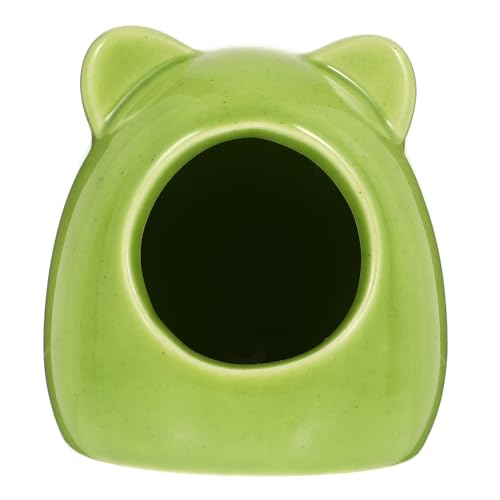
- EASY TO CLEAN-this hamster ceramic Hideout can resistant to and make you easy to clean.
- QUALITY MATERIAL-this hamster cooling nest is made of durable ceramics, safe and durable for small animals.
- COOLING HUT-Quality ceramic hamster hide house can help greatly to cooling, provides a cool nest for small animal to play and rest.
- IDEAL HIDEAWAY-Adorable, small animals can be attracted attention and increase the fun of raising. Ideal for hamsters and similar-sized animals.
- MULTIFUNCTIONAL - Your little friend can sleep, play and hide.It will adds fun and adventure for the mice without taking up of room in the cage.
Glass Baking Dish
Best for: getting a genuinely large sand area for the price of a coffee.
The best-value sand bath in the UK is not sold as a pet product at all. A Pyrex-style glass baking or lasagne dish from a supermarket costs a few pounds, weighs enough that nothing can tip it, has smooth sides that are easy for small feet to grip, and comes in sizes far larger than most purpose-made hamster baths. A 30x20cm dish gives a Syrian room to actually roll rather than just shuffle.
Size is the reason experienced keepers keep recommending this. A hamster sand bath needs a footprint big enough for the animal to lie down and turn over in — for a Syrian that is around 20x20cm as an absolute minimum, and bigger is better. Most baths sold in pet shops are smaller than that, while kitchenware is priced by volume and gets cheap fast as it gets larger. Glass also does not stain, absorb urine or scratch.
The trade-off is that it is open at the top, so it does not double as a hide and sand gets kicked over the sides more freely. Deeper dishes help, and a 7-8cm wall keeps most of it in. Check the rim for any chips before using it, avoid anything with a decorative crackle glaze on the inside, and be aware that a large glass dish takes up a serious amount of floor space in anything smaller than a 100cm enclosure.
What we like:
- Far larger sand area than most pet-shop baths
- Costs a fraction of the branded equivalent
- Glass does not stain, scratch or hold odour
- Completely stable and impossible to tip
Worth knowing:
- Open top means more sand kicked out
- Does not double as a hide
- Takes up a lot of floor space in a small enclosure
Specifications:
- Sizes: 20x15cm up to 35x25cm baking dishes
- Depth: choose 7cm or deeper to limit spillage
- Material: borosilicate or tempered glass, dishwasher safe
- Suitable for: all species, especially Syrians needing space
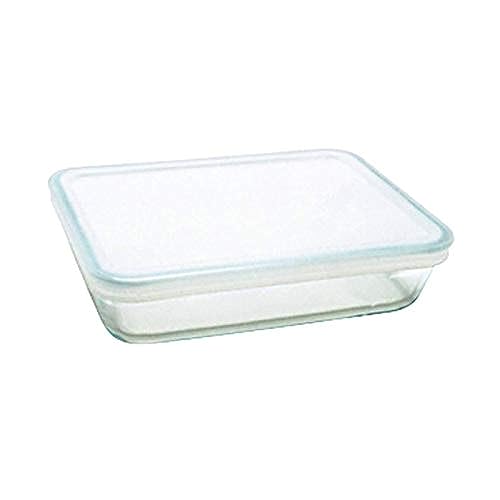
- Collection: Cook & Freeze Material: Glass - Colour: Transparent - Length: 22 cm - Width: 17 cm - Height: 6 cm - Capacity: 150 cl - Dishwasher Safe Microwave Safe
Clear Acrylic Sand Bath
Best for: watching the hamster bathe, and for big bar-cage or tank setups.
Acrylic sand baths are the modern option, usually a clear box with a rounded entrance hole and sometimes a removable lid to double as a digging tower. Because the walls are transparent, you get to watch the part of hamster keeping that most people enjoy most, which sounds trivial but genuinely increases how much attention the enclosure gets and how quickly problems are spotted.
They tend to be the tallest option, often 15-20cm high, which makes them the best choice for containing sand in an open-topped tank where a low dish just becomes a sand distribution system. Many models have a lipped entrance and a deep base, so a hamster can burrow down into 5cm of sand without flinging most of it out. The better ones from Niteangel and similar brands come apart for cleaning rather than being a single moulded piece.
Acrylic scratches, and that is the real limitation — after six months of sand abrasion the clarity you paid for has gone cloudy. It is also lighter than ceramic or glass, so a large Syrian can shift a smaller model around the enclosure. Avoid any design with a narrow tunnel entrance, as wet sand compacts in them, and never use one with a fully sealed lid in a warm room.
What we like:
- Transparent walls make the behaviour easy to watch
- Tall sides contain sand better than a low dish
- Often disassembles fully for cleaning
- Deep base allows proper burrowing in the sand
Worth knowing:
- Acrylic clouds over as sand scratches it
- Lighter than ceramic — a big Syrian can move it
- Narrow tunnel entrances clog with compacted sand
Specifications:
- Sizes: around 20x14cm up to 28x20cm
- Height: typically 15-20cm walls
- Material: clear acrylic, hand wash only
- Suitable for: tanks, bin cages and large bar cages
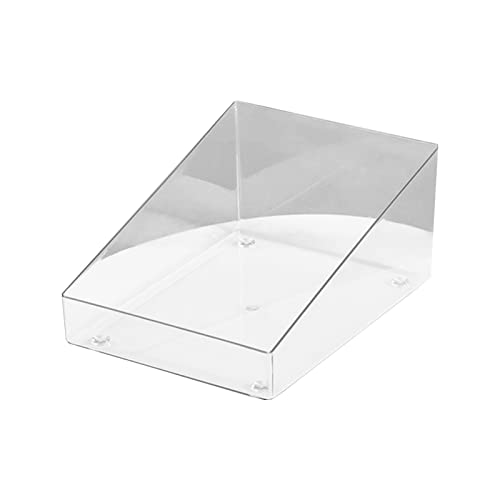
- The transparent sand bath box allows you to easily watch your hamster, enjoy and not miss your beloved pet's happy time and cute moments.
- The product uses environmentally friendly materials to protect the health of hamsters and let them enjoy the exclusive paradise you create for them. with the large space and 8.3 cm height, your hamster can move around comfortably and freely inside and the sand won't spill out.
- It is constructed of acrylic material.
- The length of this product is 18cm, the width is 13.5cm and the height is 8.3cm.
- This sand bath box is perfect for your pet hamster to play, eat, rest and more.
Wooden Sand Bath Box
Best for: naturalistic enclosures where plastic looks out of place.
A wooden sand bath is an untreated timber box, usually pine or fir, open at the top or with a small doorway cut into one side. In a planted, natural-substrate setup it looks considerably better than acrylic, and hamsters treat the wood itself as a chew item, which adds a bit of enrichment beyond the sand.
The practical advantage is grip. Wood gives small claws something to hold onto, so a nervous or elderly hamster climbs in and out more confidently than on glazed ceramic. Wooden boxes are also easy to modify — a doorway can be widened with sandpaper, and a taller back wall can be added — which suits keepers building a specific layout rather than dropping in an off-the-shelf item.
Wood and urine are a poor combination, and that is the honest limitation. If the hamster adopts the sand bath as a toilet, an untreated wooden box will absorb it, stain and eventually start to smell, so it needs replacing every few months rather than lasting years. Check that any box is genuinely untreated with no varnish, paint or glue on the inner surfaces, and put a removable glass or ceramic tray inside if you want the look without the absorption.
What we like:
- Blends into naturalistic and planted setups
- Wood gives claws grip for nervous or older hamsters
- Doubles as a chew item
- Easy to modify the entrance height
Worth knowing:
- Absorbs urine and will need replacing periodically
- Must be untreated — no varnish, paint or glue inside
- Heavier ones still lighter than ceramic when empty
Specifications:
- Sizes: typically 20x15cm up to 30x20cm
- Material: untreated pine or fir
- Cleaning: brush out and sun dry, do not soak
- Suitable for: natural setups, timid or senior hamsters
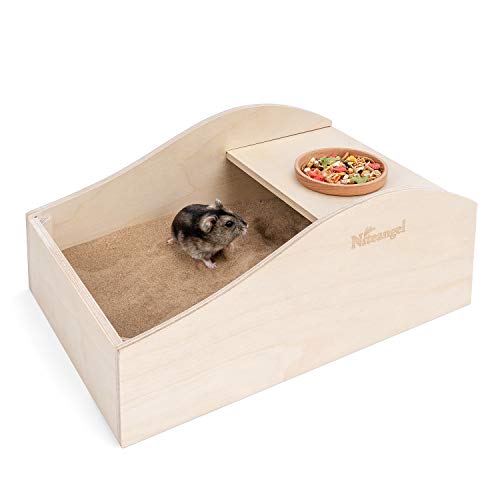
- Medium-Sized Sand Bath Box w/ Hideout - The measurements of the sandbox are 11.8-inch L x 7.8-inch W, please be sure if your hamster cage or habitats has enough space to put into it before purchasing. Hamsters love bathing in sands to remove excess oils for keeping coat thick and glossy. We designed nearly one-third of the sandbox area is roofed like a hideout, your critters will feel very safe to take a nap after bath
- Fun Digging Time - Due to their burrow instinct, hamster and gerbils love to digging sand or soil, we designed this large sand pool for them to evoke their wild characters in habitats
- Separate & Big Bathroom Area - Keeps sands out of bedding area to maintain the cleanliness easily. Dimension:11.8-inch L x 7.8-inch W, it's bigger than most of the hamster sandboxes. Please make sure your cage or habitat has enough space to settle it down before purchase
- Natural & Durable Design - Made From High-quality Birch Wood without nails, pet-safe and sturdy material while keeps its shape well and prevent waterlogging. It's safe for rodents chewing
- Comes with a wooden beechwood bowl - It's highly recommended to provide some treats or snacks in bowls to supple energy for an 'exhausting' hamster
Corner Sand Bath
Best for: squeezing a sand area into a cage that has run out of floor space.
Corner baths are triangular plastic or ceramic trays designed to tuck into the angle of a cage, most often sold as small animal litter trays. They use space that is otherwise wasted, and in an enclosure that is already crowded with a wheel, a hide and a water bottle they are sometimes the only way to fit any sand at all.
The good ones are ceramic rather than plastic, with a raised back wall of around 10cm on the two long sides and a low front lip. That combination keeps flung sand pointed into the corner rather than across the cage, while still being easy for a dwarf to step over. Because they sit flush against two walls, they are also harder for a hamster to push around than a free-standing tray of the same weight.
The catch is that they are small, and that is a real compromise rather than a minor one. A triangular tray with 25cm sides gives less usable rolling space than it looks, and a Syrian will often only be able to shuffle rather than properly roll. Treat a corner bath as the answer when the enclosure is genuinely too small for anything else, and consider whether the enclosure itself is the thing to upgrade.
What we like:
- Uses otherwise-wasted corner space
- Raised back walls direct sand into the corner
- Sits flush against cage walls so it moves less
- Cheap and widely available
Worth knowing:
- Usable area is smaller than the dimensions suggest
- Often too tight for an adult Syrian to roll properly
- Plastic versions are light and stain over time
Specifications:
- Sizes: typically 20-30cm along each side
- Material: ceramic preferred over plastic
- Wall height: look for 8-10cm at the back
- Suitable for: dwarves, and Syrians only as a last resort

- High-quality materials: the hamster bathroom is made of environmentally friendly ABS, which has been reinforced and thickened. The surface is smooth, durable and lightweight, non-toxic and harmless, very healthy for pets.
- Transparent design: the hamster sand bath has a unique translucent design that is visually spacious and bright and makes it easy to observe the bathing conditions of small pets. The bear shaped door opening design has a simple style and exquisite appearance.
- Easy to clean: the hamster sand bath can be divided into upper and lower parts, the lids can be easily removed. Equipped with a small dustpan, can easily clean hamster cages and sand baths.
- ღ【Healthy shiny fur for your rodent】Hamster sand bath size: 10.5 x 14 x 6.8 cm. The hamster sand bath can not only clean the fur of rodents, but also make pets fun, reduce the stress of pets and maintain their health.
- Box contents: hamster sand bath x 1, small dustpan x 1, sand bath shovel x 1, mini hand brush x 1, great for gerbils, mouse, coloured mouse, gold hamsters, dwarf hamsters and other small rodents.
Deep Storage Tub Conversion
Best for: very large enclosures and keepers who want a whole sand region.
In a 100cm or larger enclosure, a small bath stops making sense and a sand region does. A shallow plastic storage tub, a seed tray or a large under-bed box with an entrance cut into one side gives a hamster a sand area measured in tens of centimetres rather than a tray to stand in, and costs very little from a hardware shop.
This is the setup that produces the behaviour most keepers are hoping for. Given 40cm or more of sand at a depth of 5-8cm, a hamster will roll, burrow, dig tunnels and push sand into ridges rather than simply rubbing its flank against the side of a small tray. It also allows a proper split, with a toilet corner at one end and clean bathing sand at the other, which a small dish never achieves.
It needs thought to do safely. Any cut edge must be sanded completely smooth, as thin polypropylene leaves a sharp lip that can catch a cheek pouch. A large area of sand is also heavy, so check the enclosure base can take it, and expect to sift it more often, since a bigger area invites more digging and more mixing with bedding. It looks like what it is, which not everyone wants on display.
What we like:
- Sand area large enough for real digging behaviour
- Very cheap for the space it provides
- Allows a clean end and a toilet end
- Easy to lift out whole for sifting
Worth knowing:
- Cut edges must be sanded smooth to be safe
- Heavy when filled — check the enclosure base
- Utilitarian appearance
Specifications:
- Sizes: 40x30cm upwards
- Sand depth: 5-8cm for burrowing
- Material: food-grade polypropylene storage tub
- Suitable for: enclosures 100cm and larger

- Clear sides and lid so you can see the contents
- Sturdy and stackable
- Lid locks securely in place
- Strong plastic construction: rodent-resistant for reliable archive use
- Attractive blue click-lock handles
Hamster Sand Bath Buying Guide
What to look for when buying a hamster sand bath
Size is the first thing to check and the thing most people get wrong. The hamster needs to be able to lie down and roll over completely inside the container, which means a minimum footprint of roughly 20x20cm for a Syrian and 15x15cm for a dwarf. Anything smaller and the animal can only rub against the side, which is not the same behaviour at all. If in doubt, buy the larger option.
Weight and stability come next. Hamsters push, climb on and burrow under things, and a light plastic tray ends up flipped or shoved into a corner within a week. Ceramic and glass solve this by being heavy; acrylic and wood need to be large enough that the mass makes up for the lighter material.
Then check the entrance. A wall of 7-10cm is ideal for containing sand, but the point the hamster climbs over needs to be lower, particularly for Roborovskis and older animals. Many ceramic houses have a deliberately lowered doorway for exactly this reason. Finally, look at how it comes apart, because anything that cannot be emptied and rinsed easily will not be cleaned as often as it should be.
Sand bath types explained
Enclosed ceramic houses combine a bath, a hide and a toilet in one item and suit most keepers. Open dishes, whether glass kitchenware or purpose-made trays, give the largest bathing area per pound spent but scatter more sand. Clear acrylic boxes sit between the two, with tall walls and the bonus of visibility, at the cost of scratching over time.
Wooden boxes suit naturalistic setups and give the best grip, but absorb urine and are consumable rather than permanent. Corner trays are a space-saving compromise. Large tub conversions are the choice for big enclosures where a sand region, rather than a sand bath, is the goal.
There is no single right answer, and plenty of keepers run two: a small enclosed bath that the hamster adopts as a toilet, plus a larger open dish of clean sand for actual bathing. That split keeps the bathing sand cleaner for longer and cuts down how often the whole lot needs replacing.
Which sand to use — and which to avoid
Use children’s play sand that has been washed, sieved and baked, or a chinchilla sand sold specifically as sand rather than dust. The distinction matters: chinchilla dust is a far finer powder designed for a different species, and the airborne particles it produces are not suitable for hamsters. If the bag says dust, or the contents feel like talc rather than grit, it is the wrong product.
Avoid anything labelled as calcium sand or scented sand, both of which are sold for reptiles and small animals and are best skipped. Builders’ sand is not suitable either, as it is not cleaned and may contain sharp fragments or contaminants. Reputable UK options are widely available from Pets at Home, Zooplus and Amazon UK, and a large bag typically costs £5-12 and lasts months.
Whatever you buy, sift it with a small scoop every couple of days to lift out droppings and damp clumps, and replace the lot entirely every few weeks. Play sand should be rinsed and fully dried before first use even when sold pre-washed, as the fine dust that settles in the bag during transport is worth removing.
Size guide
Syrian hamsters need a minimum internal footprint of about 20x20cm, and are much happier with 25-30cm. Wall height of 8-12cm works well, with a doorway or low side of around 5cm to climb over. Sand depth of 4-6cm lets them burrow rather than just sit on the surface.
Russian and Chinese dwarves manage well in 15-20cm of footprint, with walls of 7-10cm and an entrance no higher than about 4cm. Roborovskis are the smallest and the most enthusiastic bathers of the lot — they need the lowest entrance, around 3cm, but benefit just as much from a large area to sprint and roll in.
As a rule of thumb, the sand bath should take up roughly a tenth of the enclosure floor area. In a 100x50cm enclosure that is a 25x20cm bath; in a 120x60cm setup there is room for something considerably larger. If the sand bath cannot fit at that proportion, the enclosure is the constraint.
How much should you spend?
Under £10 buys a glass baking dish or a basic ceramic corner tray, and for a great many keepers that is genuinely all that is needed. A large Pyrex dish performs better than most £20 pet-shop baths on the measure that matters most, which is usable area.
Between £12 and £25 is where the purpose-made ceramic houses sit, and that is the sweet spot for anyone who wants the bath to double as a hide and a toilet. Expect a glazed finish, a sensible doorway height and enough weight to stay put. This is the range most keepers should aim at.
Above £25 you are paying for large acrylic multi-part designs, decorative ceramics and branded sets that include sand and a scoop. They are nicer to look at and often taller, but a £35 bath is not three times better than a £12 one. Put the difference towards a bigger enclosure or a larger bag of sand instead.
Frequently asked questions
Do hamsters really need a sand bath?
It is not strictly essential equipment in the way a wheel or a water bottle is, but it is one of the most widely recommended additions in UK hamster keeping and most keepers consider it close to a must-have. Hamsters groom by rolling in fine substrate naturally, and a sand bath lets them do that. The practical bonus is that most hamsters adopt it as a toilet corner, which makes cleaning the rest of the enclosure considerably easier.
Can I use chinchilla dust instead of sand?
No. Chinchilla dust is a much finer powder than sand and the airborne particles it creates are not suitable for hamsters. Chinchilla sand, which is a different product despite the similar name, is fine if it is genuinely sand-textured. If you are unsure, rub a pinch between your fingers: it should feel gritty like beach sand, not soft like flour.
How often should the sand be changed?
Sift out droppings and any damp clumps every two or three days with a small scoop or a tea strainer, and replace the sand entirely every three to four weeks. If the hamster is using it heavily as a toilet you may need to change it fortnightly. Wash the container itself with hot water and dry it fully at each full change, avoiding strong detergents and anything scented.
My hamster is using the sand bath as a toilet — is that a problem?
It is normal and generally a good thing. Hamsters naturally pick one corner as a latrine, and a sand bath is an appealing spot for it. Sift daily if it becomes the main toilet, and if you would rather keep the bathing sand clean, run two containers: a small enclosed one that becomes the toilet and a larger open dish elsewhere for bathing.
What if my hamster ignores the sand bath?
Most take to it within a few days. If yours does not, check the entrance is low enough to climb over easily, move the bath to a quieter part of the enclosure away from the wheel, and try a slightly deeper layer of sand. Sprinkling a little of their used bedding or a few seeds into the sand often prompts the first visit. Some hamsters simply prefer digging in deep bedding instead, and that is fine.
Can two hamsters share a sand bath?
Syrian hamsters must be housed alone, so the question only applies to dwarf species kept in the rare successful pair. Where dwarves are housed together, provide one sand bath per hamster plus a spare, in separate parts of the enclosure, as resources that exist only in one place are a common trigger for squabbling.
Conclusion
For most UK keepers the ceramic sand bath house at £12 to £25 is the one to buy. It is heavy enough to stay put, large enough for a Syrian to roll properly, doubles as a hide and a toilet corner, and the glazed finish wipes clean without holding odour.
If the budget matters or the enclosure is large, a glass baking dish from the supermarket beats almost everything sold as a pet product on usable area per pound, and a tub conversion is the better answer in a 100cm setup. Whichever container you pick, the sand itself matters more — washed play sand or genuine chinchilla sand, never dust.
This roundup is part of our Small Pet Equipment Guide.