
The first properly cold night of October is when most rabbit owners realise the hutch needs more than a bit of extra hay. Outdoor rabbits cope with cold far better than they cope with wind and wet, and an uncovered hutch on an exposed patio takes both straight through the mesh. A hutch cover is the cheapest thing you can do about it, and on a bad night it makes a bigger difference than anything else in the run.
Covers vary more than they look, though. Some are little more than a shower-proof sheet, others are lined, weighted and shaped for a specific hutch. Get it wrong and you either trap moisture inside or watch the thing blow across the garden in the first gale. Below are the best rabbit hutch covers available in the UK, along with a guide to sizing, ventilation and winter use.
Quick Comparison Table
Product | Best For | Price Range | Rating |
Heavy-Duty Waterproof Hutch Cover | Best all-rounder for UK winters | £20-40 | ⭐⭐⭐⭐⭐ |
Thermal Lined Winter Cover | Best for exposed gardens and hard frosts | £30-55 | ⭐⭐⭐⭐⭐ |
Clear-Panel Roll-Up Cover | Best for keeping daylight and visibility | £25-45 | ⭐⭐⭐⭐ |
Two-Tier Hutch and Run Cover | Best for combined hutch-and-run units | £30-60 | ⭐⭐⭐⭐ |
Budget Shower-Proof Cover | Best budget pick under £20 | £10-18 | ⭐⭐⭐⭐ |
The Best Rabbit Hutch Covers Reviewed
Heavy-Duty Waterproof Hutch Cover
Best for: most outdoor hutches, and anyone buying one cover to last several winters.
The standard heavy-duty cover is a tailored sheet of coated polyester or PVC-backed fabric, cut to sit over the roof and down all four sides, with a roll-up flap across the mesh front. Fabric weight is usually somewhere between 300D and 600D, and the seams are taped rather than simply stitched, which is what separates a cover that stays dry inside from one that wets through along every seam line after an hour of rain.
What makes this format the sensible default is that it handles the two things that actually harm rabbits, which are driving rain and wind chill, without sealing the hutch up. The front flap rolls up and ties back during the day so the rabbits get light and air, then drops at dusk. Elasticated hems and toggle ties hold it against the hutch rather than letting it flap, and flapping is what wakes rabbits, frays fabric and eventually tears grommets out.
The limitations are worth knowing. A tailored cover is cut for a size range, so a cover made for a 4ft hutch on a 5ft hutch leaves a gap at one end that rain finds within a night. Unlined covers do very little for temperature — they stop wind and water, which is most of the battle, but on a hard frost they are not a substitute for a lined cover or a well-stuffed bedroom compartment. Check the fixings too, as cheap plastic toggles perish after a couple of seasons outdoors.
What we like:
- Taped seams keep water out at the stitching
- Roll-up front flap allows daytime light and air
- Elasticated hems stop wind flap
- Handles several UK winters if stored dry in summer
Worth knowing:
- Needs to match your hutch size closely
- Unlined fabric does little for hard frost
- Cheap toggles and grommets perish outdoors
Specifications:
- Material: 300-600D coated polyester or PVC-backed fabric
- Typical sizes: 3ft, 4ft, 5ft and 6ft hutch cuts
- Fixings: elasticated hem, toggle ties, corner grommets
- Suitable for: single-tier outdoor hutches year-round
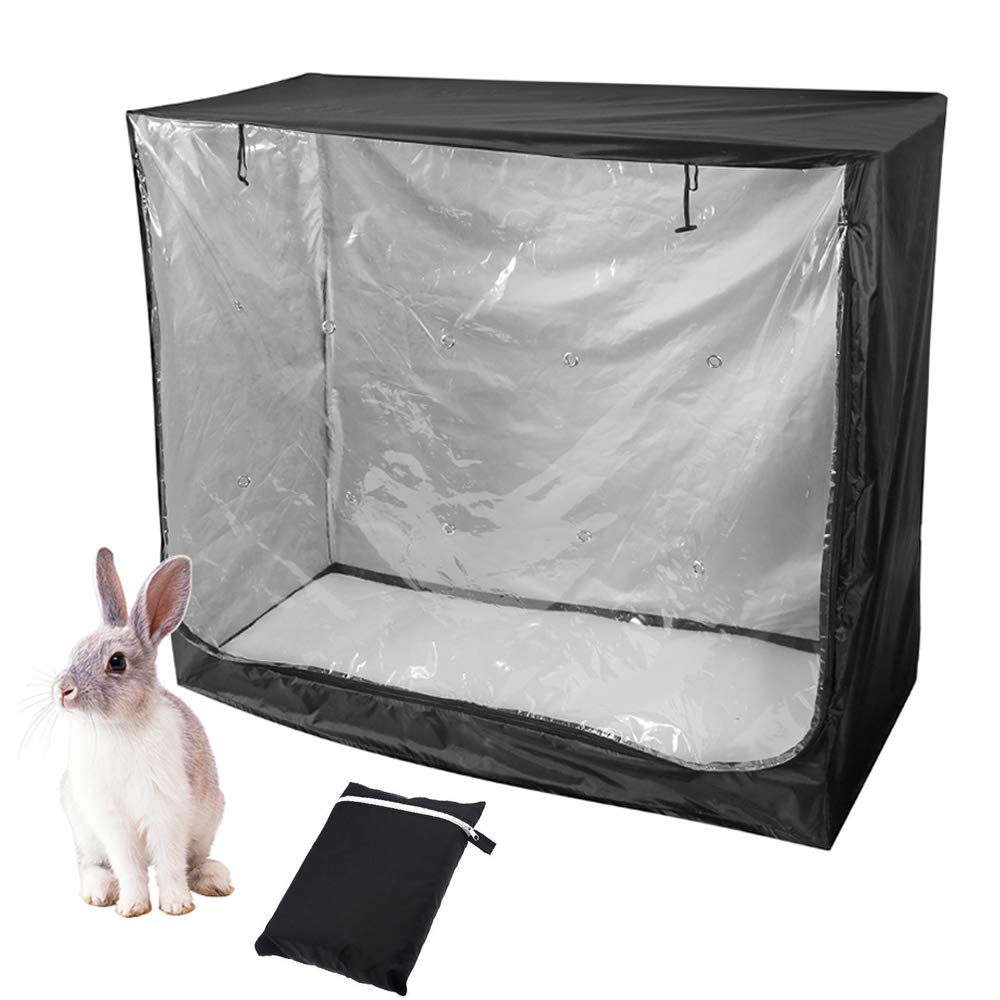
Thermal Lined Winter Cover
Best for: exposed gardens, coastal wind and stretches of hard frost.
A thermal cover adds an insulating layer, usually a fleece backing or a thin foam or reflective liner, behind the waterproof outer. The point is not to heat the hutch, which it cannot do, but to slow the rate at which the hutch loses the warmth the rabbits themselves generate, and to add a barrier the wind cannot cut through. On a still night the difference inside a lined hutch is a few degrees; on a windy one it is considerably more.
It earns its keep in a garden with no natural shelter. A hutch against a house wall in a walled town garden is in a very different climate from one standing free on an exposed plot or near the coast, and the second is where owners tend to find that a plain waterproof cover is not enough. Rabbits with less to fall back on also benefit disproportionately: elderly rabbits, single rabbits with no companion to huddle against, and rex-coated breeds whose fur gives them less insulation than a normal coat.
The trade-off is moisture. Insulation only works while it is dry, and a lined cover left down day and night in a hutch with poor ventilation will collect condensation in the lining, at which point it insulates less than nothing. These covers also cost more, take much longer to dry once wet through, and are bulky to store. Treat one as a winter item to be put on in November and taken off in March, not a permanent fixture.
What we like:
- Genuinely reduces wind chill in exposed spots
- Helps elderly, single and thin-coated rabbits most
- Reflective liners work without adding much weight
- Noticeable difference on frosty nights
Worth knowing:
- Lining holds condensation if ventilation is poor
- Slow to dry once soaked through
- Costs more and is bulky to store
Specifications:
- Material: waterproof outer with fleece, foam or reflective lining
- Typical sizes: 4ft, 5ft and 6ft hutch cuts
- Season: November to March, not year-round
- Suitable for: exposed gardens, older rabbits and cold snaps

Clear-Panel Roll-Up Cover
Best for: rabbits that dislike being enclosed, and hutches in shaded corners.
A clear-panel cover replaces the front section with heavy-gauge transparent PVC, so the mesh is shielded from wind and rain while daylight still reaches the hutch. Most have a roll-up section above the panel, giving three settings through the day: fully open in good weather, clear panel down in wind and rain, and the solid flap over the top of it on the worst nights.
The advantage is that you are not choosing between weather protection and daylight. Rabbits are crepuscular and their body clocks run on light levels, so a hutch that is dark from three in the afternoon because the cover is down is not ideal through a long winter. Nervous rabbits also settle better when they can still see the garden, and it is a good deal easier to check on them without opening anything up, which matters when the weather is bad enough that you would rather not.
PVC has its quirks. It stiffens noticeably below about freezing and can crack if you roll it up while frozen, so leave it down on those mornings. It scratches and clouds over a season or two, and condensation forms on the inside of the panel more readily than on fabric, which means ventilation gaps at the top matter more here than on other covers. Check the panel is stitched in with reinforced binding rather than simply welded, as welded joins are the first thing to split.
What we like:
- Keeps daylight reaching the hutch through winter
- Three weather settings in one cover
- Easy to check the rabbits without opening up
- Suits rabbits that dislike being shut in
Worth knowing:
- PVC stiffens and can crack in hard frost
- Clouds and scratches over time
- Condensation forms readily on the panel
Specifications:
- Material: coated polyester with heavy-gauge clear PVC front panel
- Typical sizes: 4ft, 5ft and 6ft hutch cuts
- Fixings: roll-up straps, toggle ties, weighted hem
- Suitable for: shaded gardens and nervous rabbits
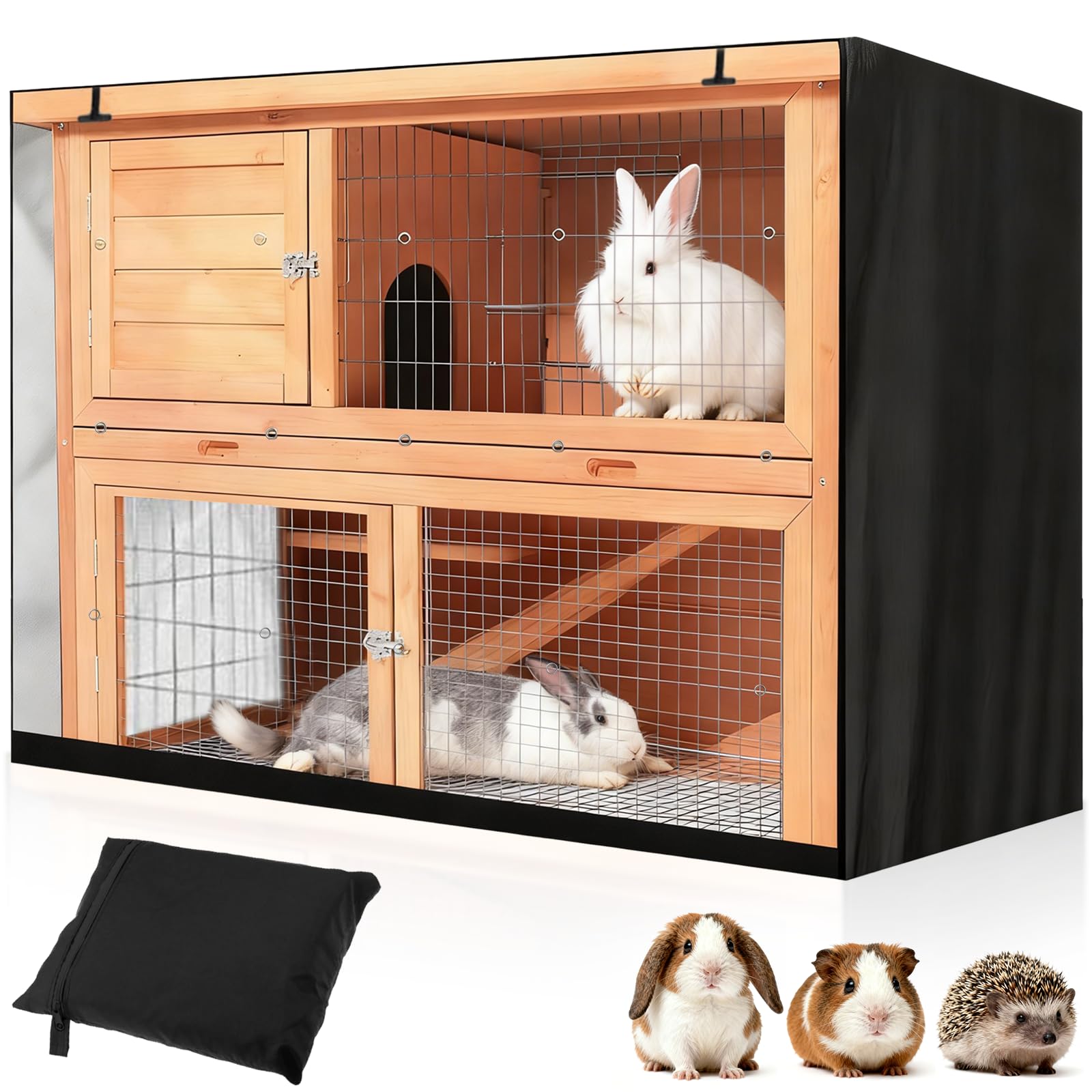
Two-Tier Hutch and Run Cover
Best for: combined hutch-and-run units and double-decker hutches.
Combined units, where a hutch sits above a covered run or a second tier, need a cover cut for the shape rather than a rectangle draped over the top. These covers are made in an L-shape or a stepped profile, with separate flaps for the hutch front and the run mesh so each can be opened independently, and a slot or gap where the ramp meets the lower level.
Buying the right shape matters more than it does on a single-tier hutch. A standard cover thrown over a two-tier unit leaves the run either uncovered or completely sealed, and neither works: an open run soaks in rain and turns the ground beneath it to mud, while a sealed one loses the airflow rabbits need. A properly cut cover keeps the run dry and usable in poor weather, which in practice means the rabbits keep exercising through the winter instead of spending four months in the top box.
They are the most size-sensitive covers to buy and the most expensive. Two-tier hutches vary a great deal between manufacturers, so measuring width, depth and total height, and checking where the ramp exits, is essential. They are heavy when wet, need a decent fixing system to stop the whole thing sliding off in wind, and the lower flaps sit close to the ground where they collect mud and need hosing down regularly.
What we like:
- Cut to the actual shape of a two-tier unit
- Keeps the run dry and usable through winter
- Independent flaps for hutch and run
- Rabbits keep exercising in bad weather
Worth knowing:
- Very size-sensitive — measure carefully
- Heavy when wet and awkward to handle alone
- Lower flaps collect mud at ground level
Specifications:
- Material: 420-600D coated polyester, reinforced at ramp opening
- Typical sizes: cut to specific two-tier hutch models
- Fixings: full-length ties, weighted hem, ground pegs on some
- Suitable for: hutch-and-run combinations and double-deckers
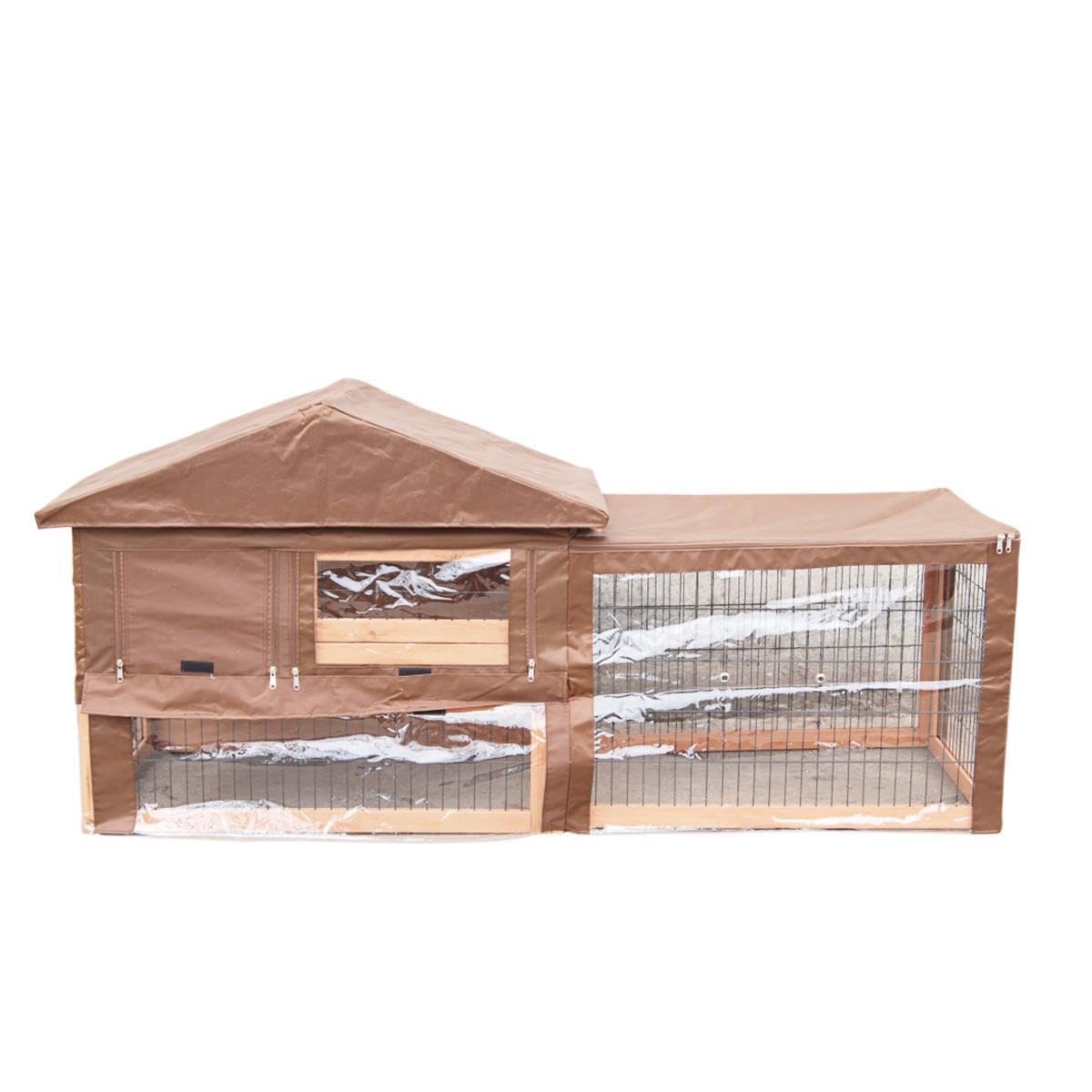
Budget Shower-Proof Cover
Best for: sheltered gardens, spare hutches and getting through one winter.
At the budget end are lightweight shower-proof sheets, typically 210D polyester with a light coating, cut generously and held on with tie tapes. They are shower-proof rather than waterproof, which is a real distinction: they shrug off drizzle and a passing shower, and they wet through in sustained rain.
They still have a place. A hutch tucked against a house wall or under a carport is sheltered from most of the weather already, and all it needs is something to stop rain blowing in at the front. They are also sensible for a spare or isolation hutch that is only occasionally in use, and light enough to put on and take off daily without it becoming a chore, which is more than can be said for a soaked thermal cover.
Do not ask more of one than it can give. In an exposed garden it will wet through and, worse, hold that water against the hutch timber, and a permanently damp hutch roof rots within a couple of seasons. The tie tapes are the usual failure point in wind, and the thin fabric abrades where it rubs on hutch corners. Buy one as a light-duty cover for a sheltered spot, not as winter protection in an open garden.
What we like:
- Cheap enough to replace annually
- Light and quick to put on and take off
- Fine for sheltered spots and spare hutches
- Dries quickly after light rain
Worth knowing:
- Wets through in sustained rain
- Holds damp against hutch timber once soaked
- Tie tapes and thin fabric fail in strong wind
Specifications:
- Material: 210D shower-proof polyester
- Typical sizes: 3ft, 4ft and 5ft hutch cuts
- Fixings: tie tapes, occasionally elasticated corners
- Suitable for: sheltered gardens and occasional use

Universal-Fit Elasticated Hutch Cover
Best for: homemade hutches, unusual shapes and long-term value.
True made-to-measure covers are a specialist, direct-order product rather than something sold through Amazon, so the practical alternative is a universal-fit design with an elasticated hem and drawcord that cinches down around whatever shape it is covering. It is not cut to exact dimensions, but the stretch and adjustment range covers most homemade and non-standard hutches that a fixed-size cover would not fit properly.
Because the fit is adjustable rather than fixed, one cover can be reused if the hutch is ever replaced or if it needs to travel between two different-sized hutches — useful for anyone who builds their own housing or has an odd, non-catalogue shape to cover. The trade-off for that flexibility is a slightly looser fit than a genuinely bespoke cover, so it flaps a little more in strong wind.
Check the maximum dimensions the elasticated hem will stretch to before buying, since a hutch at the very top end of its range will fit more loosely than one comfortably within it. For anything larger than the largest listed size, a genuinely custom commission from a specialist maker off-Amazon remains the only real option.
What we like:
- Elasticated hem and drawcord adapt to non-standard shapes
- Reusable if the hutch changes size or shape
- Cheaper than a bespoke commission
- Covers most homemade and irregular hutches within its size range
Worth knowing:
- Looser fit than a genuinely made-to-measure cover
- Flaps more in strong wind than a fitted cover
- Hutches at the top of the size range fit less snugly
Specifications:
- Fit: elasticated hem with drawcord, adjustable within a size range
- Material: waterproof outer fabric
- Sizes: check maximum dimensions before buying
- Suitable for: homemade hutches, irregular shapes, reuse across hutches


Rabbit Hutch Cover Buying Guide
What to look for when buying a rabbit hutch cover
Start with the waterproof rating and the seams. Shower-proof and waterproof are not the same thing, and taped seams matter as much as the fabric itself, because untaped stitching lets water through every needle hole after an hour of steady rain. For UK winter use, look for a coated fabric of at least 420D with taped seams, and treat anything lighter as a fair-weather cover.
Then check the front arrangement and the fixings. A cover with no way of opening the front leaves you choosing between a dark, stuffy hutch and no cover at all, so a roll-up flap or a clear panel is close to essential. Fixings should be elasticated hems, toggles or full-length ties rather than tapes alone, since wind is what destroys covers. Finally, look for a weighted or elasticated bottom hem, which is the single feature that most reliably stops a cover lifting in a gale.
Hutch cover types explained
Standard waterproof covers are the default and suit most hutches in most gardens, blocking wind and rain while leaving ventilation intact. Thermal lined covers add insulation for exposed sites and hard frosts, but are a winter-only item because the lining holds moisture. Clear-panel covers trade a little weather resistance for daylight and visibility, which suits shaded gardens and rabbits that dislike being shut in.
Two-tier and hutch-and-run covers are cut to the shape of combined units and are worth the extra over a rectangular sheet if that is what you have. Made-to-measure covers solve non-standard hutches properly. Worth mentioning alongside these are hutch huggers and snuggle covers, which are fitted fabric wraps designed to be used under a waterproof outer rather than instead of one, and simple tarpaulins, which work in an emergency but trap moisture badly if left on for more than a night or two.
Size guide
Measure the hutch width, depth and height, then add the roof overhang, which is the dimension most often forgotten and the reason a great many covers arrive too short at the front. Covers are usually sold by hutch length — 3ft, 4ft, 5ft and 6ft are the common cuts — but depth varies considerably between makes, so check the depth figure rather than assuming.
A cover should reach the ground or close to it at the back and sides, since a cover stopping halfway down leaves the wind a clear run underneath. At the front it should clear the door opening when rolled up. Err slightly generous rather than tight: a cover a little too big can be tied in, while one that is even slightly too small leaves a gap that rain will find on the first bad night. For two-tier units, measure the total height including the legs and note where the ramp exits.
Ventilation and condensation
The most common mistake is sealing the hutch up completely. Rabbits produce a surprising amount of moisture in their breath and urine, and in a sealed hutch that moisture condenses on the inside of the cover and runs back onto the bedding, so the hutch ends up damper covered than uncovered. Damp bedding is far more of a problem for a rabbit than cold air is.
In practice this means leaving a gap. Roll the front flap up during the day whenever it is not actually raining, and at night leave a hand’s width of the mesh uncovered at one end, or use a cover with built-in vents. Check the bedding each morning: if it feels damp or the inside of the cover is wet with condensation, you need more airflow, not more insulation. In prolonged wet weather it is worth taking the cover off entirely on any dry afternoon to let the hutch air out.
Winter use and hutch positioning
A cover works best alongside the other basics. Move the hutch to the most sheltered spot you have, ideally against a wall or fence and out of the prevailing wind, and raise it off the ground on bricks or legs if it is not already, so cold does not come up through the floor. Fill the bedroom compartment generously with straw rather than hay, since straw insulates far better, and top it up weekly.
Rabbits handle cold much better than they handle damp and draughts, and a healthy pair in a dry, draught-free, well-bedded hutch cope with a British winter without difficulty. Watch for the specific cases that need more: single rabbits with nobody to huddle with, rabbits over about six years old, and any rabbit that is unwell or underweight. On those, a lined cover and a microwaveable heat pad are reasonable additions, and if the hutch is genuinely exposed, moving it into a shed or unheated garage for the worst weeks is better than any cover.
How much should you spend?
A budget shower-proof cover costs £10 to £18 and is fine for a sheltered spot or a spare hutch, but will not carry an exposed hutch through a UK winter. Most owners should be looking at £20 to £40 for a heavy-duty waterproof cover with taped seams, a roll-up front and proper fixings, which is the point at which a cover reliably lasts more than one season.
Thermal and clear-panel covers run £25 to £55, and two-tier covers £30 to £60. Made-to-measure covers start around £60 and go well beyond it, which is money well spent on a non-standard hutch and wasted on a standard one. A practical approach is one good waterproof cover for year-round use and, if your garden is exposed, a thermal cover added over the winter months.
Frequently asked questions
Do rabbits need a hutch cover in winter?
Outdoor rabbits benefit from one, though what they most need is protection from wind and rain rather than from cold itself. Rabbits are well insulated and a healthy pair in a dry, draught-free hutch with plenty of straw cope with UK winter temperatures without difficulty. A cover keeps driving rain out of the mesh front and cuts wind chill, which is where most of the real risk lies. Ventilation must be maintained, as a damp hutch is worse than a cold one.
Can I leave a hutch cover on all the time?
Not fully down, no. Leaving a cover closed day and night restricts airflow and cuts out daylight, and both matter to rabbits. Roll the front flap up during the day whenever it is not raining, and leave a gap or vent at night. In long spells of wet weather, take the cover off completely on any dry afternoon so the hutch and the cover itself can air out.
Will a cover stop the hutch getting damp inside?
It will stop rain getting in, but it can make condensation worse if there is no ventilation. Rabbits release a good deal of moisture, and in a sealed hutch that moisture collects on the inside of the cover and drips back onto the bedding. Check the bedding each morning through winter: if it feels damp, the answer is more airflow rather than more covering.
What size hutch cover do I need?
Measure the width, depth and height of the hutch and include the roof overhang, which is the measurement most often missed. Covers are sold by hutch length, commonly 3ft to 6ft, but depth varies between makes, so check that figure too. It should reach the ground or near it at the back and sides. If you are between sizes, go up rather than down, as a slightly large cover can be tied in but a small one leaves a gap.
Is a tarpaulin as good as a proper hutch cover?
For one bad night it will do, but not as a season-long solution. Tarpaulins have no ventilation designed in and no shaped front flap, so they trap moisture against the hutch and either seal the mesh entirely or leave it exposed. They also lack fitted fixings, so they flap and shift in wind. A proper cover costs little more than a decent tarpaulin and is cut for the job.
Should I add insulation as well as a cover?
Usually a thick layer of straw in the bedroom compartment does more than anything you add outside, and it is worth topping up weekly through winter. A thermal cover is a sensible addition in an exposed garden or for older, single or thin-coated rabbits. Avoid sealing the hutch with plastic sheeting or foam board, which stops airflow, and if the weather turns severe, moving the hutch into a shed or unheated garage beats any amount of insulation.
Conclusion
For most outdoor hutches, a heavy-duty waterproof cover at £20 to £40 is the right choice. Taped seams, a coated fabric of at least 420D, a roll-up front flap and elasticated or weighted hems cover everything that actually matters, and one good cover will see out several winters if it is dried and stored over the summer.
Add a thermal lined cover through the coldest months if your garden is exposed or your rabbits are elderly, single or thin-coated, and choose a clear-panel version if the hutch sits somewhere shaded and daylight is scarce. Whichever you buy, leave a ventilation gap — a dry, airy hutch does far more for a rabbit through winter than a tightly sealed warm one.
This roundup is part of our Small Pet Equipment Guide.