Rabbits are naturally clean animals, and most will happily use a litter tray once they learn where it lives, which makes a good tray one of the best things you can buy for a tidier hutch or house-rabbit setup. The right tray keeps mess in one spot, protects the floor of an enclosure or your carpet, and makes daily cleaning a quick job rather than a chore. It also helps you keep an eye on your rabbit’s toileting habits, which is a useful early warning if something is amiss.
The trouble is that rabbit litter trays vary in shape, size and design, from simple corner trays to high-sided pans and hay-rack combinations, and the wrong one leads to spilled litter, sprayed urine and a rabbit that refuses to use it. Below we round up the best rabbit litter trays in the UK for 2026, with a buying guide to help you pick the right size, style and features for a cleaner, happier bunny.
Quick Comparison Table
| Product | Best For | Price Range | Rating |
| High-Sided Rectangular Litter Tray | Best all-rounder for most rabbits | £10-20 | ⭐⭐⭐⭐⭐ |
| Corner Litter Tray with Hay Rack | Best space-saver with built-in hay feeder | £8-16 | ⭐⭐⭐⭐⭐ |
| Large Deep Pan with Grate | Best for messy or spraying rabbits | £15-30 | ⭐⭐⭐⭐ |
| Budget Plastic Corner Tray | Best budget pick under £10 | £4-9 | ⭐⭐⭐⭐ |
| Extra-Large Tray for Bonded Pairs | Best for two or more rabbits | £18-35 | ⭐⭐⭐⭐ |
The Best Rabbit Litter Trays Reviewed
High-Sided Rectangular Litter Tray
Best for: most rabbits and the widest range of hutches and rooms.
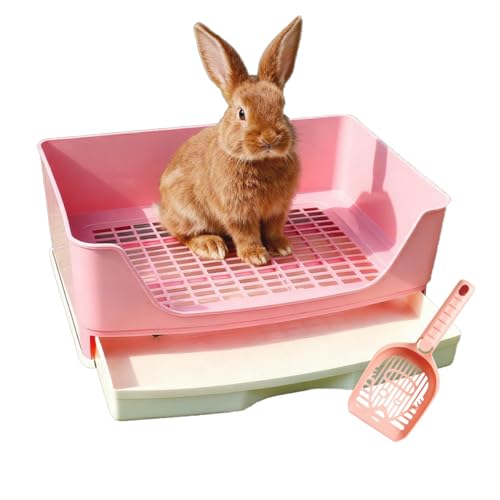
A high-sided rectangular tray is the one we would choose first, because it handles the core job well and suits almost any rabbit and setup. The generous rectangular footprint gives your rabbit room to turn around and settle, which encourages reliable use, while the raised sides at the back and edges catch the urine that rabbits tend to spray backwards. A slightly lower front lip lets your rabbit hop in and out easily without trapping litter inside.
The roomy design means you can add a decent layer of paper-based litter and a pile of hay in one corner, tapping into rabbits’ natural habit of eating and toileting at the same time. Smooth moulded plastic wipes clean quickly and does not hold odours, and the flat, stable base sits securely in a hutch, cage or on the floor without tipping when your rabbit leans on the side. It is a simple, durable design that quietly does everything most owners need.
The main things to weigh up are size and space. A full rectangular tray takes up more room than a corner design, so in a small hutch you will need to plan the layout, and a very large rabbit will want the biggest size available. For a reliable, easy-clean tray that encourages good litter habits in almost any rabbit, though, the high-sided rectangular tray is the standout all-round pick.
What we like:
- Roomy footprint encourages reliable use
- High back and sides catch sprayed urine
- Lower front lip for easy hopping in and out
- Smooth plastic wipes clean and resists odours
Worth knowing:
- Takes up more floor space than a corner tray
- Largest sizes needed for giant breeds
- No built-in hay rack on the basic version
Specifications:
- Material: moulded polypropylene plastic
- Shape: rectangular with high back, low front
- Suitable for: most rabbit sizes, hutch or indoor use
- Care: empty and wipe or rinse clean
Corner Litter Tray with Hay Rack
Best for: smaller hutches and owners who want hay and toilet in one.
A corner tray with a built-in hay rack is a clever space-saver that fits the natural behaviour of rabbits beautifully. The triangular shape tucks neatly into the corner of a hutch or cage where rabbits instinctively like to toilet, freeing up floor space, while the wire or slatted hay rack sits above the tray so your rabbit can munch hay while doing its business. Because rabbits graze and toilet together, this pairing genuinely helps litter training take hold.
The raised hay rack keeps the hay clean and dry, off the soiled litter below, which reduces waste and is more hygienic than piling hay straight into the tray. Most have reasonably high back walls to contain spray, and a removable rack makes refilling and cleaning straightforward. For single small or medium rabbits, and for anyone short on hutch space, this combination is a tidy, practical choice that covers two jobs at once.
The trade-offs are capacity and fit. Corner trays are smaller than rectangular pans, so they need emptying more often and may be cramped for a large rabbit, and they only work well in an enclosure with a suitable corner. The hay rack also needs regular topping up. For compact setups and rabbits that like to eat where they toilet, though, the corner-and-rack design is hard to beat.
What we like:
- Triangular shape saves space in the corner
- Built-in rack keeps hay clean and off the litter
- Encourages litter training through natural grazing
- Removable rack for easy refilling and cleaning
Worth knowing:
- Smaller capacity needs more frequent emptying
- Can be cramped for large rabbits
- Only suits enclosures with a usable corner
Specifications:
- Material: plastic tray with wire or plastic hay rack
- Shape: triangular corner design
- Suitable for: small to medium rabbits, compact hutches
- Care: lift out rack, empty and wipe tray
Large Deep Pan with Grate
Best for: messy rabbits, heavy sprayers and keeping paws dry.
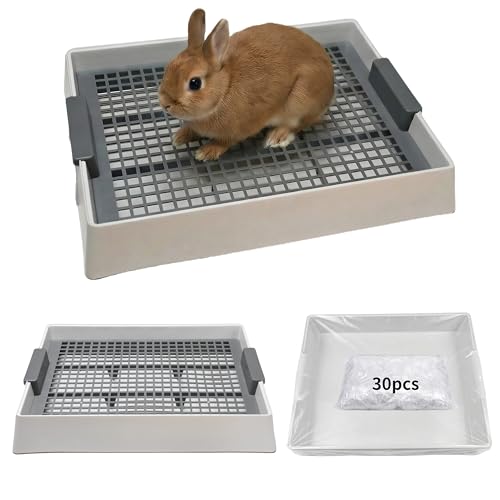
For rabbits that make a real mess, a large deep pan with a raised grate is the tidiest solution. The deep, high-walled pan contains even determined backward spraying, while an optional wire or plastic grate sits above the litter so your rabbit stands on the grate rather than in the damp litter. That keeps paws and fur cleaner and drier, which is especially welcome for rabbits prone to a soiled bottom or urine staining.
The extra depth lets you use a thicker litter layer that absorbs more and needs changing less often, and the sturdy construction stands up to rabbits that like to dig and rearrange. Many of these pans are sold as generously sized rabbit or small-animal toilets, giving plenty of room to settle. The grate lifts out for cleaning, and the smooth pan rinses easily, so despite the heavier build it stays quick to maintain.
The considerations are that a grate does not suit every rabbit, as some prefer to dig in the litter and may resist standing on wire, and the deeper pan takes up more space and costs a little more. Not all rabbits need one. For heavy sprayers, messy individuals or bunnies with hygiene issues, though, the deep pan and grate combination keeps the enclosure noticeably cleaner.
What we like:
- Deep high walls contain heavy spraying
- Raised grate keeps paws out of damp litter
- Thicker litter layer needs changing less often
- Sturdy build resists digging and rearranging
Worth knowing:
- Some rabbits dislike standing on a grate
- Larger and pricier than a basic tray
- Grate must be cleaned separately
Specifications:
- Material: deep plastic pan with removable grate
- Shape: rectangular, high-walled
- Suitable for: messy or spraying rabbits, larger breeds
- Care: lift grate, empty pan, rinse both
Budget Plastic Corner Tray
Best for: keeping costs down and fitting out extra hutches.
If you are litter training a new rabbit or kitting out a second enclosure, a budget plastic corner tray covers the basics for very little. It offers the same essential corner design as pricier models, tucking into the natural toileting spot and containing litter and mess, but in a simpler, lighter form without extras such as a hay rack. For small rabbits and straightforward setups, it does the important job of keeping waste in one place.
Despite the low price, most budget corner trays still include the useful features that matter: a raised back wall to catch spray, a clip or fixing to attach the tray to cage bars so an enthusiastic rabbit cannot tip it, and smooth plastic that wipes clean in seconds. They are light, easy to position and cheap enough to replace if they become scratched or stained over time. For light use and smaller bunnies, a budget tray is often all that is genuinely needed.
The compromises are in size, sturdiness and features. Budget trays are usually small, so they need emptying more frequently, the thinner plastic is less robust against a rabbit that chews or digs hard, and there is no hay rack or grate. For a large rabbit, a heavy sprayer or a bonded pair, a bigger sturdier tray is the wiser buy, but for keeping costs down on a small, tidy rabbit, the budget corner tray is honest value.
What we like:
- Very affordable way to start litter training
- Corner shape fits the natural toileting spot
- Often clips to cage bars to stop tipping
- Light, easy to place and cheap to replace
Worth knowing:
- Small capacity needs emptying more often
- Thinner plastic less robust against chewing
- No hay rack or grate included
Specifications:
- Material: lightweight moulded plastic
- Shape: triangular corner design
- Suitable for: small rabbits, occasional or spare use
- Care: unclip, empty and wipe clean
Extra-Large Tray for Bonded Pairs
Best for: two or more rabbits sharing an enclosure.
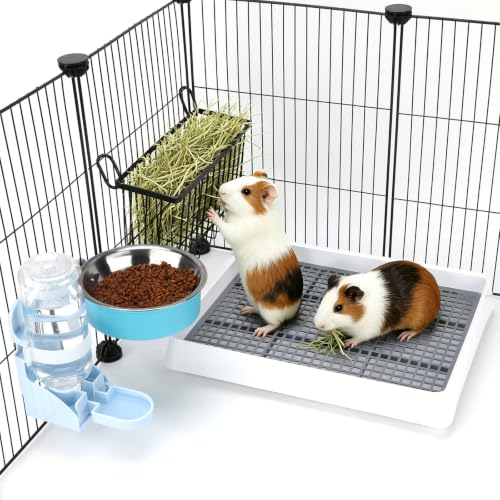
Bonded rabbits like to do everything together, toileting included, so a pair or group needs an extra-large tray with room for more than one bunny at once. These oversized rectangular pans give two rabbits space to share without squabbling, hold a much bigger volume of litter and hay, and cut down on the accidents that happen when a tray is too small or too crowded. For anyone with a bonded pair or a small group, the extra capacity is a genuine daily convenience.
The generous size means less frequent emptying despite the extra use, and there is room to place a big pile of hay at one end for the grazing-and-toileting habit both rabbits share. High sides contain spray from multiple directions, and the wide, stable base resists being tipped or dragged by two active rabbits. Many owners find one large shared tray easier to manage than two separate smaller ones, and it takes up less overall floor space in the enclosure.
The considerations are footprint and weight. An extra-large tray needs a good amount of floor space and a bigger enclosure to suit, it holds more litter so costs a little more to fill, and when full it is heavier to lift and empty. Some pairs also prefer two trays in different spots. For most bonded pairs sharing a roomy hutch or house-rabbit space, though, one big well-sided tray is the neatest solution.
What we like:
- Room for two rabbits to share comfortably
- Large capacity means less frequent emptying
- Space for a big hay pile at one end
- Wide stable base resists tipping and dragging
Worth knowing:
- Needs plenty of floor space and a larger enclosure
- Holds more litter, so costs more to fill
- Heavier to lift and empty when full
Specifications:
- Material: heavy-duty moulded plastic
- Shape: extra-large rectangular
- Suitable for: bonded pairs and small groups
- Care: empty and rinse, wipe sides clean
Rabbit Litter Tray Buying Guide
What to look for when buying a rabbit litter tray
Start with your rabbit and your enclosure, because those two decide most of the choice. Match the tray size to your rabbit, giving even a single bunny room to turn around and settle, and go bigger for large breeds or a bonded pair. Then look at where it will sit: a rectangular tray suits open floors and larger hutches, while a corner design tucks into the natural toileting spot in a smaller cage. High back and side walls are important on any tray, as rabbits reverse up and spray urine backwards.
Beyond size and shape, look for smooth, chew-resistant plastic that wipes clean easily, a stable base or a clip to stop an active rabbit tipping it, and a low front lip for easy access. A built-in or nearby hay rack taps into rabbits’ habit of eating while toileting and speeds up litter training, while a grate can help keep paws dry for messy individuals. Avoid anything with rough edges or gaps a rabbit could chew or catch a claw on.
Rabbit litter tray types explained
A rectangular high-sided tray is the all-rounder, offering plenty of room, good spray protection and space for hay, and it suits most rabbits and larger hutches. A corner tray saves space by fitting the triangular gap rabbits naturally use, and often pairs with a hay rack for compact setups. A deep pan with a grate keeps paws out of soiled litter and contains heavy spraying, which helps messy or staining rabbits.
Budget corner trays keep the same basic shape in lighter, cheaper plastic for small rabbits and spare enclosures, while extra-large trays give bonded pairs and groups room to share. There is no single best type; the right pick depends on your rabbit’s size and habits, how many rabbits you keep, the space in your enclosure and how much mess you are dealing with.
Getting the size and litter right
A tray only works if your rabbit fits it comfortably, so choose one that lets your bunny climb in, turn around and settle with room to spare. As a rough guide the tray should be at least as long as your rabbit stretched out, and larger breeds and bonded pairs need the biggest sizes. A tray that is too small or too shallow is the most common reason a rabbit refuses to use it, so err on the generous side and make sure the sides are high enough to catch backward spray.
Litter choice matters as much as the tray. Use a rabbit-safe, paper-based or wood-pellet litter that is absorbent and dust-free, and never use clumping cat litter or softwood shavings such as cedar or pine, which can be harmful if nibbled. Add a good layer to absorb urine and control odour, place a handful of hay at one end to encourage use, and scoop daily with a full change every few days to keep everything fresh and inviting.
How much should you spend?
Rabbit litter trays are inexpensive, so a cleaner enclosure need not cost much. A budget plastic corner tray runs around £4 to £9 and covers small rabbits, litter training and spare enclosures. A corner tray with a hay rack sits at roughly £8 to £16 and adds the space-saving grazing feature, while a good high-sided rectangular tray, the sweet spot for most rabbits, costs around £10 to £20 for a roomy, durable pan.
A large deep pan with a grate for messy or spraying rabbits sits higher at about £15 to £30, and an extra-large tray for a bonded pair lands at roughly £18 to £35. For most single rabbits, a high-sided rectangular tray in the £10 to £20 band is the best-value choice, offering room, spray protection and easy cleaning without overspending, while multi-rabbit homes will want to budget for the larger sizes.
Frequently asked questions
How do you litter train a rabbit?
Rabbits litter train more easily than many owners expect, especially once neutered, as this reduces territorial spraying. Place the tray in the corner your rabbit already uses, pop a little of their droppings and a handful of hay into it to signal what it is for, and confine them to a small area at first so the tray is always nearby. Reward use, clean up accidents promptly so the scent does not draw them elsewhere, and gradually give more space as the habit sticks.
What litter is safe for rabbits?
Use an absorbent, dust-free, rabbit-safe litter such as paper-based pellets, compressed wood pellets or shredded paper. Avoid clumping cat litters, which can cause a blockage if eaten, and steer clear of aromatic softwood shavings like cedar and pine, which can irritate a rabbit’s airways. A handful of clean hay on top encourages use, since rabbits like to eat while they toilet. Whatever you choose, it should be safe if nibbled, as some contact is inevitable.
Why won’t my rabbit use its litter tray?
The usual culprits are a tray that is too small, placed in the wrong spot, or not cleaned to your rabbit’s liking, along with un-neutered territorial behaviour. Try a larger tray, move it to the corner your rabbit naturally favours, and make sure it is scooped regularly but still smells faintly of them. Adding hay helps, and neutering often makes a dramatic difference to spraying. If habits suddenly change, it is worth ruling out a health problem with your vet.
How often should you clean a rabbit litter tray?
Scoop out wet litter and droppings daily to keep the tray pleasant and encourage continued use, and do a full change every two to three days depending on how many rabbits use it and how deep the litter is. Wash the tray with a pet-safe cleaner or diluted white vinegar during a full change to cut through urine scale and odour, then dry and refill. A clean tray is far more inviting, so regular maintenance actually helps litter training.
Do rabbits need a litter tray in the hutch?
Yes, a litter tray makes a hutch or indoor enclosure far cleaner and healthier by concentrating waste in one spot rather than spreading it across the floor. It protects the enclosure base, makes daily cleaning much quicker, and lets you monitor your rabbit’s droppings and urine for early signs of illness. Most rabbits take to a tray readily, and combining it with a hay rack or hay pile makes the whole setup tidier and more hygienic.
Conclusion
For most rabbits a high-sided rectangular litter tray is the one to buy: it gives plenty of room to settle, catches backward spray with its raised walls, holds a good layer of litter and hay, and wipes clean in seconds. In the £10 to £20 range it strikes the best balance of size, spray protection and durability for a cleaner hutch or house-rabbit setup.
Choose a corner tray with a hay rack if space is tight and you want grazing and toileting in one, a deep pan with a grate for a messy or spraying rabbit, an extra-large tray for a bonded pair, and a budget corner tray if you simply need an affordable start for a small, tidy bunny.