Best Hamster Wheel UK

A hamster wheel is not an optional extra, it is one of the most important things in the cage. In the wild a hamster covers surprising distances every night, and a good wheel is how a pet hamster burns off that energy, stays fit and settles happily. The wrong wheel, though, can be noisy enough to keep you awake, too small for your hamster’s back, or built in a way that risks trapped feet.

The good news is that a proper wheel is inexpensive and lasts for years. Below we round up the best hamster wheels in the UK for 2026, from whisper-quiet solid-surface plastic wheels to large freestanding stands, natural wooden designs and budget cage-clip options, with a buying guide to help you pick the right size and style for a Syrian or a dwarf.

Quick Comparison Table

ProductBest ForPrice RangeRating
Silent Solid-Surface Plastic WheelBest all-rounder for quiet running£10-20⭐⭐⭐⭐⭐
Large Freestanding Stand WheelBest for Syrian hamsters£15-30⭐⭐⭐⭐⭐
Savic Rolly Cage-Clip WheelBudget pick from a familiar brand£6-12⭐⭐⭐⭐
Natural Wooden WheelBest for a natural-look setup£15-28⭐⭐⭐⭐
Closed-Back Bearing WheelQuietest for a bedroom cage£18-30⭐⭐⭐⭐

The Best Hamster Wheels Reviewed

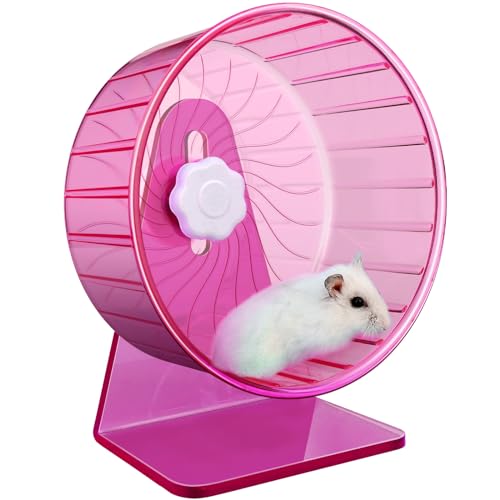
Silent Solid-Surface Plastic Wheel

Best for: most hamsters, as a quiet, easy-clean everyday wheel.

The solid-surface plastic wheel is the one we would reach for first, because it gets the important things right without any fuss. A one-piece running track with no rungs or gaps means there is nowhere for a foot or leg to slip through, which is the single biggest safety point with any wheel. The better versions run on a proper bearing rather than a bare axle, so instead of the familiar squeak-squeak of a cheap wheel they turn with barely a sound, which matters enormously if the cage lives in a bedroom.

Brands such as Trixie, Ferplast and Savic all make solid plastic wheels in a range of diameters, so you can match the size to a dwarf or a full-grown Syrian rather than making do. Most stand on their own weighted base as well as offering a cage clip, so you can place the wheel wherever suits and move it at cleaning time. The smooth plastic wipes clean in seconds, which is welcome given how much bedding and mess a hamster kicks about.

The main thing to watch is buying big enough, because plastic wheels are sold in sizes that include some that are frankly too small for a Syrian. Check the diameter against the guidance below rather than trusting a label that just says ‘hamster’. Very cheap plastic wheels can also develop a squeak as the axle wears. Buy a decently sized, bearing-mounted one, though, and this is the best-value, lowest-hassle wheel for almost any hamster.

What we like:

  • Solid one-piece surface with no rungs to trap feet
  • Bearing-mounted versions run almost silently
  • Available in sizes for dwarf and Syrian hamsters
  • Smooth plastic wipes clean in seconds

Worth knowing:

  • Some sizes sold are too small for a Syrian
  • Very cheap ones can squeak as the axle wears
  • Free-standing base takes up floor space in the cage

Specifications:

  • Type: solid-surface plastic wheel
  • Suitable for: dwarf and Syrian hamsters (choose by size)
  • Mounting: free-standing base and/or cage clip
  • Care: wipe clean; dishwasher-safe on some models

Large Freestanding Stand Wheel

Best for: Syrian hamsters and anyone who wants the safest back-friendly size.

A large freestanding wheel is the pick when you want to be certain the size is right, especially for a Syrian. These come with their own heavy base so the wheel stands securely on the cage floor rather than clipping to the bars, which means it stays put even when a determined hamster gets up to full speed. The generous diameter lets the hamster run with a flat, natural back rather than the arched posture a too-small wheel forces, which is the whole point of choosing a bigger one.

Because they are designed around bigger hamsters, these wheels usually pair the large track with a proper bearing and a solid running surface, so you get quiet running and safe footing in one. They suit deep cages and bin-style setups well, and the standalone base means you are not limited by where the cage bars happen to be. Several specialist and mainstream brands offer them, and they are worth the extra few pounds for a Syrian that will use the wheel every single night.

The trade-offs are size and space: a big wheel needs a cage with enough floor area and height to house it, so check your cage dimensions before buying. The base also adds weight, which is a plus for stability but a minor nuisance at cleaning time. For a Syrian, or for an owner who simply wants to buy the right size once and not worry, a large freestanding stand wheel is the standout choice.

What we like:

  • Generous diameter lets a hamster run with a flat back
  • Heavy base keeps it stable at full speed
  • Not limited by where the cage bars are
  • Usually combines a bearing with a solid surface

Worth knowing:

  • Needs a cage with enough floor space and height
  • Base adds weight to lift out at cleaning time
  • Costs a little more than a basic clip-on wheel

Specifications:

  • Type: freestanding upright wheel with weighted base
  • Suitable for: Syrian hamsters and larger dwarves
  • Surface: solid running track, bearing axle
  • Note: check diameter fits your cage before buying

Savic Rolly Cage-Clip Wheel

Best for: a cheap, no-nonsense wheel from a familiar UK brand.

Savic is a name you will spot in plenty of UK pet shops, and its Rolly wheels are the fuss-free budget option. The wheel clips onto the cage bars or stands on a small base, has a solid running surface rather than open rungs, and simply gets on with the job at a price that rarely troubles a tenner. For a first hamster, a spare wheel or a second cage, it is an easy, low-risk buy that still covers the safety basics.

The range includes a few sizes, so you can pick a small one for a dwarf or a larger one for a Syrian, and the moulded plastic is easy to wipe down. Being widely stocked, it is simple to replace or add to, and the cage-clip mounting keeps floor space free in a smaller cage. For owners who want a wheel that does the essentials without spending much, the Rolly is a sensible, familiar choice.

At this price the running is serviceable rather than whisper-quiet, so on a bare axle it can pick up a slight squeak over time, usually cured with a dab of vegetable oil on the spindle. The largest size still may not be big enough for a really large Syrian, so size up carefully. As an affordable, safe-surfaced starter wheel from a brand you can find on any pet-shop shelf, though, it is good value.

What we like:

  • Very affordable and widely stocked in the UK
  • Solid surface rather than open rungs
  • Clip-on mounting saves floor space
  • Easy to wipe clean and to replace

Worth knowing:

  • Bare axle can squeak over time
  • Largest size may still be small for a big Syrian
  • Plastic is serviceable rather than premium

Specifications:

  • Type: clip-on / standing plastic wheel
  • Suitable for: dwarf and small to medium Syrian hamsters
  • Brand: Savic Rolly, widely available in the UK
  • Mounting: cage-bar clip with small base

Natural Wooden Wheel

Best for: owners building a natural-look, chew-friendly setup.

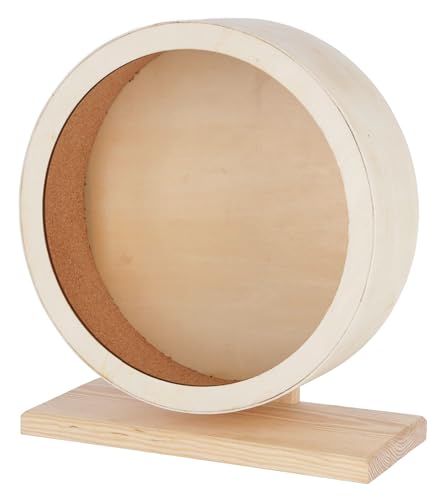
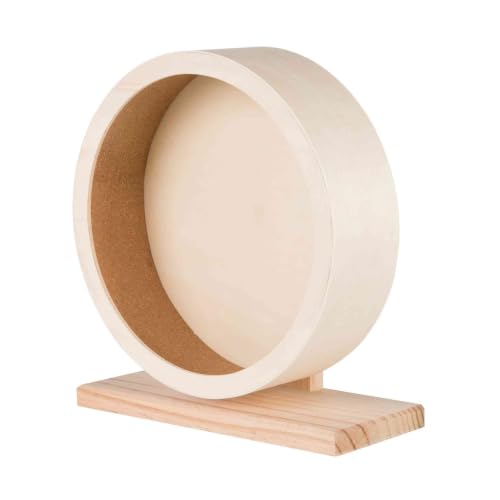
A wooden wheel suits owners who like a natural theme and want something a hamster can nibble without worry. Made from untreated timber or cork-covered board, these wheels give excellent grip underfoot, blend into a naturalistic cage of deep bedding and wooden hides, and satisfy a hamster’s urge to gnaw. Brands aimed at the natural-setup crowd, such as Niteangel and Getzoo, make large wooden wheels sized properly for Syrians as well as smaller ones for dwarves.

The textured wooden surface is kind to feet and gives confident traction, and because it is a solid bed there are no gaps to catch a leg. Many are freestanding on a wooden base, so they sit anywhere in the cage and match the rest of a bioactive or natural build. For anyone moving away from bright plastic toward a more understated, tank-style habitat, a wooden wheel is often the centrepiece that pulls the look together.

Wood does need a little more care than plastic. It can absorb urine if a hamster favours the wheel as a toilet spot, so it needs occasional scrubbing and thorough drying, and a very keen chewer may reshape the edges over time. It is also usually a touch pricier than a basic plastic wheel. For a natural, foot-friendly wheel that doubles as something safe to gnaw, though, a quality wooden design is a lovely choice.

What we like:

  • Natural wood gives excellent grip underfoot
  • Safe for a hamster to gnaw
  • Suits naturalistic, deep-bedding setups
  • Available in large sizes for Syrians

Worth knowing:

  • Wood can absorb urine and needs proper drying
  • A keen chewer may reshape the edges over time
  • Usually costs a little more than basic plastic

Specifications:

  • Type: solid wooden / cork-surfaced wheel
  • Suitable for: dwarf and Syrian hamsters (choose by size)
  • Material: untreated timber, freestanding base
  • Care: scrub and dry fully; spot-clean soiled areas

Closed-Back Bearing Wheel

Best for: the quietest possible running in a bedroom cage.

If near-silent running is your priority, a closed-back bearing wheel is the one to seek out. This style, often sold as a ‘silent runner’ design, encloses the back of the wheel and runs on a sealed ball bearing rather than an open axle, which all but eliminates the wobble and squeak that make cheaper wheels so noticeable at 2am. The solid back also means there is no central spindle poking into the running area, giving an uninterrupted, safe surface for the hamster’s feet.

These wheels usually mount to the cage side or a stand and come in dwarf and Syrian sizes, so you still choose by diameter as with any wheel. The engineering that makes them quiet also tends to make them smooth and durable, so they keep running well for a long time. For anyone whose hamster shares a bedroom, or who has been driven to distraction by a rattly wheel, the difference in noise is the main reason to spend a bit more here.

The obvious downside is price, as the bearing design costs more than a plain plastic wheel, and the enclosed back can trap a little more bedding that needs clearing out at cleaning time. Fit and mounting also need to be secure so the wheel does not work loose and start to rattle, which undoes the whole point. Where quiet matters most, though, a closed-back bearing wheel is worth every extra pound.

What we like:

  • Sealed bearing makes it exceptionally quiet
  • Solid back with no central spindle in the way
  • Smooth and durable over long-term use
  • Available in dwarf and Syrian sizes

Worth knowing:

  • Costs more than a basic plastic wheel
  • Enclosed back can trap bedding to clear out
  • Needs a secure fit so it does not rattle loose

Specifications:

  • Type: closed-back, sealed-bearing wheel
  • Suitable for: dwarf and Syrian hamsters (choose by size)
  • Feature: silent running, uninterrupted surface
  • Mounting: cage-side bracket or stand

Dwarf Hamster Small-Diameter Wheel

Best for: dwarf and Roborovski hamsters that need a smaller, lighter wheel.

Dwarf and Roborovski hamsters are tiny and light, so they suit a smaller wheel that spins easily under their weight rather than a large heavy one that takes real effort to get moving. A purpose-made dwarf wheel has a lower-set, narrower solid track that a little hamster can turn freely, while still being big enough that they are not forced to curve their back. For robos in particular, which are astonishingly fast, an easy-spinning wheel of the right size sees a lot of use.

These come from the same trusted brands as the larger wheels, in solid-surface plastic or wood, and usually clip to the bars or sit on a compact base to suit the smaller cages dwarves are often kept in. The lighter action means the wheel responds to a small hamster’s stride, and the solid surface keeps delicate little feet safe. If you have a dwarf, robo or Chinese hamster, buying a wheel scaled to them rather than a big Syrian wheel makes for far more comfortable running.

The key is not to go too small in the name of a compact cage, because even a dwarf needs enough diameter to run without arching. Check the minimum size below and treat it as a floor, not a target. A small wheel is also, naturally, no use if you later move a Syrian into the cage. For a dedicated dwarf setup, though, a correctly sized small-diameter wheel is exactly the right tool.

What we like:

  • Light, easy-spinning action suits tiny hamsters
  • Solid surface keeps small feet safe
  • Compact mounting fits smaller dwarf cages
  • Available from the same trusted brands

Worth knowing:

  • Still needs enough diameter to avoid an arched back
  • Not suitable if you later keep a Syrian
  • Easy to buy one that is too small, so check the size

Specifications:

  • Type: small-diameter solid wheel
  • Suitable for: dwarf, Roborovski and Chinese hamsters
  • Surface: solid track, light-action axle
  • Mounting: cage clip or compact base

Hamster Wheel Buying Guide

What to look for when buying a hamster wheel

The first thing to check is the running surface, because it is a safety issue. Choose a wheel with a solid, one-piece track and avoid any with open rungs, wire mesh or ladder-style gaps, since these can trap a foot or leg. After that, look at how it is driven: a wheel on a sealed bearing runs far more quietly and smoothly than one spinning on a bare axle, which is well worth the small extra cost if the cage is anywhere you sleep or relax.

Then think about size and mounting. Match the diameter to your hamster using the guidance below, always sizing up rather than down, so your hamster can run with a flat back rather than an arched one. Decide whether you want a freestanding wheel with its own base, which stands anywhere and stays put, or a clip-on that saves floor space in a smaller cage. Finally, favour materials that are easy to keep clean, since a well-used wheel needs regular wiping down.

Hamster wheel types explained

Solid plastic wheels are the everyday standard: one-piece, easy to clean and, on a bearing, pleasingly quiet. Wooden wheels swap plastic for natural timber or cork, giving great grip and something safe to gnaw, and they suit naturalistic setups, though they need a little more cleaning care. Closed-back bearing wheels enclose the back and run on a sealed bearing for the quietest possible action, which is the style to choose when noise is your main concern.

Mounting splits wheels into freestanding designs with a weighted base and clip-on designs that attach to the cage bars. Freestanding wheels are stable and can go anywhere, ideal for tank and bin cages with no bars to clip to; clip-ons keep the cage floor clear, handy in a smaller home. Steer clear of the old-fashioned open-rung metal wheels and treat flying-saucer discs as a novelty rather than a main wheel, as a proper upright wheel of the right size is what most hamsters use best.

Getting the size right

Size is the most important decision, because a wheel that is too small forces a hamster to run with a curved spine. As a rule of thumb, a Syrian hamster needs a wheel of at least around 28cm in diameter, and bigger is better, while dwarf and Roborovski hamsters need at least about 20cm. If in doubt, go up a size: a hamster can happily use a wheel that is slightly larger than the minimum, but never one that is too small.

A quick way to sense-check the fit is to watch your hamster run. If its back stays roughly level and flat as it goes, the wheel is big enough; if the body curves upward into a clear arch, the wheel is too small and should be replaced with a larger one. Because a young hamster grows, it is worth buying for the adult size from the start, particularly with a Syrian, so you are not replacing the wheel a few weeks later.

How much should you spend?

Hamster wheels are inexpensive, so there is no need to compromise on size or safety to save money. A basic solid plastic clip-on wheel such as a Savic Rolly costs around £6 to £12, which is fine as long as you buy a big enough size. A larger freestanding or wooden wheel from a brand aimed at proper setups typically runs £15 to £30, and a closed-back silent bearing wheel sits at the upper end of that range.

For most owners the sweet spot is a mid-priced solid wheel on a bearing, in the correct diameter for the hamster, at somewhere around £12 to £20. That buys quiet, safe, durable running that will last for years. Spending a little more on a large or silent design is money well spent if you have a Syrian or the cage lives in a bedroom, while a budget wheel of the right size is perfectly acceptable for a dwarf on a tighter budget.

Frequently asked questions

What size wheel does my hamster need?

It depends on the type. A Syrian hamster needs a fairly large wheel, at least around 28cm in diameter and ideally more, while dwarf and Roborovski hamsters need at least about 20cm. The simplest check is to watch your hamster run: its back should stay flat and level rather than arching upward. If the body curves into a clear arch, the wheel is too small and a bigger one is needed.

Why is my hamster’s wheel so noisy?

Most wheel noise comes from a bare axle rubbing as it spins, or from a clip-on wheel that has worked slightly loose and rattles against the bars. A dab of vegetable oil on the spindle often quietens a squeak, and checking the mounting is firm stops rattling. If it is still noisy, switching to a wheel with a sealed bearing, or a closed-back silent design, makes by far the biggest difference to how much you hear it at night.

Are solid wheels better than wire ones?

Yes. A solid, one-piece running surface is much safer than an open-rung or wire-mesh wheel, because there are no gaps for a foot or leg to slip through and get injured. Solid wheels also give better, more comfortable footing. For this reason we would always choose a solid-surface wheel, in plastic or wood, over any wheel with rungs or mesh, whatever the size of hamster.

Does my hamster really need a wheel?

A wheel is one of the most important things you can give a hamster. In the wild they travel long distances each night, and a wheel is how a caged hamster meets that need to run, stay fit and burn off energy. Without one, a hamster is far more likely to become bored, restless or overweight. Alongside a large cage, deep bedding and things to explore, a correctly sized wheel is an everyday essential rather than a luxury.

How do I clean a hamster wheel?

For a plastic wheel, wipe it down with warm water and, if needed, a pet-safe cleaner, then rinse and dry before returning it to the cage; many are dishwasher-safe on a low setting. Wooden wheels should not be soaked, so scrub soiled patches, spot-clean and let them dry fully to avoid absorbing damp. Clean whenever the wheel gets grubby, as hamsters often use the wheel as a toilet, and dry it completely before refitting.

Conclusion

For most hamsters a silent solid-surface plastic wheel in the right diameter is the wheel to buy: it is quiet on a bearing, safe underfoot, easy to clean and excellent value. Get the size right for your hamster, sizing up rather than down, and it will get used happily every night for years.

If you keep a Syrian, a large freestanding stand wheel is the safest choice for a flat-backed run, while the Savic Rolly is the easy budget pick from a familiar brand. Choose a natural wooden wheel for a naturalistic setup, a closed-back bearing wheel where quiet matters most, and a small-diameter wheel scaled to a dwarf or Roborovski.

Some More Reviews Here..