Best Cat Feeding Mat UK 2026

If you have ever put a bare foot straight into a puddle of spilled water or a scattering of stray biscuits by the food bowl, you already know why a feeding mat earns its place. Cats are famously particular eaters, and many are enthusiastic paddlers too, flicking kibble out of the bowl and dabbling in their water. A good mat catches all of it, protects your flooring and keeps the feeding area easy to wipe down.

The right mat also stops bowls skidding across a hard floor as your cat tucks in. Below we round up the best cat feeding mats in the UK for 2026, from wipe-clean silicone with raised edges to absorbent microfibre and smart bamboo, with a buying guide to help you pick the right size and style.

Quick Comparison Table

ProductBest ForPrice RangeRating
Raised-Edge Silicone MatBest all-rounder for spills and mess£8-18⭐⭐⭐⭐⭐
Large Non-Slip Silicone MatBest for messy eaters and multi-cat£12-22⭐⭐⭐⭐⭐
Budget Wipe-Clean PVC MatBudget pick from a familiar brand£4-10⭐⭐⭐⭐
Absorbent Microfibre MatBest for water splashers£8-15⭐⭐⭐⭐
Bamboo / Cork Feeding MatBest for a smart, natural look£12-25⭐⭐⭐⭐

The Best Cat Feeding Mats Reviewed

Raised-Edge Silicone Mat

Best for: most cats, as an easy-clean everyday mat that actually contains the mess.

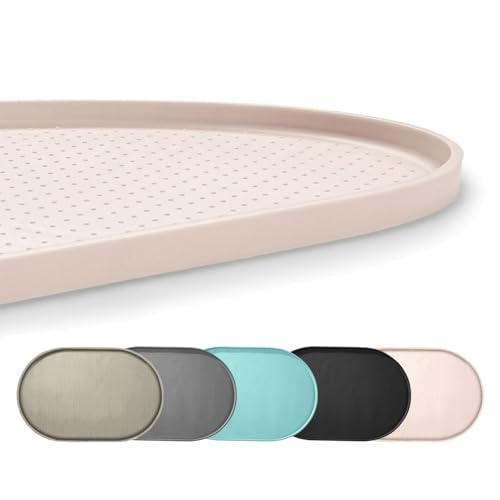
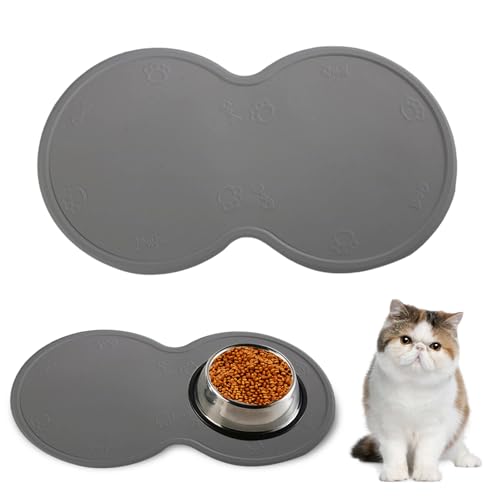
The raised-edge silicone mat is the one we would reach for first, because it solves the two things that make feeding stations messy: skidding bowls and escaping spills. Moulded from a single piece of food-grade silicone, it has a low lip running all the way around that keeps flicked kibble and slopped water on the mat rather than on your floor. The soft, grippy underside stops the mat itself from sliding about, and its slightly tacky surface helps hold lightweight bowls in place while your cat eats.

Because it is one solid piece with no seams, cleaning could not be simpler: tip off any crumbs, wipe it with a damp cloth, or rinse it under the tap and shake it dry. Most are dishwasher-safe too, so it can go in with the plates now and then for a proper clean. Silicone does not absorb odours or stain the way fabric can, and it lies completely flat without curling at the corners, which matters if you have a cat that likes to nudge things around.

The main things to weigh up are size and depth of lip. A shallow edge contains splashes but will not hold a real puddle, so a determined water-dabbler may still push some over the side. Very cheap silicone can also have a faint smell when new, which airs off within a day or two. Buy a decently sized mat with a proper raised rim, though, and this is the lowest-hassle, best-value choice for almost any cat.

What we like:

  • Raised lip keeps spills and stray kibble contained
  • Grippy underside stops the mat sliding on hard floors
  • One-piece silicone wipes or rinses clean in seconds
  • Lies flat without curling and does not absorb odours

Worth knowing:

  • Shallow lip won’t hold a large water spill
  • Some mats have a faint silicone smell when new
  • Plain look won’t suit everyone’s kitchen

Specifications:

  • Material: food-grade silicone, one-piece moulding
  • Feature: raised edge all round, non-slip base
  • Suitable for: single cats and kittens
  • Care: wipe, rinse or dishwasher-safe on most models

Large Non-Slip Silicone Mat

Best for: messy eaters, big bowls and multi-cat feeding stations.

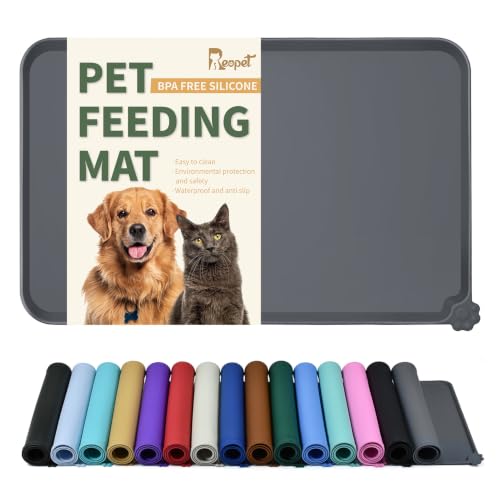
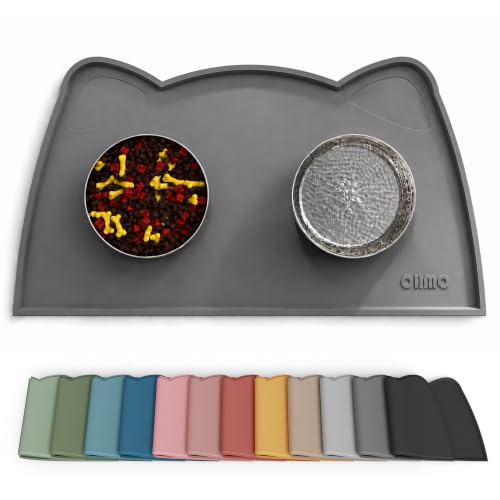
When one small mat simply is not big enough, a large non-slip silicone mat is the answer. The generous footprint comfortably holds two bowls side by side, or a bowl plus a water fountain, which makes it ideal for a proper feeding station or a two-cat household where dishes sit next to each other. The extra surface area also catches the wider spray of a cat that eats with real gusto, so more of the mess lands on the mat and less on the surrounding floor.

Like the smaller silicone mats, it is a single moulded piece with a grippy base and a raised edge, so it stays put and contains spills, just on a bigger scale. The heavier weight of a larger mat adds to its stability, meaning it will not shift even when a hungry cat leans in and shoves the bowl. It still wipes or rinses clean easily, and many large versions are dishwasher-safe if they fit, or simply need a quick scrub in the sink.

The trade-off is space, as a big mat needs a clear stretch of floor and can look bulky in a small kitchen or a narrow hallway feeding spot. It also costs a little more than a compact mat, though it is still an inexpensive item overall. For anyone with more than one cat, a raised bowl set, or simply a cat that treats mealtimes as a splash zone, the large non-slip silicone mat is the standout pick.

What we like:

  • Big enough for two bowls or a bowl and fountain
  • Extra weight keeps it firmly in place
  • Raised edge and non-slip base contain wider mess
  • Still easy to wipe, rinse or scrub clean

Worth knowing:

  • Needs a clear stretch of floor space
  • Can look bulky in a small kitchen
  • Costs a little more than a compact mat

Specifications:

  • Material: food-grade silicone, one-piece moulding
  • Size: large footprint for two bowls or a station
  • Suitable for: multi-cat homes and messy eaters
  • Care: rinse, scrub or dishwasher-safe if it fits

Budget Wipe-Clean PVC Mat

Best for: a cheap, cheerful mat that covers the basics.

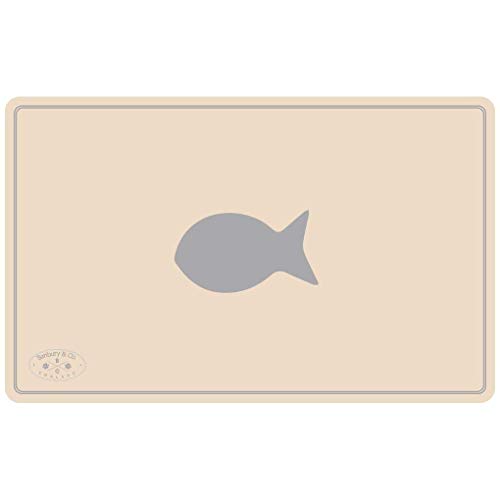
If you just want to protect the floor without spending much, a budget wipe-clean PVC mat does the job for the price of a coffee. These thin, flexible mats come in a huge range of colours and paw-print patterns, wipe clean with a damp cloth, and are widely stocked in supermarkets and pet shops as well as online. For a first cat, a spare feeding spot or a second station upstairs, it is an easy, low-risk buy that keeps kibble and drips off the tiles.

The plastic surface does not absorb water or smells, so a quick wipe after meals keeps it fresh, and because they cost so little you can simply replace one when it eventually looks tired. Many are cut to a generous size that sits comfortably under a double bowl set, and the bright designs are popular with owners who want the mat to look like a deliberate part of the kitchen rather than an afterthought. As a no-nonsense starter mat, it is genuinely good value.

The compromises are what you would expect at this price. A flat PVC mat has no raised edge, so it stops drips soaking into the floor but will not contain a real puddle, and being lightweight it can slide on smooth tiles or ruck up if a cat paws at it. The thin plastic is also less durable than moulded silicone over the long term. For keeping costs down while still protecting your floor, though, it is a sensible, cheerful choice.

What we like:

  • Very affordable and widely available
  • Wipes clean and does not absorb odours
  • Lots of colours and patterns to choose from
  • Generous sizes fit under a double bowl set

Worth knowing:

  • No raised edge to hold a spill
  • Lightweight, so can slide on smooth tiles
  • Thin plastic is less durable long-term

Specifications:

  • Material: wipe-clean PVC / plastic
  • Feature: flat mat, wide range of designs
  • Suitable for: single cats, budget setups
  • Care: wipe with a damp cloth after meals

Absorbent Microfibre Mat

Best for: water splashers and cats that trail wet paws.

Some cats are far more interested in the water than the food, batting at the surface and soaking the area around the bowl. For these paddlers, an absorbent microfibre mat works differently to silicone: instead of trying to contain the splashes with a lip, it soaks them straight up. A soft, thick fabric top drinks in drips and stray droplets, while a waterproof or rubberised backing stops that moisture reaching the floor beneath, so the tiles stay dry even when the bowl gets a proper stirring.

The plush surface is gentle under a cat’s paws and also catches loose kibble in its pile, which you can shake out over the bin. When it needs freshening up, the whole mat goes in the washing machine and comes out like new, which many owners find easier than wiping and drying a hard mat. It suits water fountains especially well, as fountains tend to throw off a fine spray that a fabric mat handles far better than a shallow-lipped tray.

The obvious downside is that a fabric mat needs washing rather than a quick wipe, so it is a little more effort day to day and you may want a spare to swap in on wash day. It also holds damp for longer than silicone, so it needs drying properly to stay fresh. For a dedicated splasher or a fountain setup, though, an absorbent microfibre mat keeps the floor drier than any wipe-clean tray can.

What we like:

  • Soaks up water splashes and trailed wet paw prints
  • Waterproof backing keeps the floor beneath dry
  • Soft underfoot and machine washable
  • Handles the fine spray from a water fountain well

Worth knowing:

  • Needs washing rather than a quick wipe
  • Holds damp longer, so must be dried properly
  • Worth having a spare for wash day

Specifications:

  • Material: microfibre top, waterproof backing
  • Feature: absorbent surface, machine washable
  • Suitable for: water dabblers and fountain stations
  • Care: machine wash and dry fully between uses

Bamboo / Cork Feeding Mat

Best for: owners who want the feeding station to look smart.

Not every mat has to be a functional slab of plastic in the corner. A bamboo or cork feeding mat is the choice for owners who want the station to look like a considered part of the room, with a natural, understated finish that sits happily in a modern kitchen. Made from sealed bamboo or pressed cork, these mats have a firm, wipeable surface that shrugs off drips and crumbs while looking a good deal more tasteful than a paw-print PVC sheet.

The rigid construction means the mat lies dead flat and will not ruck up, and a good one has a non-slip backing or felt feet so it stays in place on a hard floor. Bamboo in particular wipes clean easily and resists water when properly sealed, so day-to-day cleaning is a simple wipe-down. For a feeding spot that is on show in an open-plan space, rather than hidden in a utility room, it strikes a nice balance between practicality and looks.

The considerations are that a hard mat has, at most, a low edge, so like silicone it contains drips rather than large spills, and a really enthusiastic splasher may still push water over the side onto the floor. Natural materials also need the seal to stay intact, so avoid soaking them and dry any standing water rather than leaving it to sit. As a smart, floor-friendly mat for a station you actually want to look at, though, bamboo or cork is a lovely option.

What we like:

  • Natural, understated look suits modern kitchens
  • Firm surface lies flat and wipes clean
  • Non-slip backing or feet keep it in place
  • Sealed bamboo resists water and drips well

Worth knowing:

  • Low or no edge won’t hold a big spill
  • Needs the seal kept intact; don’t soak it
  • Costs more than a basic plastic mat

Specifications:

  • Material: sealed bamboo or pressed cork
  • Feature: rigid, flat, non-slip base or feet
  • Suitable for: on-show feeding stations
  • Care: wipe clean; dry standing water promptly

Non-Slip Rubber-Backed Mat

Best for: bowls that slide and cats on slippery hard floors.

If your main frustration is the bowl chasing itself across the floor while your cat tries to eat, a mat built around grip is the answer. A non-slip rubber-backed mat pairs a wipeable top with a dense rubber underside that clings to tile, laminate and vinyl, anchoring both the mat and the bowls that sit on it. That stops the familiar clatter of a dish being pushed into the skirting board, which is not only annoying but can put a nervous cat off settling down to eat.

The textured top adds a second layer of grip so bowls stay put, and the wipe-clean surface deals with the usual drips and crumbs without fuss. These mats tend to be slim and low-profile, so they tuck neatly under a bowl set without the bulk of a big silicone tray, and they lie completely flat with no curling corners for a cat to catch a claw on. For older or wobbly cats in particular, a stable, non-slip feeding surface makes mealtimes calmer and steadier.

The trade-off is that grip is the priority rather than containment, so a low-profile rubber mat may have little or no raised edge and will not hold a spill the way a lipped silicone mat does. The rubber backing can also mark or hold onto dust on some floors, so it benefits from an occasional lift and wipe underneath. Where a sliding bowl is the real problem, though, a non-slip rubber-backed mat is exactly the fix.

What we like:

  • Dense rubber backing grips tile, laminate and vinyl
  • Textured top helps stop bowls sliding
  • Slim, low-profile and lies completely flat
  • Steadier mealtimes for older or nervous cats

Worth knowing:

  • Low or no edge, so won’t contain a spill
  • Rubber can hold dust and needs a wipe underneath
  • Focused on grip rather than mess containment

Specifications:

  • Material: wipeable top with rubber non-slip base
  • Feature: high-grip backing, low profile
  • Suitable for: slippery floors and steady eaters
  • Care: wipe top; lift and wipe under occasionally

Cat Feeding Mat Buying Guide

What to look for when buying a cat feeding mat

Start with the problem you are trying to solve, because it points you straight to the right material. If your cat flicks kibble and slops water, a silicone mat with a raised edge contains the mess best. If the trouble is a bowl skating across a hard floor, prioritise a non-slip backing and a grippy surface. If your cat is a committed water-dabbler, an absorbent microfibre mat that soaks up splashes will keep the floor driest of all.

After material, think about cleaning and size. A mat that wipes or rinses clean, or goes in the dishwasher or washing machine, will get cleaned far more often than one that is fiddly, and a fresh mat matters right by the food. Make sure the mat is comfortably bigger than the bowl footprint so it actually catches the overspill, and check it lies flat without curling corners. A non-slip base is worth having whatever the style, so the mat itself stays put.

Cat feeding mat types explained

Silicone mats are the everyday standard: one-piece, wipe-clean and, with a raised edge, good at containing spills while gripping the floor. PVC mats are the budget option, thin and cheerful and easy to wipe, but flat and lightweight. Absorbent fabric mats take a different approach, soaking splashes into a microfibre top over a waterproof backing, which suits water fountains and enthusiastic paddlers and simply goes in the wash.

Bamboo and cork mats are the smart, natural choice for a station on show, rigid and wipeable with an understated look, though they contain drips rather than large spills. Rubber-backed mats put the emphasis on grip, anchoring sliding bowls on slippery floors. There is no single best type; the right one depends on whether your priority is containing mess, soaking up water, stopping a sliding bowl or simply looking good in the room.

Getting the size right

A feeding mat only catches what lands on it, so size it generously. As a rule of thumb, choose a mat that extends several centimetres beyond the edge of the bowl or bowls on every side, so flicked kibble and drips fall onto the mat rather than just past it. For a single small bowl a compact mat is fine, but for a standard food-and-water pairing, or a raised bowl set, measure the footprint and add a comfortable margin all round.

If you feed more than one cat, or run a bowl alongside a water fountain, step up to a large mat that holds everything with room to spare, as fountains and messy eaters throw mess wider than a tidy single feeder. It is also worth checking the spot the mat will live in, especially a narrow galley kitchen or a hallway corner, so the mat fits the space as well as the bowls. When in doubt, size up: a slightly larger mat catches more and rarely gets in the way.

How much should you spend?

Feeding mats are inexpensive, so there is no need to overspend to get a good one. A basic wipe-clean PVC mat costs around £4 to £10 and covers the essentials, while a quality raised-edge silicone mat, which is where most owners land, typically runs £8 to £18 depending on size. A large silicone mat for a multi-cat station, an absorbent microfibre mat, or a smart bamboo or cork design sits a little higher, usually £12 to £25.

For most homes the sweet spot is a mid-priced silicone mat with a proper raised edge and a non-slip base, at somewhere around £10 to £18. That buys years of easy, wipe-clean service that keeps the floor tidy and the bowls in place. Spending a little more on a large or absorbent mat is money well spent if you have several cats or a serious splasher, while a budget PVC mat is perfectly fine for a tidy single eater on a tighter budget.

Frequently asked questions

Do I really need a cat feeding mat?

You do not strictly need one, but it makes daily life much tidier. A mat catches the kibble cats flick out of the bowl and the water they slop over the side, protecting your flooring from drips, stains and scratches, and keeping the whole area easy to wipe down. It also stops bowls sliding about on a hard floor. For a small outlay it saves a lot of repeated mopping around the feeding spot.

What is the best material for a cat feeding mat?

It depends on your cat. Silicone is the best all-rounder, as it wipes clean, grips the floor and, with a raised edge, contains spills. For a serious water-dabbler, an absorbent microfibre mat that soaks up splashes keeps the floor driest. For a smart look in an open kitchen, sealed bamboo or cork works well. Match the material to whether your priority is containing mess, absorbing water or looking tidy.

How do I clean a cat feeding mat?

For silicone or PVC, tip off the crumbs and wipe with a damp cloth, or rinse under the tap and shake dry; many silicone mats are dishwasher-safe for an occasional deeper clean. Absorbent fabric mats go straight in the washing machine and should be dried fully before going back down. Bamboo and cork just need a wipe, avoiding soaking so the seal stays intact. Cleaning often keeps the feeding area fresh and hygienic.

What size feeding mat should I get?

Choose a mat that extends several centimetres beyond your bowls on every side, so overspill lands on the mat rather than the floor. A compact mat suits a single small bowl, while a standard food-and-water pairing or a raised bowl set needs a bigger one. For multiple cats or a bowl-and-fountain setup, go for a large mat. When unsure, size up, as a slightly larger mat catches more without getting in the way.

Will a feeding mat stop my cat’s bowl sliding around?

A mat with a non-slip base and a grippy top will hold both itself and the bowls far better than a bare floor, which stops the dish being pushed into the skirting board. Silicone mats and rubber-backed mats grip especially well on tile and laminate. Very lightweight flat PVC mats grip less, so if a sliding bowl is your main issue, choose a mat that specifically features a non-slip or rubberised backing.

Conclusion

For most cats a raised-edge silicone mat is the one to buy: it grips the floor, holds spills and stray kibble, wipes clean in seconds and costs very little. Size it generously so the overspill lands on the mat, and it will keep the feeding area tidy for years.

If you have more than one cat or a messy eater, step up to a large non-slip silicone mat, while the budget PVC mat is the easy low-cost pick. Choose an absorbent microfibre mat for a dedicated water-splasher or fountain, and a bamboo or cork mat for a station you want to look smart on show.

Some More Reviews Here..