Best Cat Cave Bed UK 2026

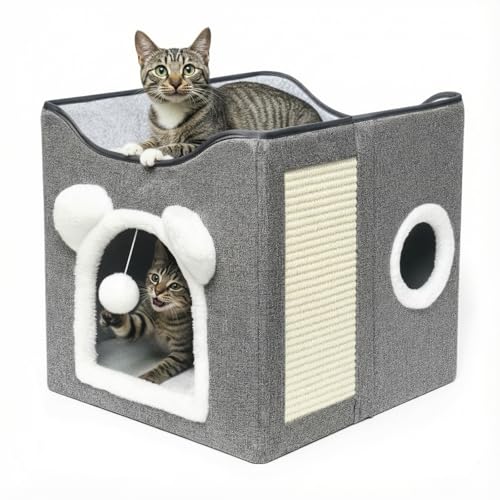
Cats are hard-wired to seek out small, enclosed hideaways where they can curl up and feel safe, which is exactly why a cat cave bed can become the most-used piece of furniture in the house. The covered, den-like shape gives a nervous cat somewhere to retreat, traps a pocket of body heat for extra warmth, and satisfies that deep feline urge to burrow away out of sight. For anxious cats, cold-sensitive breeds and kittens missing the warmth of the litter, an enclosed bed often works where an open one is ignored.

The catch is that cave beds vary hugely in shape, material and size, from soft felt wool domes to plush igloos and self-warming hideouts. Below we round up the best cat cave beds in the UK for 2026, with a buying guide to help you pick the right size, material and style for your cat.

Quick Comparison Table

ProductBest ForPrice RangeRating
Felt Wool Cave BedBest all-rounder in a natural material£25-45⭐⭐⭐⭐⭐
Plush Hooded Igloo BedBest for cosy warmth and softness£15-30⭐⭐⭐⭐⭐
Self-Warming Cave BedBest for senior and cold-sensitive cats£18-35⭐⭐⭐⭐
Budget Fabric Cave BedBudget pick for a first hideaway£10-20⭐⭐⭐⭐
Large Cave Bed for Big BreedsBest for Maine Coons and multi-cat homes£30-55⭐⭐⭐⭐

The Best Cat Cave Beds Reviewed

Felt Wool Cave Bed

Best for: an all-round hideaway in a natural, breathable material.

A felt wool cave bed is the one we would reach for first, because it balances the things cats and owners both care about. Made from densely pressed natural wool, it holds a firm, self-supporting dome shape that will not collapse when your cat leans against the side, while staying soft enough inside to be genuinely cosy. Wool is naturally breathable and temperature-regulating, so it feels warm in winter without becoming stuffy in summer, which makes it a sensible year-round choice.

The enclosed shape gives a cat the sense of security it craves, and the sturdy walls mean it keeps its den-like form far longer than a floppy fabric hideout. Many felt caves come with a small entrance that a cat can widen or reshape over time, and some have a foldable top so you can open the bed out into a flat mat on warmer days. Natural wool is also good at resisting odours and, being a solid single piece, there is very little to go wrong.

The main things to weigh up are cleaning and price. Felt wool is best spot-cleaned and air-dried rather than machine washed, as heat and agitation can shrink or misshape it, so it needs a little more care than a fabric bed. It also sits at the higher end for cave beds. For a durable, breathable, natural hideaway that suits most cats, though, it is the standout everyday pick and tends to last for years.

What we like:

  • Firm, self-supporting dome that keeps its shape
  • Natural wool is breathable and temperature-regulating
  • Resists odours and feels cosy year-round
  • Many fold flat into an open mat for warm days

Worth knowing:

  • Best spot-cleaned rather than machine washed
  • Sits at the pricier end for cave beds
  • Firmer feel than a plush bed suits some cats better than others

Specifications:

  • Material: pressed natural wool felt
  • Use: year-round enclosed hideaway
  • Suitable for: most adult cats and kittens
  • Care: spot-clean and air-dry

Plush Hooded Igloo Bed

Best for: cats that love to burrow into something soft and warm.

If your cat is a dedicated burrower that flattens every blanket in the house into a nest, a plush hooded igloo bed will be a hit. Built from thick, fluffy fleece or faux-fur over a padded base, it is the softest, cosiest style of cave bed and the one that feels most like a warm blanket wrapped around your cat. The domed hood traps body heat beautifully, so it becomes a favourite spot on cold nights and for cats that always seem to be looking for the warmest corner of the room.

The generous padding and soft walls make it especially appealing to cats that like to knead and snuggle, and the enclosed hood offers the same sense of security as a firmer cave while feeling more pillowy inside. These beds are usually lightweight and easy to move from room to room, so you can shift it to follow the sun or tuck it into a quiet corner. Most have a removable, machine-washable cushion, which makes keeping it fresh straightforward.

The trade-off is structure. A plush igloo is soft rather than rigid, so the hood can sag or squash down over time, particularly if a larger cat likes to sit on top of it rather than inside. The fluffy fabric also collects fur and needs regular washing to stay cosy and clean. For a warm, snuggly hideaway that burrowing cats adore, though, it is hard to beat on comfort or on price.

What we like:

  • Thick fleece or faux-fur is exceptionally cosy
  • Domed hood traps warmth for cold nights
  • Lightweight and easy to move around the home
  • Removable, machine-washable cushion on most models

Worth knowing:

  • Soft hood can sag or squash over time
  • Fluffy fabric collects fur and needs regular washing
  • Less sturdy than a firm felt cave

Specifications:

  • Material: fleece or faux-fur over padded base
  • Use: warm, soft hideaway for burrowing cats
  • Suitable for: kittens, adults and snuggly cats
  • Care: removable washable cushion; wash cover regularly

Self-Warming Cave Bed

Best for: senior cats and lean, cold-sensitive breeds.

For an older cat or a fine-coated breed that always seeks out the warmest spot, a self-warming cave bed adds gentle, no-electricity heat to the usual enclosed comfort. These beds use a metallic thermal layer built into the lining that reflects your cat’s own body heat back towards them, so the inside of the den warms up naturally as they settle in. There is nothing to plug in and no cables to worry about, which makes it a safe, fuss-free way to keep a chilly cat cosy.

The warmth is particularly welcome for senior cats and for lean breeds that feel the cold, as well as for any cat that likes to sleep in a cooler room, hallway or conservatory. The enclosed cave shape works with the thermal lining to hold that reflected heat inside the den rather than letting it escape, so it stays noticeably warmer than an open self-warming mat. Most have a removable, washable insert containing the thermal layer, which keeps cleaning simple.

The considerations are that a self-warming bed relies on your cat spending enough time in it to build up heat, so it works best once a cat has adopted it as a regular sleeping spot rather than for a quick visit. It also offers gentle warmth rather than the active heat of an electric pad, which is exactly the point for unsupervised safety. For keeping an older or cold-sensitive cat comfortable through winter, though, it is a reassuring and low-effort choice.

What we like:

  • Thermal lining reflects body heat with no electricity
  • Enclosed shape holds warmth inside the den
  • Safe and cable-free for unsupervised use
  • Ideal for senior cats and cold-sensitive breeds

Worth knowing:

  • Needs time in the bed to warm up properly
  • Gentle warmth rather than active heat
  • Thermal insert must be positioned correctly after washing

Specifications:

  • Material: padded fabric with reflective thermal lining
  • Use: gentle warmth for cold-sensitive cats
  • Suitable for: senior cats, lean breeds, cool rooms
  • Care: removable washable insert on most models

Budget Fabric Cave Bed

Best for: a cheap, low-risk first hideaway to test the idea.

If you are not yet sure whether your cat will take to an enclosed bed, a budget fabric cave bed lets you try the idea without much outlay. These simple hooded beds use a lightweight padded fabric over a flexible frame or a soft self-supporting shell, and they come in a wide range of colours and prints. For a first cave, a spare for a second room, or a hideaway for a rescue cat still settling in, it is an easy, low-cost buy that covers the essentials.

Despite the low price, a decent budget cave still delivers the core benefit: a covered, den-like space where a cat can tuck itself away and feel secure. Many fold flat for storage or travel, which makes them handy for trips to the vet, a holiday let or a relative’s house, giving an anxious cat a familiar-smelling refuge in a strange place. Because they cost so little, you can place one in each of your cat’s favourite spots rather than expecting it to commit to a single bed.

The compromises are what you would expect at the price. The padding is thinner and the structure less sturdy, so a budget cave offers less warmth and can lose its shape sooner, particularly with a heavier cat. The fabrics are also less hard-wearing than a quality felt or plush bed. As an affordable way to find out whether your cat likes a cave bed, or as a spare and travel option, though, it is a sensible and cheerful choice.

What we like:

  • Very affordable and widely available
  • Low-risk way to test if your cat likes a cave
  • Many fold flat for storage and travel
  • Cheap enough to place one in several rooms

Worth knowing:

  • Thinner padding gives less warmth
  • Structure can sag sooner, especially with big cats
  • Fabrics less durable than premium beds

Specifications:

  • Material: lightweight padded fabric over frame or shell
  • Use: first hideaway, spare bed or travel refuge
  • Suitable for: kittens and average-sized adult cats
  • Care: check label; many have washable covers

Large Cave Bed for Big Breeds

Best for: Maine Coons, Ragdolls and homes with more than one cat.

Big cats need big hideaways, and a large cave bed is sized to give substantial breeds room to stretch out inside rather than squeezing in with their tail poking out of the door. Designed with a wider base and a taller, roomier dome, it comfortably fits a Maine Coon, Ragdoll, Norwegian Forest cat or British Shorthair, and often has enough space for a bonded pair of smaller cats to curl up together. If your cat has ever tried and rejected a standard cave for being too cramped, size is usually the reason.

The extra room does not come at the expense of the enclosed, secure feeling, because a well-designed large cave keeps the walls high and the entrance snug enough to still feel den-like. The bigger models tend to use sturdier construction to support their size, whether that is thick felt, a reinforced frame or a firm padded shell, so they hold their shape under a heavier cat. A generous, removable base cushion adds comfort and makes washing manageable.

The considerations are footprint and price. A large cave takes up noticeably more floor space, so it needs a spot where it can sit undisturbed, and the bigger, sturdier build pushes the price towards the top of the range. In a multi-cat home you may also find one cat guards it, so a second bed can help. For a large breed or a pair of cats that share, though, the extra space transforms an ignored bed into a favourite.

What we like:

  • Roomy enough for large breeds to stretch out
  • Fits a bonded pair of smaller cats in some models
  • Sturdier build holds its shape under a heavier cat
  • Keeps the enclosed, secure feel despite the size

Worth knowing:

  • Takes up more floor space than a standard cave
  • Larger, sturdier build costs more
  • One cat may guard it in a multi-cat home

Specifications:

  • Material: thick felt, reinforced frame or firm shell
  • Use: roomy hideaway for big breeds and pairs
  • Suitable for: Maine Coon, Ragdoll, Norwegian Forest, pairs
  • Care: removable washable base cushion on most models

Cat Cave Bed Buying Guide

What to look for when buying a cat cave bed

Start with your cat’s temperament and habits, because they point you to the right type. A nervous or newly rehomed cat benefits most from the security of a firm, fully enclosed cave, while a dedicated burrower will prefer a soft, plush igloo to nest into. An older or cold-sensitive cat is well served by a self-warming design, and a large breed needs a roomy cave sized to fit them. Matching the bed to the cat matters far more than the colour or looks.

Whatever the type, comfort, size and cleaning come next. Look for a soft but supportive base cushion, a dome that holds its shape rather than collapsing, and an entrance large enough for your cat to come and go easily but snug enough to still feel den-like. A removable, machine-washable cushion or cover makes a real difference to how easy the bed is to keep fresh, and natural or breathable materials help avoid a stuffy, overheated den in summer.

Cat cave bed types explained

Felt wool caves are the sturdy, natural all-rounder: breathable, firm and long-lasting, suiting most cats year-round. Plush igloo beds are the soft, cosy option, ideal for burrowing cats and cold nights, though less rigid. Self-warming caves add a thermal lining that reflects body heat, which suits senior and lean cats without any electricity.

Budget fabric caves offer a low-cost, foldable hideaway that is handy for testing the idea or for travel, at the expense of durability and warmth. Large caves are simply scaled up for big breeds and pairs. There is no single best type; the right one depends on whether your priority is durability, cosiness, warmth, budget or size, and many multi-cat homes end up with more than one style.

Getting the size right

A cave bed should feel snug without being cramped, so measure your cat before you buy rather than guessing. As a rough guide, the internal base should be a little longer than your cat when curled up, with enough height for them to sit up and turn around comfortably inside. Most makers give internal dimensions and a suggested cat size or weight range, so check these against your cat rather than relying on labels like small, medium and large alone.

Getting the fit right matters because a cave that is too small will be rejected, while one that is far too big loses the cosy, enclosed feeling that makes it appealing in the first place. Large breeds such as Maine Coons and Ragdolls almost always need a bed marketed specifically for big cats, and a growing kitten will benefit from something with a little room to grow into. If two cats will share, size up so both can settle without squabbling over space.

How much should you spend?

Cat cave beds span a wide range, so there is something at most budgets. A basic fabric cave costs around £10 to £20 and is fine for testing the idea or as a travel bed, while a plush hooded igloo typically runs £15 to £30 and offers excellent cosiness for the money. A self-warming cave sits around £18 to £35, and a quality felt wool cave, which is where many owners land for durability, usually costs £25 to £45.

For most homes the sweet spot is a felt wool cave at around £25 to £45 or a plush igloo at £15 to £30, depending on whether you prioritise longevity or softness. Large caves for big breeds sit higher, often £30 to £55, reflecting the extra size and sturdier build. It is worth remembering that a well-made cave a cat actually uses is better value than a cheap one it ignores, so match the bed to your cat rather than simply buying the cheapest.

Frequently asked questions

Why do cats like enclosed cave beds?

Cats are both predators and prey in the wild, so they instinctively seek out small, covered spaces where they can rest without feeling exposed. An enclosed cave bed taps straight into that instinct, offering a den-like refuge where a cat feels hidden and secure. The covered shape also traps body heat, so it stays warmer than an open bed, which is why many cats choose a cave over a flat cushion, especially nervous cats and those that feel the cold.

Are cave beds good for anxious cats?

Yes, an enclosed cave bed is one of the simplest ways to give an anxious or newly rehomed cat somewhere to feel safe. Having a private, covered spot to retreat to can help a nervous cat settle into a home, cope with visitors or noise, and feel more in control of its surroundings. Place the cave somewhere quiet and out of the main flow of the house, and let your cat discover it in its own time rather than placing them inside.

What size cave bed does my cat need?

Choose a cave with an internal base a little longer than your cat when curled up, and enough height to sit up and turn around inside. Check the maker’s internal dimensions and suggested weight range against your own cat. Large breeds such as Maine Coons, Ragdolls and Norwegian Forest cats almost always need a bed made specifically for big cats, while an average adult cat suits a standard size and a kitten benefits from a little room to grow.

How do I clean a cat cave bed?

It depends on the material. Beds with a removable, machine-washable cushion or cover are the easiest, needing only a regular gentle wash to stay fresh. Plush igloos usually wash well, while felt wool caves are best spot-cleaned and air-dried, as heat and agitation can shrink or misshape the wool. Check the care label before washing, vacuum or lint-roll off fur between washes, and reposition any thermal insert correctly after cleaning a self-warming bed.

How do I get my cat to use a cave bed?

Place the cave in a spot your cat already likes, ideally somewhere quiet and slightly raised or tucked away, rather than in a busy thoroughfare. Adding a familiar-smelling blanket or a little catnip can help, as can popping a favourite toy or treat just inside. Avoid forcing your cat in; let curiosity do the work, and be patient, as some cats adopt a new bed within hours while others take a week or two to commit to it.

Conclusion

For most cats a felt wool cave bed is the one to buy: it is breathable, holds its shape for years and gives the secure, enclosed feeling cats love, all in a natural material that suits any room. If your cat is a dedicated burrower, a plush hooded igloo offers unbeatable cosiness for less money.

Choose a self-warming cave for a senior or cold-sensitive cat, a budget fabric cave to test the idea or for travel, and a large cave bed if you share your home with a Maine Coon, Ragdoll or a pair of cats that like to curl up together.

Some More Reviews Here..