Best Guinea Pig Hideout UK 2026

Guinea pigs are prey animals at heart, and no matter how safe their cage is, they feel most settled when they have somewhere to duck out of sight. A good hideout gives your piggy a dark, enclosed retreat to nap, shelter and feel secure, which cuts stress, encourages natural behaviour and often makes a nervous new guinea pig far more confident. It is one of the cheapest and most effective ways to keep a happy, relaxed pet.

The catch is that hideouts vary enormously, from simple plastic igloos to wooden houses, fleece tunnels and edible grass hides, and the wrong one can be too small, hard to clean or quickly chewed to bits. Below we round up the best guinea pig hideouts in the UK for 2026, with a buying guide to help you pick the right size, material and style so every piggy in your herd has a cosy place to hide.

Quick Comparison Table

ProductBest ForPrice RangeRating
Wooden Guinea Pig HouseBest all-rounder for most piggies£12-25⭐⭐⭐⭐⭐
Plastic Igloo HideoutBest easy-clean pick£5-12⭐⭐⭐⭐⭐
Fleece Tunnel & BedBest cosy hide for bonded pairs£10-20⭐⭐⭐⭐
Edible Grass TunnelBest budget chew-and-hide pick£4-9⭐⭐⭐⭐
Large Two-Exit Hide HouseBest for herds and nervous pigs£15-30⭐⭐⭐⭐

The Best Guinea Pig Hideouts Reviewed

Wooden Guinea Pig House

Best for: most guinea pigs and owners who want a sturdy, natural-looking hide.

A wooden house is the hideout we would reach for first, because it ticks the most boxes for the widest range of piggies. The solid timber walls create a genuinely dark, den-like space that guinea pigs love to shelter and sleep in, while the natural material feels warm underfoot and blends nicely into a hutch or C&C cage. Many designs include a doorway and sometimes a second exit, which reassures a nervous pig that it is never cornered.

Wood is also satisfying to gnaw, which helps keep ever-growing guinea pig teeth in check and gives a bored piggy something to do. A good untreated hardwood or ply house is robust enough to stand up to daily use and the occasional chew, and the flat roof often doubles as a lookout perch. For a hide that looks good, feels natural and suits nearly any setup, the wooden house is the standout all-round choice.

The things to weigh up are cleaning and chewing. Bare wood absorbs moisture and can hold odours if it gets damp, so it needs a dry spot and occasional airing, and a determined chewer will slowly whittle it down and eventually need a replacement. Choose an untreated, guinea-pig-safe wood and keep it out of the wettest corner. For most piggies, though, a wooden house is the cosy, hard-wearing hide that does everything well.

What we like:

  • Solid walls create a proper dark den for napping
  • Natural wood is safe to gnaw and helps wear teeth
  • Often has two exits so pigs never feel trapped
  • Sturdy build and roof that doubles as a perch

Worth knowing:

  • Bare wood can absorb moisture and odours
  • Heavy chewers will need a replacement over time
  • Harder to wipe clean than plastic

Specifications:

  • Material: untreated wood or plywood
  • Shape: house with doorway, often a second exit
  • Suitable for: single guinea pigs and pairs
  • Care: keep dry, air out and brush clean

Plastic Igloo Hideout

Best for: easy cleaning and damp-prone cage corners.

The classic plastic igloo is a guinea pig staple for good reason: it is cheap, tough and wipes clean in seconds. The smooth, domed shell gives a dark, cave-like retreat that piggies dart into at the first sign of stress, and because the plastic does not absorb urine or moisture, it stays hygienic even in a busy cage. A quick rinse and wipe returns it to like-new, which makes it ideal for the corner your guinea pig toilets in most.

Igloos come in a range of sizes and cheerful colours, and the single moulded piece has no joints or fixings to work loose. The wide, open doorway lets a piggy see out and slip in easily, and the light weight means you can lift it to spot-clean underneath without dismantling anything. For a fuss-free, wipe-and-go hide that shrugs off mess, the plastic igloo is hard to beat on convenience and price.

The trade-offs are warmth and chew appeal. Plastic feels cooler and less cosy than wood or fabric, some guinea pigs prefer a snugger fit, and a bored pig cannot safely gnaw it the way it would wood. Very light igloos can also be nudged around by an enthusiastic piggy. None of that stops it being a brilliant easy-clean option, especially as a second hide in a damp or heavily used corner of the cage.

What we like:

  • Wipes clean in seconds and resists odours
  • Tough one-piece moulding with no loose parts
  • Wide doorway for quick, easy access
  • Cheap enough to have one in every cage

Worth knowing:

  • Cooler and less cosy than wood or fleece
  • Not safe or satisfying for a pig to chew
  • Light versions can be pushed around

Specifications:

  • Material: moulded plastic
  • Shape: domed igloo with single opening
  • Suitable for: all guinea pigs, damp corners
  • Care: rinse and wipe clean

Fleece Tunnel & Bed

Best for: cosy-loving piggies and bonded pairs that snuggle.

For guinea pigs that like to burrow and snuggle, a padded fleece tunnel or hide bed is the cosiest option going. The soft, insulated fabric traps warmth beautifully, making it a favourite in cooler months and with older or thin-coated pigs, while the enclosed tunnel shape satisfies the natural urge to tuck into a snug, dark space. Bonded pairs will often pile in together, which is lovely to watch and reassuring for both pigs.

Fleece hides are gentle on the feet, comfortable to lie on and usually collapsible, so they store flat and travel well for vet trips or holidays. The best ones use guinea-pig-safe fleece over a soft filling and, crucially, come apart or have a removable cover for washing. A machine-washable fleece hide fits neatly into a reusable-bedding setup and adds a real touch of comfort to any cage.

The considerations are hygiene and durability. Fabric absorbs urine and needs washing regularly to stay fresh, so it suits pigs that mostly toilet elsewhere and owners happy to launder it often, and stray loops of thread or heavy chewing can be a hazard, so it needs checking for damage. Kept clean and inspected, though, a fleece tunnel is the snug, sociable hide that cosy-loving guinea pigs adore.

What we like:

  • Soft insulated fabric traps warmth for chilly days
  • Snug tunnel shape suits burrowers and cuddlers
  • Big enough for bonded pairs to share
  • Machine washable and folds flat for travel

Worth knowing:

  • Absorbs urine and needs frequent washing
  • Loose threads must be checked and trimmed
  • Not suitable for determined chewers

Specifications:

  • Material: guinea-pig-safe fleece with soft filling
  • Shape: tunnel or open-ended hide bed
  • Suitable for: single pigs and bonded pairs
  • Care: machine wash on a gentle cycle

Edible Grass Tunnel

Best for: keeping costs down and combining a hide with a chew.

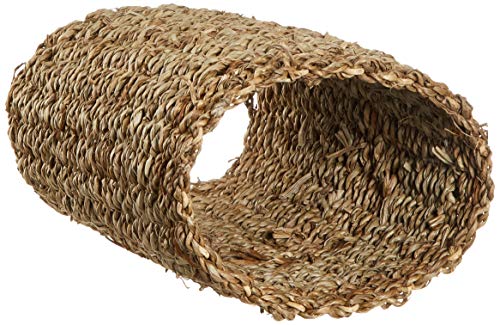
An edible grass tunnel is a clever two-in-one: a hideaway your guinea pig can also nibble. Woven from natural seagrass or timothy hay, it offers a snug tunnel to shelter and rush into when startled, while doubling as a safe, fibre-rich chew that helps wear down teeth and keeps a bored pig busy. For very little money it delivers both enrichment and security, which is why it is such a popular budget pick.

Because it is fully natural and edible, there is no worry about your piggy gnawing it, and the open-ended tunnel design means a nervous pig always has a clear escape route. It is light, easy to move around the cage to keep things interesting, and pairs well with a sturdier main hide as a fun, disposable extra. Many owners rotate a fresh grass tunnel in every few weeks to keep enrichment varied.

The obvious limitation is lifespan. A grass tunnel is meant to be eaten, so an enthusiastic chewer will demolish it in a matter of weeks and it will need replacing, and it offers less structure and warmth than a solid house. It also cannot be washed, so a soiled one simply gets composted and swapped. As an affordable, edible hide-and-chew, though, it is excellent value and genuinely good for your pig.

What we like:

  • Doubles as a safe, tooth-wearing chew
  • Fully natural and edible, no chew worries
  • Open-ended so nervous pigs feel safe
  • Cheap enough to replace and rotate often

Worth knowing:

  • Keen chewers destroy it within weeks
  • Cannot be washed, so soiled ones are binned
  • Less warmth and structure than a house

Specifications:

  • Material: woven seagrass or timothy hay
  • Shape: open-ended tunnel
  • Suitable for: all guinea pigs, especially chewers
  • Care: replace when soiled or chewed through

Large Two-Exit Hide House

Best for: herds, larger breeds and easily spooked guinea pigs.

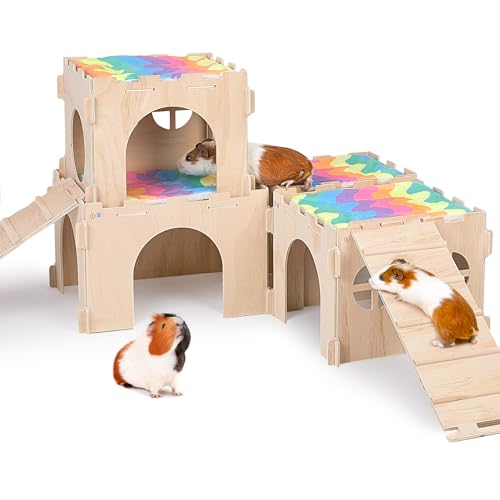
Guinea pigs kept in threes or fours, or simply larger and more nervous individuals, do best with a big hide that has more than one exit. A spacious two-door house lets several pigs shelter at once without squabbling and, importantly, means no piggy is ever cornered by a cage-mate, which keeps the peace in a herd. The extra room and second escape route make even a jumpy guinea pig far more willing to use the hide and settle.

These larger houses give proper headroom and floor space for pigs to stretch out, turn around and share, and the twin openings improve airflow so the interior stays fresher. Whether in wood or sturdy plastic, a well-sized two-exit hide becomes the calm centre of the cage where the herd naps and retreats together. For multi-pig homes it removes a common source of tension at a stroke.

The considerations are footprint and price. A big two-exit house takes up a fair chunk of cage floor, so you need the space for it alongside food, water and a run-around area, and larger hides cost a little more. In a small cage with a single calm pig it can be overkill. For herds, big breeds and nervous piggies, though, the room and the second doorway are well worth the space they take.

What we like:

  • Room for several pigs to shelter at once
  • Two exits stop any pig being cornered
  • Twin openings keep the inside well ventilated
  • Calms nervous pigs with a guaranteed escape route

Worth knowing:

  • Takes up a good share of the cage floor
  • Costs more than a basic single hide
  • Overkill for one calm guinea pig in a small cage

Specifications:

  • Material: wood or sturdy plastic
  • Shape: large house with two doorways
  • Suitable for: herds, large breeds, nervous pigs
  • Care: wipe or brush clean, keep dry

Guinea Pig Hideout Buying Guide

What to look for when buying a guinea pig hideout

Start with size, because a hide that is too small is the main reason a guinea pig ignores it. Choose one your pig can fully enter, turn around in and settle inside with room to spare, and size up for larger breeds or if two pigs like to share. Then think about exits: a second doorway, or at least an open-ended design, stops a nervous or bullied pig feeling trapped, which matters hugely in a pair or herd.

After size and exits, weigh up material against how you keep your cage. Wood is cosy and chewable but needs to stay dry, plastic wipes clean but feels cooler, fleece is warmest but needs washing, and edible grass doubles as a chew but wears out. Whatever you pick, make sure it is guinea-pig-safe with no sharp edges, small parts, treated timber or loose threads, and ideally give each pig its own hide so there is never a squabble over the safe spot.

Guinea pig hideout types explained

Wooden houses are the sturdy all-rounder, offering a dark den that is safe to gnaw, and they suit most pigs and setups. Plastic igloos are the easy-clean choice for damp or heavily used corners, wiping down in seconds. Fleece tunnels and hide beds are the cosiest, trapping warmth for snuggly pigs and bonded pairs, but they need regular washing.

Edible grass tunnels combine a hide with a chew for very little money, though they are eaten and replaced often, while large two-exit houses give herds and nervous pigs room to share and a guaranteed escape route. There is no single best type; many owners mix a couple, such as an easy-clean igloo plus a cosy fleece hide, so every pig always has a choice of safe spots to suit its mood and the season.

Getting the size and number right

A hideout only works if your guinea pig fits it comfortably, so pick one that lets your pig walk in, turn around and lie down without touching the sides, and go bigger for breeds like Rex and Texel or for pigs that share. A cramped hide gets ignored, while a roomy one becomes a favourite retreat. As a rule of thumb, if your pig has to squeeze or reverse out, the hide is too small.

Number matters as much as size. Guinea pigs are social but also territorial about safe spaces, so the golden rule is one hide per pig plus one spare, giving everyone somewhere to bolt without conflict. In a herd this prevents a dominant pig monopolising the only hide and bullying the others out. Spreading a few hides around the cage also encourages movement and exercise, since your pigs will potter between their favourite spots.

How much should you spend?

Guinea pig hideouts are inexpensive, so keeping a whole herd well supplied need not cost much. An edible grass tunnel runs around £4 to £9 and doubles as a chew, while a plastic igloo sits at roughly £5 to £12 and wipes clean forever. A good wooden house, the best all-rounder for most pigs, costs around £12 to £25 depending on size and design.

A padded fleece tunnel or hide bed lands at about £10 to £20, and a large two-exit house for a herd sits higher at roughly £15 to £30. For most owners the sensible approach is to spend on one sturdy main hide, such as a wooden house, then add a cheap igloo or grass tunnel so every pig has options. That way a couple of pigs are comfortably catered for well under £40.

Frequently asked questions

Do guinea pigs really need a hideout?

Yes. Guinea pigs are prey animals and feel exposed without somewhere to hide, which causes chronic stress that can affect their health and make them timid and hard to handle. A hideout gives them a safe retreat to rest and shelter, and pigs with good hides are noticeably calmer, more confident and more active. It is not a luxury but a basic welfare need, and arguably the single most important cage accessory after food, water and bedding.

How many hideouts should guinea pigs have?

The standard guidance is one hide per guinea pig plus one extra, so two pigs need at least three hides. Guinea pigs can be territorial about safe spaces, and having spares stops a dominant pig claiming the only hide and bullying the others out into the open. Spreading several hides around the cage also encourages exercise and gives each pig a choice, which keeps the whole herd more relaxed and content.

Are wooden hideouts safe for guinea pigs to chew?

Untreated, guinea-pig-safe wood is safe and even beneficial to chew, since gnawing helps wear down their continuously growing teeth and relieves boredom. Avoid anything painted, varnished, glued with unsafe adhesives or made from aromatic softwoods like cedar and pine, which can be harmful. Stick to plain hardwood or safe plywood hides, check them for splinters or sharp edges as they wear, and replace a house once a determined chewer has whittled it down too far.

How do you clean a guinea pig hideout?

It depends on the material. Plastic igloos rinse and wipe clean in seconds and can be scrubbed with a pet-safe cleaner or diluted white vinegar. Wooden houses should be brushed out, spot-cleaned and left to air dry, as soaking damages the wood, so keep them out of the wettest corner. Fleece hides go in the washing machine on a gentle cycle, and edible grass tunnels are simply composted and replaced once soiled or chewed through.

Will a hideout help a nervous guinea pig settle in?

A hideout is one of the best ways to help a new or shy guinea pig gain confidence. Having a dark, secure retreat to dash into lets a nervous pig feel in control and observe its surroundings safely, which speeds up settling in enormously. Choose a hide with two exits or an open end so it never feels cornered, place it in a quiet part of the cage, and resist pulling your pig out of it, so the hide stays a trusted safe space.

Conclusion

For most guinea pigs a sturdy wooden house is the hideout to buy: it creates a proper dark den, is safe and satisfying to gnaw, often has a second exit so no pig feels trapped, and suits nearly any cage. In the £12 to £25 range it offers the best balance of cosiness, durability and natural appeal for a calmer, more confident pig.

Add a wipe-clean plastic igloo for damp corners, a fleece tunnel for snuggly pigs and colder months, an edible grass tunnel as a cheap hide-and-chew, and a large two-exit house for herds or nervous pigs. Remember the golden rule of one hide per pig plus a spare, and every guinea pig in your home will always have somewhere safe to retreat.

Some More Reviews Here..