Choosing a dog harness can feel more complicated than it should be. Back clips, front clips, step-ins and vests all promise a better walk, and it is easy to end up with the wrong one. The right harness is comfortable, secure and matched to your dog and the way you walk them, and the wrong one can rub, slip or make pulling worse.
This guide covers the main harness types, how to measure your dog, the features that matter, and when a harness is a better choice than a collar. Where we recommend a specific harness, you will find a product box so you can check the current price and size range.
Types of Dog Harness Explained
Back Clip Harnesses
A back clip harness attaches the lead between the shoulder blades. It is comfortable and simple, and it suits calm dogs and puppies, but it does not discourage pulling. The Julius K9 IDC Powerharness and the Ruffwear Front Range are two well-known examples, and both also offer a front attachment for training. They are best for relaxed everyday walks.


No products found.
Front Clip Harnesses
A front clip sits at the chest, so when a dog pulls, it is turned back towards you. This makes front clip harnesses a popular choice for pullers and for reactive dogs. The PetSafe Easy Walk and the Halti No Pull harness are two well-known examples, and used with training, they can reduce pulling noticeably within a few walks.
No products found.
Dual Clip (Multi-Clip) Harnesses
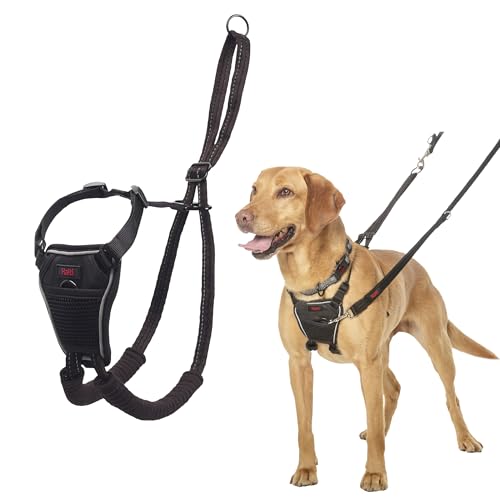
Dual clip harnesses have D-rings on both the chest and the back, so you can switch between a training mode and a casual mode, or clip a double-ended lead to both. Ruffwear and Julius K9 are two of the best-regarded brands, and both build durable, well-finished harnesses.
Step-In Harnesses
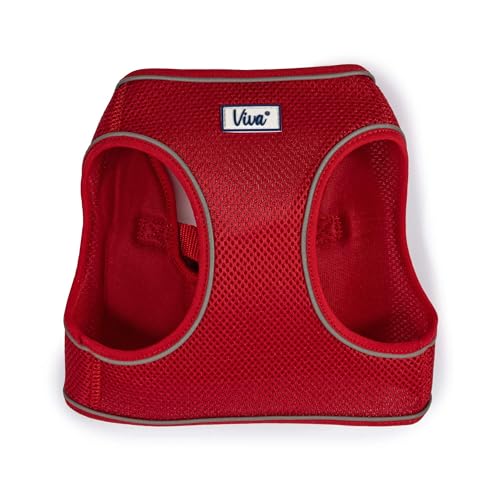
With a step-in harness, your dog steps into two loops, and you fasten it on the back. It is ideal for head-shy dogs that dislike a harness going over their head. It is simpler than other types, but it is also easier for a dog to slip out of, so it is best for calm dogs. The Ancol Viva step-in is a well-reviewed, low-cost example.
Vest and Padded Harnesses
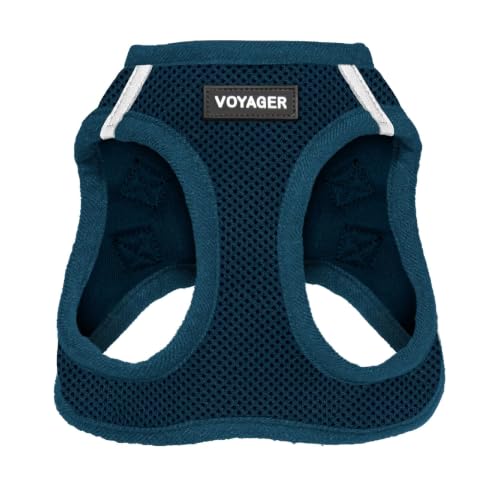
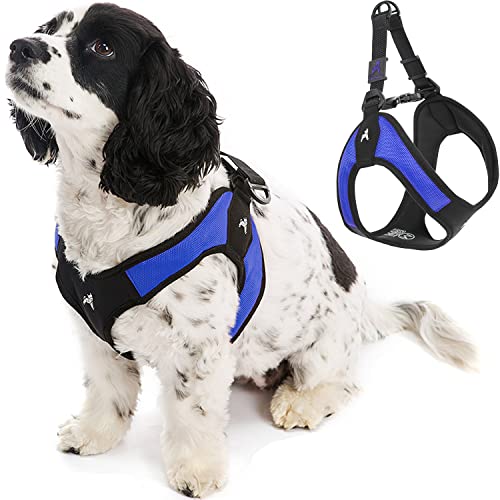
A vest harness wraps around the chest with wide padding that spreads pressure evenly. It is an excellent choice for small breeds, puppies and dogs with tracheal problems, and mesh versions are good for dogs that overheat. The Voyager Step-In Air is a popular mesh vest, and the Gooby Escape Free is a well-known padded step-in design.
How to Measure Your Dog for a Harness
Chest girth is the most important measurement. Wrap a soft tape around the widest part of your dog’s chest, just behind the front legs, keeping it snug but not tight. Also measure the neck just below where the collar sits, so that the harness fits comfortably around the neck and ears.
If your dog is between sizes, choose the larger size, since straps tighten but do not lengthen. Always check the maker’s own size chart, because sizing varies from brand to brand.
Dog Harness Size Guide
Size | Chest Girth | Weight | Example Breeds |
XS | 26-50cm | Under 5kg | Chihuahua, Pomeranian, Yorkshire Terrier |
S | 35-66cm | 5-10kg | Cavapoo, Jack Russell, Shih Tzu, Westie |
M | 40-71cm | 10-20kg | Cocker Spaniel, Cockapoo, French Bulldog, Corgi |
L | 55-83cm | 20-35kg | Labrador, Golden Retriever, German Shepherd, Husky |
XL | 71-99cm | 35kg+ | Rottweiler, Boxer, Great Dane, Mastiff |
Key Features to Look For
Adjustability matters most. Look for at least four adjustment points, two on the chest and two on the body, so that you can fit the harness precisely and prevent rubbing and backing out. Padding on the chest plate helps with comfort on long walks, and neoprene lining is soft, while mesh suits dogs that overheat.
Hardware should be metal where possible. Metal D-rings and buckles outlast plastic, especially on dogs over 15kg, and side-release buckles should click firmly. Reflective stitching is worth having for dark UK winter walks, and a handle on the back is helpful for steadying a dog near traffic, on hikes and around other dogs.
Harness vs Collar: Which Should You Use?
A collar is the right place for an ID tag and works for calm dogs, but a harness spreads pressure across the chest instead of the neck. It is better for pullers, for dogs with neck problems, especially flat-faced breeds such as pugs and French bulldogs, and for puppies whose tracheas are still developing.
Our recommendation is to use a harness as the main walking tool, and a flat collar for ID only. Many trainers now advise against collar-only walking for dogs that are not yet trained.
Choosing a Harness for a Puppy
Puppies grow quickly, so they need a harness with plenty of adjustment, and you should expect to size up within six months for medium and large breeds. Lightweight, padded vest styles are comfortable on a developing frame. Avoid designs that restrict the shoulders, and check that the chest strap sits at the breastbone rather than across the shoulder joint. Ask a vet or trainer to check the fit if you are unsure.
How Much Should You Spend?
Under £20 buys a basic harness that is fine for occasional use or for a puppy that will soon outgrow it, although the hardware and stitching may not last. The £20 to £40 range is the sweet spot, with good adjustability, padding and metal hardware, and brands such as Ancol, Company of Animals and PetSafe. From £40 upwards, brands such as Ruffwear, Julius K9 and Hurtta make harnesses that last for years of daily use, which is worth it for large, powerful dogs and all-weather walkers.
Frequently Asked Questions
Can my dog wear a harness all day? Most harnesses are not designed for all-day wear, since they can rub under the armpits and chest. Take it off when your dog is resting at home, and check for rubbing each night on longer trips.
Is a harness better than a collar for a dog that pulls? Yes. A collar puts pressure on the neck and windpipe, while a front or dual clip harness interrupts pulling without pain.
How tight should a dog harness be? Use the two-finger rule: you should be able to slide two fingers under any strap. If you cannot, it is too tight, and if more than two fit easily, it is too loose.
What harness do dog trainers recommend? Many UK trainers recommend front or dual clip harnesses for training, and Ruffwear, Julius K9 and PetSafe Easy Walk are often mentioned. A good fit matters more than the brand.
Can I use a harness for a reactive dog? A front or dual clip harness gives better directional control than a back clip. Some owners use a double-ended lead clipped to both rings. For serious reactivity, work with a qualified trainer.
Final Thoughts
Three things decide the right harness: your dog’s size, how they behave on the lead and how often you walk. For most dogs, a dual clip harness with a padded chest plate, metal hardware and four adjustment points covers every situation. Measure the chest before you buy, choose a reputable brand and do not be afraid to return a harness that does not fit well.