A lead is not just a way of keeping your dog attached to you. The right training lead makes it easier to teach loose-lead walking, keeps a strong dog under control and gives you more options in different places. It is one of the cheapest changes an owner can make to walks that are currently a struggle.
Training leads come in several types. Double-ended leads have two clips and adjust to several lengths. Control leads have an extra handle for close control. Long lines give distance for recall training. We have compared five training leads currently available at Amazon UK, from a huge-selling Halti to a premium Ruffwear, so you can choose the right one for your dog.
Quick Comparison Table
Product | Best For | Price Range | Rating |
Halti Training Lead (Large, 2m) | Loose-lead walking | £12-£14 | 4.6/5 |
Julius-K9 Adjustable Super-Grip Lead | Strong pullers, reactive dogs | £15-£17 | 4.6/5 |
Halti Control Lead | Busy environments | £10-£12 | 4.6/5 |
RUFFWEAR Front Range Dog Lead | Premium everyday and training | £31-£35 | 4.4/5 |
Total Pet Biothane Long Line | Recall training | £24-£26 | 4.5/5 |
The Best Dog Training Leads Reviewed
Halti Training Lead (Large, 2m)
Best for: loose-lead walking, with length and control in one lead
The Halti Training Lead is a double-ended lead that can be used in several ways: as a normal lead, clipped to two points on a harness for more control, or adjusted to different lengths with its three rings. That flexibility makes it one of the most useful leads for a dog that is learning to walk nicely.
The padded webbing is comfortable in the hand, and the two trigger clips are strong and easy to use. With a front-and-back harness, the double-ended lead gives you two points of contact, which is a gentle way to steer a dog that pulls without pressure on the neck.
It costs around £13 for the large 2m version and has an extraordinary record, averaging 4.6 out of 5 across more than 32,000 ratings.
What we like:
- Double-ended with adjustable length
- Padded, comfortable webbing
- Outstanding review record
Worth knowing:
- Works best with a harness that has two attachment points
- Takes a little time to learn
Specifications:
- Type: double-ended training lead
- Length: 2m
- Size shown: Large
- Brand: Halti


Julius-K9 Adjustable Super-Grip Lead (2.2m)
Best for: strong pullers and reactive dogs
The Super-Grip lead from Julius-K9 has rubber threads woven into the webbing, which gives a real grip in wet or muddy hands. It is adjustable to several lengths, with heavy-duty clips, so you can shorten it for busy streets and lengthen it in open spaces.
For strong dogs and dogs that react to other dogs or people, a secure grip is not a luxury. The rubberised webbing stops the lead slipping through your hands, and the strong clips are built for hard use.
It costs around £16 and averages 4.6 out of 5 across more than 3,000 ratings.
What we like:
- Rubber grip in wet conditions
- Adjustable length
- Heavy-duty clips
Worth knowing:
- Rubber texture can be rough on bare hands
- Bulkier than a basic lead
Specifications:
- Type: adjustable training lead
- Length: 2.2m
- Feature: rubber-threaded webbing
- Brand: Julius-K9 (Color & Gray)
No products found.
Halti Control Lead
Best for: a short, secure lead for busy environments
A control lead has a second handle close to the clip, so you can shorten the lead quickly to keep your dog close in a crowd, on a pavement or when passing other dogs. The Halti Control Lead is a well-made and affordable example.
The extra handle lets you grip the lead just above the dog, giving you instant control without wrapping the lead around your hand. It is a simple, effective design that many owners find much easier than a standard lead.
It costs around £11 and averages 4.6 out of 5 across more than 6,000 ratings.
What we like:
- Second handle for instant control
- Very good value
- Strong reviews
Worth knowing:
- Less versatile than a double-ended lead
- Shorter overall length
Specifications:
- Type: control lead
- Length: 2m
- Feature: extra control handle
- Brand: Halti

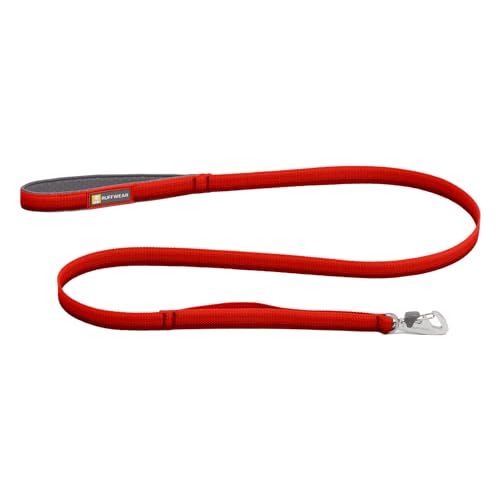
RUFFWEAR Front Range Dog Lead (1.5m)
Best for: one premium, durable lead for training and everyday walks
The Ruffwear Front Range lead is a well-designed, durable lead with a padded handle, reflective stitching and a traffic handle near the clip for close control. It is a premium lead that feels excellent in the hand.
The webbing is weather-resistant and soft, and the strong clip and light hardware make it comfortable for long walks. It matches the Front Range harness and collar if you want a set.
It costs around £33 and averages 4.4 out of 5 across more than 1,800 ratings.
What we like:
- Premium build and comfort
- Reflective stitching
- Traffic handle for close control
Worth knowing:
- Higher price than basic leads
- Shorter 1.5m length
Specifications:
- Type: everyday and training lead
- Length: 1.5m
- Features: padded handle, reflective stitching
- Brand: Ruffwear
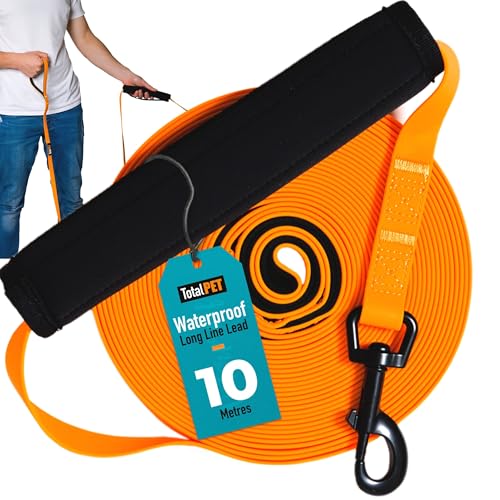
Total Pet Waterproof Biothane Long Line
Best for: recall training and safe freedom at a distance
A training lead does not have to be short. A biothane long line lets your dog explore at a distance while you keep control, making it the best tool for recall training. Biothane is waterproof, easy to clean and does not smell.
This lead has a solid clip and a comfortable feel, and comes in several lengths. It works well with a harness and is a great choice for dogs that train on wet fields.
It costs around £25 and averages 4.5 out of 5 across more than 900 ratings.
What we like:
- Waterproof, wipe-clean material
- Great for recall training
- Strong and durable
Worth knowing:
- Long lines need safe, open spaces
- More expensive than nylon
Specifications:
- Type: biothane long line
- Feature: waterproof
- Use: recall training
- Brand: Total Pet
Dog Training Lead Buying Guide
What to look for when buying a dog training lead
Look for a lead that is comfortable in your hand and strong enough for your dog. Padded or rubber-gripped handles help when a dog pulls, and strong, easy-to-use clips are essential. Adjustable leads offer the most flexibility.
Length matters too. Most training leads are around 2 metres, which gives your dog room to move without letting them wander into the road. For recall work, use a much longer line in a safe space.
Training lead types explained
Double-ended leads have a clip at each end and rings that let you change the length or clip to two harness points. Control leads have a second handle near the dog. Long lines give distance for recall. Premium leads add weather-resistant materials and reflective stitching.
Size and fit guide
Choose a lead width that suits your dog: thin and light for small dogs, wide and strong for large dogs. A lead that is too heavy will weigh down a small dog, and one that is too thin will cut into your hands if a big dog pulls.
How much should you spend?
£10-£15 buys an excellent training lead from a specialist brand such as Halti. £15-£20 buys a heavy-duty adjustable lead. £30 and above buys a premium lead for daily use.
Frequently asked questions
What is a double-ended training lead for?
A double-ended lead has a clip at each end, so you can attach it to two points on a harness, at the chest and the back, for gentler steering. You can also wear it across your body for hands-free walking or use it at different lengths by clipping to the rings.
Should a training lead clip to a collar or a harness?
Most trainers recommend a harness for training leads, particularly for dogs that pull. A harness spreads the pressure across the chest and does not put strain on the neck. Some leads can be clipped to a collar and a harness together.
How long should a recall training long line be?
Five to ten metres suits most dogs and most spaces. Use a longer line only in wide-open areas, and always with a harness.
Are training leads suitable for puppies?
Yes, a light, soft lead is ideal for puppies learning to walk on the lead. Use short sessions and plenty of praise, and choose a lead that does not weigh the puppy down.
How do I keep a training lead clean?
Wipe biothane leads with a damp cloth. Nylon and webbing leads can be washed by hand or in a laundry bag on a cool cycle. Let them dry completely before use to prevent mould and smells.
Conclusion
The Halti Training Lead is our top pick for most owners. It is versatile, well made, very well priced and has one of the strongest review records of any lead. If you need more grip and strength, the Julius-K9 Super-Grip is an excellent choice, and the Halti Control Lead is a cheap way to gain instant control in busy places.
For a premium lead that you can use every day, the Ruffwear Front Range is beautifully made and comfortable, and the Total Pet biothane line is the best choice for recall training in wet conditions.
Whichever lead you choose, pair it with a well-fitted harness and use it consistently as you teach your dog to walk on a loose lead.
This roundup is part of our Dog Walking Gear: The Complete Guide.