
Cats find the warmest spot in any house within about a day of moving in, and from October onwards that spot is usually the radiator. Left to their own devices they will settle for draping themselves along the top of one, which is neither comfortable nor especially safe. A radiator bed gives them the same warmth with somewhere soft to actually sleep, and it uses heat the house is already producing rather than adding anything to the bill.
They are also one of the few pieces of cat furniture that take up no floor at all, which makes them a good option in a small flat. The variables worth understanding are the hook design, the weight rating and whether the frame will fit your particular radiator. Below are the best radiator cat beds in the UK, with a buying guide on fitting, safety and sizing.
Quick Comparison Table
| Product | Best For | Price Range | Rating |
| Classic Hooked Radiator Cradle | Best all-rounder for most radiators | £15-30 | ⭐⭐⭐⭐⭐ |
| Heavy-Duty Wide-Hook Bed | Best for large breeds and modern radiators | £25-45 | ⭐⭐⭐⭐⭐ |
| Covered Radiator Igloo Bed | Best for nervous cats wanting a den | £25-45 | ⭐⭐⭐⭐ |
| MEWOOFUN Wide-Capacity Radiator Hammock | Best for multi-cat radiator sharing | £25-£35 | ⭐⭐⭐⭐ |
| Budget Fabric Radiator Bed | Best budget pick under £15 | £10-15 | ⭐⭐⭐⭐ |
The Best Radiator Cat Beds Reviewed
Classic Hooked Radiator Cradle
Best for: most cats and most homes, and anyone buying their first radiator bed.
The classic design is a steel wire frame with a removable fleece cover, suspended from two or four hooks that sit over the top of the radiator. The cover buttons or zips onto the frame and the cat lies in a shallow cradle a few centimetres clear of the radiator surface, warmed by the convection current rising past it rather than by direct contact. It is a simple piece of engineering that has barely changed in twenty years because it works.
The appeal is how little it asks of you. There is no drilling, no tools and no floor space taken, it goes up in under a minute, and it can be moved to a different radiator in a different room when the sun moves or the cat changes its mind. The removable cover is the important detail: cats moult heavily on a warm bed, and a cover that comes off and goes in the machine is the difference between a bed that stays pleasant and one that gets thrown out in March. Most take cats up to around 7kg comfortably.
The two things to check are your radiator and the hook depth. Standard hooks are cut for a conventional panel radiator roughly 60 to 80mm deep, and they simply will not seat on a slim designer panel, a column radiator or a towel rail. Cheaper frames also use thin wire that flexes under a heavy cat, which unsettles them and puts them off the bed for good. Test the frame by pressing down firmly on one corner before you trust a cat to it.
What we like:
- Up in under a minute with no tools
- Uses no floor space at all
- Removable cover goes straight in the machine
- Easy to move between rooms and radiators
Worth knowing:
- Standard hooks do not fit slim or column radiators
- Thin wire frames flex under a heavier cat
- Needs a genuine gap so air can rise past it
Specifications:
- Material: powder-coated steel frame with fleece cover
- Typical size: 45-50cm wide, 30-35cm deep
- Weight limit: around 7kg on most models
- Suitable for: standard panel radiators 60-80mm deep

- CUDDLY COMFORT: The soft short-hair plush cover made of high-quality polyester offers cats a particularly pleasant lying comfort and cosy warmth - ideal for cosy hours by the radiator
- PRACTICAL REVERSIBLE CUSHION: The reversible cushion with polyester fleece filling can be used on both sides and allows flexible use, offering both comfort and variety
- STABLE AND SAFE: The sturdy metal frame guarantees a high load capacity of up to 5 kg and offers your cat a safe place to relax
- ADJUSTABLE HOLDER: Thanks to the adjustable holder between 9 - 12 cm, the cuddle bag fits on all standard radiators and is easy to attach
- IDEAL FOR COLD DAYS: The radiator cosy bag is the perfect retreat for cats to feel cosy on cold days and enjoy the pleasant warmth of the radiator

Heavy-Duty Wide-Hook Bed
Best for: Maine Coons, Ragdolls and homes with modern or double-panel radiators.
The heavy-duty version addresses the two most common reasons a standard radiator bed fails: the cat is too big for it, or the radiator is too thick for the hooks. Frames use thicker gauge steel with reinforced welds at the corners, and the hooks are either wider by design or adjustable, spanning double and triple panel radiators that a standard bed cannot grip.
For large breeds the difference is obvious. A 7kg Maine Coon in a standard cradle sinks the middle and splays the frame, and cats are quick to abandon anything that moves under them; a properly braced frame stays flat and stable and gets used. The larger platform also matters, since a big cat needs somewhere to stretch rather than a hammock it has to curl into. Adjustable hooks are worth seeking out in their own right, because they let you move the bed to any radiator in the house without checking dimensions first.
You pay more and you get more weight hanging on the radiator, which is worth thinking about. A heavy frame plus a heavy cat is a real load on the radiator’s wall brackets, so it is worth checking the radiator is properly secured before hanging one, particularly in a rented flat or an older house. These beds are also bulkier to store over the summer, and the sturdier frames tend to have less generously padded covers, so a folded blanket on top is often a worthwhile addition.
What we like:
- Stays flat and stable under a large cat
- Adjustable hooks fit almost any radiator
- Reinforced welds rather than thin bent wire
- Bigger platform allows a full stretch
Worth knowing:
- Puts real load on the radiator’s wall brackets
- Costs noticeably more than a standard bed
- Bulkier to store out of season
Specifications:
- Material: heavy-gauge powder-coated steel with fleece cover
- Typical size: 50-58cm wide, 35-40cm deep
- Weight limit: 10-12kg on most models
- Suitable for: large breeds and double or triple panel radiators

- The Kumfy Kradle is a radiator bed for cats and is a warm and cosy place for a cat to relax.
- Available in soft Sherpa fleece fabric overlaid with the Danish Design paw print motif and faux fur leopard print.
- Available in two sizes to fit standard or double household radiators. The cover is fully washable.
Covered Radiator Igloo Bed
Best for: nervous cats, bright rooms and cats that like to sleep out of sight.
An igloo version adds a fabric hood over the cradle, so the cat sleeps in an enclosed pocket rather than in the open. Warmth from the radiator is trapped inside the hood, which makes it noticeably warmer than an open bed, and the enclosure appeals strongly to cats that prefer to sleep somewhere they cannot be seen from.
It is the format that suits anxious cats and busy households. A cat sleeping in an open cradle in a family living room is still exposed to everything going on; a hooded bed gives it the enclosure that makes proper deep sleep possible, and being off the ground adds the security of height at the same time. Combining warmth, height and concealment in one place is a strong draw, and hooded radiator beds are often the first thing a shy cat in a new home will claim. Most have a removable hood, so it can be run as an open bed when the cat prefers.
The considerations are heat, weight and airflow. A hood traps warmth well, which is welcome in January and much less so on a mild autumn day when the heating is still on, so a removable hood is close to essential rather than a nice extra. The hood also adds weight and, more importantly, catches the convection current, so the room warms slightly less efficiently than with an open bed. Cats that dislike enclosed spaces will simply refuse to use one, and there is not much to be done about that.
What we like:
- Enclosure suits nervous and shy cats
- Traps warmth better than an open cradle
- Combines height, warmth and concealment
- Hood removable on most models
Worth knowing:
- Can get too warm on milder days
- Blocks more of the radiator’s convection current
- Some cats simply refuse enclosed beds
Specifications:
- Material: steel frame with fleece cover and removable fabric hood
- Typical size: 45-50cm wide, 32-38cm deep, 30cm tall
- Weight limit: around 7kg on most models
- Suitable for: shy cats, open-plan rooms and cold spots

MEWOOFUN Wide-Capacity Radiator Hammock
Best for: households with two or more cats sharing one warm radiator.
Rather than stacking two separate beds, this is a single wide hammock — around 47cm across — built with a reinforced wooden frame rated to hold up to 18kg. That is enough for two adult cats to share comfortably, or one substantial cat with room to stretch, which solves the actual problem multi-cat households have: one radiator, several cats, and squabbling over the one bed that fits.
The frame clips over the radiator the same way as a standard hooked bed, and the fabric is a warm, brushed fleece that holds heat well without overheating a cat that stays on it for hours. Because it is one continuous surface rather than two stacked tiers, cats who tolerate each other can share it without the awkwardness of one being underneath the other.
It needs a radiator wide enough to take a 47cm hammock, so measure before buying — narrow single-panel radiators may not give the frame enough to hook onto. It is also a single-level design, so it does not suit households wanting a literal two-tier arrangement with separate spaces stacked vertically; it is a wide shared perch rather than two private ones.
What we like:
- Wide enough for two cats to share, or one cat to fully stretch out
- 18kg weight rating comfortably covers multi-cat use
- Reinforced wooden frame feels sturdier than basic wire hooks
- Warm brushed fleece cover
Worth knowing:
- Needs a wide radiator panel to hook onto securely
- Single wide surface, not two separate stacked tiers
- Bulkier to store flat than a simple fabric cradle
Specifications:
- Size: around 47 x 40cm, holds up to 18kg
- Material: wooden frame with brushed fleece cover
- Fit: adjustable hooks for standard single-panel radiators
- Suitable for: multi-cat households, larger breeds

- 【Cat Approved Window Seat】Without having to drill anything or using suction cups. Super easy to move from window to window. PLEASE make sure your window fit the hooks before placing order.
- 【Different Usage Scenarious 】By adjusting the distance between the hook and the supporting leg, it can be easily installed on the window sill, cabinet, drawer. It can easily be removed to close the curtains and just as easy to put back up.
- 【No Drilling, Quick Installation】Following our instruction and finish it within 10 minutes. The hook has a 6 inch adjustable distance to satify different wall thicknesses. Felt gaskets where under the supporting leg could protect the wall.
- 【Stable & Super Load Bearing】Compared to suction-mounted window shelves, our cat bed structure design is more stable. You don't need to worry suction cups drop problem. It can hold up to 18kg, suitable for multiple kitties or a large cat.
- 【 Favorite Spot for Cats 】Provide them a comfortable sunbathing spot. Cat enjoys sitting at a high vantage point to look out of the window nice view. The window hammock will be your cats favorite spot to hang out.
Budget Fabric Radiator Bed
Best for: trying the idea out, spare rooms and second beds.
At the budget end are simple beds using a light wire frame or a stiffened fabric shell with sewn-in hanging straps, often with the cover fixed rather than removable. They cost about a third of a good radiator bed and do the essential job of holding a cat in the rising warm air with something soft underneath.
The case for one is that plenty of cats never take to a radiator bed at all, and finding that out for £12 rather than £40 is the better outcome. They also make sensible second beds for a spare room, a home office or a hallway, where a cat might nap occasionally but does not need a premium bed sitting unused for months. Being light, they are easy to move around while you work out which radiator your cat actually favours.
The savings show in the frame and the cover. Thin wire flexes under anything over about 5kg, which unsettles cats, and a fixed cover means washing the whole bed and waiting for a wire frame to dry, so in practice it gets washed less often. Fabric hanging straps stretch over a season and let the bed sag closer to the radiator than intended. Buy one to test the concept, then replace it with something sturdier if your cat takes to it.
What we like:
- Cheapest way to find out if your cat will use one
- Fine as a second bed in a spare room
- Light and easy to move between radiators
- No great loss if it is ignored
Worth knowing:
- Thin frames flex under cats over about 5kg
- Fixed covers are awkward to wash and dry
- Fabric straps stretch and sag over a season
Specifications:
- Material: light wire or stiffened fabric shell, plush cover
- Typical size: 40-45cm wide, 28-32cm deep
- Weight limit: around 5kg
- Suitable for: smaller cats, trial use and second beds
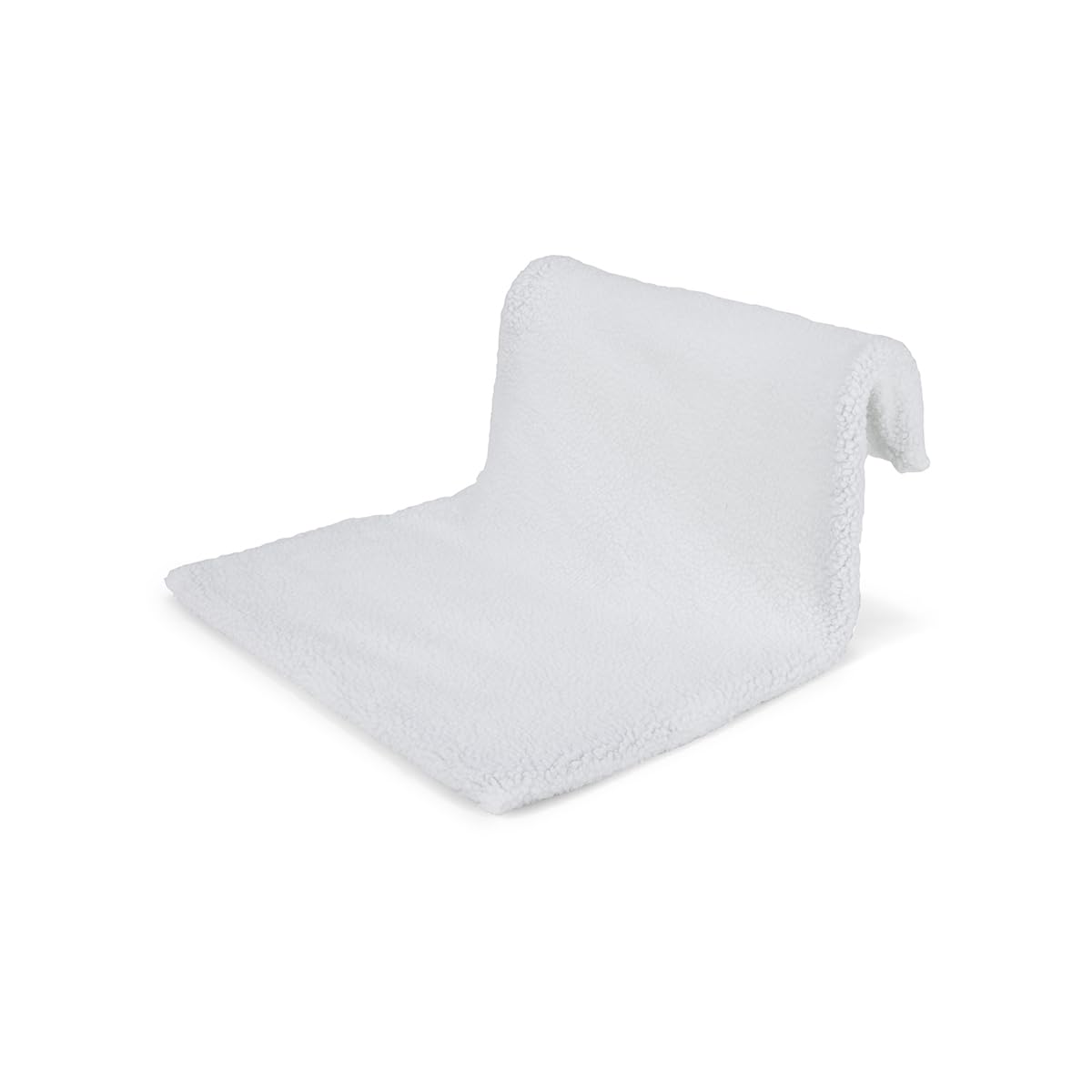
- ATTACHABLE: Keep your cat comfy and warm with this radiator bed that easily attaches to single and most double wall-mounted household radiators
- FEATURES: Luxuriously soft washable fleece cover retains heat for added comfort, making it perfect for indoor use during colder months
- PET ESSENTIAL: Offers a cosy space for your feline to curl up, snooze, and feel secure, supporting pets up to a maximum weight of 5kg
- PRACTICALITY: Saves floor space while providing a snug sleeping spot; assembled size approx. 51 x 25.5 x 29 cm for a perfect fit
- DESIGN: Cat Radiator Bed from Petface Catkins, crafted with quality and care to meet all your cat’s napping needs in style
Radiator Bed with Washable Cover Set
Best for: moulting breeds, allergy-conscious homes and year-round use.
Some radiator beds are sold with two or three interchangeable covers rather than one, and it is a more useful feature than it sounds. Warm beds collect fur at a rate that surprises new owners, and having a spare cover means the bed carries on being used while the other one is in the wash, rather than the cat being turned out of it for a day.
For heavy moulters — Maine Coons, Ragdolls, Persians and Norwegian Forest cats — this is close to essential, since a fleece cover on a warm radiator can need washing weekly through the spring moult. It also matters in homes where someone reacts to cat allergen, because dander concentrates in warm sleeping spots more than anywhere else in the house and frequent hot washing is the main way to keep it down. Multi-cover sets often include a lighter cotton cover for milder weather alongside the fleece.
The catches are cost and compatibility. A multi-cover set costs more than a single-cover bed, and replacement covers are usually specific to that manufacturer’s frame, so you are tied to their sizing for the life of the bed. Check the covers are machine washable at 40 degrees or above, since a cool wash does much less for allergen and mites. And check the fastening: press studs and zips outlast elastic loops, which perish after a couple of dozen washes.
What we like:
- Bed stays in use while a cover is washing
- Important for heavy moulters and allergy homes
- Sets often include a lighter cover for milder weather
- Encourages washing often enough to matter
Worth knowing:
- Costs more than a single-cover bed
- Replacement covers tied to that frame
- Elastic loop fastenings perish with washing
Specifications:
- Material: steel frame with two or three interchangeable covers
- Typical size: 45-50cm wide, 30-35cm deep
- Washing: covers machine washable, ideally at 40C or above
- Suitable for: long-haired breeds and allergy-conscious households

Radiator Cat Bed Buying Guide
What to look for when buying a radiator cat bed
Measure your radiator first, because hook fit is the single most common reason a radiator bed goes straight back. Standard hooks suit a conventional panel radiator around 60 to 80mm deep, and will not grip a slim designer panel, a column radiator, a towel rail or a radiator with a fitted cover. If your radiators are anything other than standard, look specifically for adjustable or wide-span hooks rather than hoping.
Then look at the frame gauge, the weight rating and the cover. Press down hard on a corner of the frame: it should barely move, because a bed that flexes will be tried once and never again. Check the stated weight limit against your cat with a decent margin, since ratings are optimistic. A removable, machine-washable cover is not optional in practice, and press studs or a zip will outlast elastic loops. Finally, make sure the design holds the cat a few centimetres clear of the radiator rather than pressed against it, so air can rise past.
Radiator bed types explained
Open cradles are the standard and suit the majority of cats: simple, light, easy to wash and cheap enough to have on more than one radiator. Hooded or igloo versions trap more heat and give an enclosed space, which suits nervous cats and cold rooms but can be too warm on milder days, so a removable hood is worth having. Heavy-duty frames with reinforced welds and wide hooks are the answer for large breeds and non-standard radiators.
Two-tier units stack two beds on one radiator for multi-cat homes, at the cost of a much heavier load on the wall brackets. Worth mentioning as alternatives are window-mounted suction beds, which give the perch and the view without the heat, and self-heating mats using reflective insulation, which suit homes with no suitable radiator at all. Some owners run a radiator bed in winter and move to a window perch in summer, which is a sensible pairing.
Size guide
As a general rule, a radiator bed should be at least as wide as your cat measured from nose to base of tail while stretched. For an average domestic shorthair of 4 to 5kg, a 45cm bed rated to 7kg is comfortable. For larger breeds — Maine Coons, Ragdolls, Norwegian Forest cats and British Shorthairs at the heavier end — look for 50cm or wider and a rating of at least 10kg, and check the frame depth as well, since a cat that overhangs the front will not settle.
Kittens can use a standard adult bed, though it is worth waiting until they are confident jumpers, usually around four to five months, before hanging one at height. For elderly or arthritic cats, height is the deciding factor rather than size: a radiator bed a metre off the ground is no use to a cat that can no longer jump, so site one on a low radiator or put a stool or box beside it as a step. That single change is often what turns an ignored bed into a favourite.
Radiator bed safety
The main safety points are load, heat and hooks. Check that the radiator itself is firmly fixed to the wall before hanging anything on it, since older brackets and plasterboard fixings are not always up to a cat plus a steel frame, and be especially careful with two-tier units. Make sure the hooks seat fully over the radiator top with no chance of lifting off when a cat jumps in or out, and check them again every few weeks.
On heat, a radiator bed should hold the cat clear of the radiator surface, not against it, so that warmth arrives by convection rather than conduction. Check the bed by hand when the heating is at full output, and if it is too hot for your palm it is too hot for a cat to lie on. Cats are generally good at moving when they are too warm, but kittens, elderly cats and any cat with reduced mobility or sensation are less able to, so it is worth turning the radiator’s own thermostatic valve down a little in the room where the bed hangs. Keep beds clear of drying laundry and away from radiators with exposed hot pipework.
How much should you spend?
A budget fabric bed costs £10 to £15 and is a fair trial purchase, or a second bed for a spare room. Most owners are best served by a classic hooked cradle at £15 to £30, which buys a properly rigid frame, a removable washable cover and hooks that seat securely — the three things that decide whether the bed gets used.
Heavy-duty and hooded designs run £25 to £45, and two-tier units £35 to £60. Above roughly £60 you are generally paying for styling, since the underlying engineering is a steel frame and two hooks. A sensible approach for a two-cat house is one good bed on the warmest radiator and a budget bed elsewhere, which comes to well under £50 and gives each cat somewhere of its own.
Frequently asked questions
Are radiator cat beds safe?
Yes, when they are fitted properly and hold the cat clear of the radiator surface rather than against it. Check the radiator is securely fixed to the wall before hanging anything on it, make sure the hooks seat fully so the bed cannot lift off, and feel the bed by hand when the heating is running at full output. Take extra care with kittens, elderly cats and cats with reduced mobility, who are less able to move away if they get too warm.
Will a radiator bed make my heating less efficient?
Slightly, but far less than most people expect. A bed hanging on the front of a radiator interrupts some of the convection current, which is why designs that hold the bed clear of the surface are better than those that press against it. Hooded beds block more than open cradles. In practice the effect on a room is small, and it is generally outweighed by a cat that is no longer trying to sleep on top of the radiator itself.
My cat will not use the radiator bed — what should I do?
Give it time and make it smell familiar. Put a blanket or jumper the cat already sleeps on into the bed, since scent does more than anything else to make a new object acceptable, and rub a little used bedding around the cover. Check the height too, as a bed hung too high for an older cat is simply out of reach. Feeding a few treats in it and avoiding lifting the cat into it also help; most cats take somewhere between a few days and a couple of weeks.
Do radiator beds fit all radiators?
No, and this is the most common problem. Standard hooks are made for a conventional panel radiator about 60 to 80mm deep and will not grip slim designer panels, column radiators, towel rails or radiators with fitted covers. Measure the depth of the top of your radiator before ordering, and look for adjustable or wide-span hooks if your radiators are non-standard. Radiators with a decorative cover generally need a different type of bed altogether.
How do you wash a radiator cat bed?
Take the cover off the frame and machine wash it at 40 degrees or above, which is warm enough to deal with dander and dust mites, then air dry it rather than tumble drying, as heat can shrink fleece backing. Vacuum the frame and wipe it with a damp cloth. In heavy moulting season the cover may need washing weekly, which is the main argument for buying a bed with a spare cover. Avoid fabric softener, as it flattens the pile of the fleece.
Can two cats share a radiator bed?
Some bonded pairs will curl up together, but most cats prefer their own space, and a single bed on the warmest radiator often becomes something one cat guards. A two-tier unit works better than expected because cats like to sleep at different heights, and two separate beds on different radiators is better still. As a rule of thumb, provide one more warm sleeping spot than you have cats.
Conclusion
For most homes, a classic hooked radiator cradle at around £15 to £30 is the right buy. A rigid steel frame, hooks that seat properly on a standard panel radiator and a removable cover that goes in the machine cover everything that matters, and it takes up no floor space at all.
Choose a heavy-duty wide-hook model if you have a large breed or non-standard radiators, since a frame that flexes is a frame your cat will ignore. A hooded igloo version suits a nervous cat in a busy room, and a two-tier unit is worth considering in a two-cat household where the warmest radiator has become contested territory.
This roundup is part of our Cat Furniture Buying Guide.